
When a motor starts, a diesel generator’s voltage drops 15-30% for a few seconds, and the deepest part of the dip lasts under two seconds. Keep the drop under 20% for a normal plant (ISO 8528 G2), and under 15% for sensitive loads like PLCs and contactors (G3). Never let it exceed 35%, because that is the point where contactors drop out.
Kevin, the maintenance manager at a bottling plant, watched this happen every weekday at 7:42 a.m. The conveyor line’s 75 kW pump kicked on, the lights dipped for a heartbeat, and the line’s PLC lost its memory. Ten minutes of resetting and re-syncing followed every single morning.
He assumed the pump was the problem. It wasn’t. The pump was fine. The generator was simply too slow to hold voltage during the start.
If that scene sounds familiar, you’re not alone. The generator voltage dip from motor starting is the most common complaint our engineers hear, and it is fixable. This guide covers the safe limits with a reference table, the two dips you must tell apart, and how long the event lasts. You’ll also get a simplified way to estimate your own dip, what breaks when it dips too far, and the fixes that stop it.
It is one part of a three-article cluster. The math behind motor starting kVA lives in our guide on generator motor starting kVA. The full diagnosis of voltage drop under load, including AVR and excitation faults, lies in the generator voltage drop under load.
Shandong Huali Electromechanical manufactures diesel generator sets from 8 kVA to 4,000 kVA, factory load-tests every unit, and offers PMG and fast-AVR options for motor-load applications. If your set already dips too deep, send our engineers the motor nameplate and set rating, and we’ll compute your dip for free.
Key Takeaways
- A motor start drops generator voltage 15-30% for a few seconds, and most of the damage happens in the first few cycles.
- Keep the dip under 20% (ISO G2) for normal plants and under 15% (G3) for sensitive loads; contactors drop out past a 35% dip.
- Generator sets sag 5-10 times deeper than the utility because alternator impedance runs 15-20% versus 2-5% for a grid transformer.
- Instantaneous voltage dip (IVD) is the event equipment actually feels; the sustained spec (SVD) understates it badly.
- Fix it with staggered starts, soft starters or VFDs, PMG excitation, and right-sized alternators, not a bigger engine alone.
Why Voltage Drops When a Motor Starts
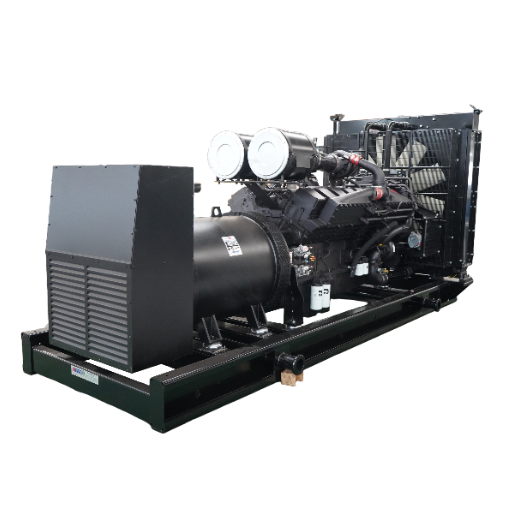
Four things stack on top of each other the instant a motor energizes. Understanding them explains why the same motor that ran fine on the grid wrecks the voltage on generator power.
Inrush Current Runs 5-8× Full Load (Up to 10×)
A motor at standstill behaves like a near short circuit until its magnetic field builds. It draws 5-8 times full-load current in the first few cycles, and premium-efficiency motors can pull up to 10 times. As CSEMag’s power quality primer notes, the inrush is almost entirely reactive. That is the critical detail: the alternator has to supply reactive kVA, not just kW.
Generator Impedance Runs 5-10× Higher Than Utility
The utility grid is stiff. A distribution transformer looks like a 2-5% impedance to a motor. A generator set looks like 15-20% because of the alternator’s subtransient reactance (X”d). Same motor, same inrush, and the voltage collapses much deeper on generator power, because the source itself sags as it supplies the surge.
The Starting Power-Factor Collapse
During start, motor power factor collapses to roughly 0.2-0.3 lagging. That means most of the inrush is reactive demand, and reactive demand is exactly what stresses an alternator. It’s also why a set sized by kW alone fails at motor starting, and why the generator kVA vs kW distinction matters here more than anywhere else.
The AVR Can’t React in the First Few Cycles
An automatic voltage regulator only corrects what it has already sensed. A generator voltage regulation percentage of ±1% describes steady state, but it does nothing for the first few cycles of a motor start, because the field exciter hasn’t had time to respond. That gap between the spec sheet and the transient event is where the confusion starts. If the voltage never comes back, or the dip keeps getting worse across seconds, that’s a different fault, and our generator voltage drop under load guide covers it.
How Much Voltage Drop Is Acceptable When a Motor Starts?
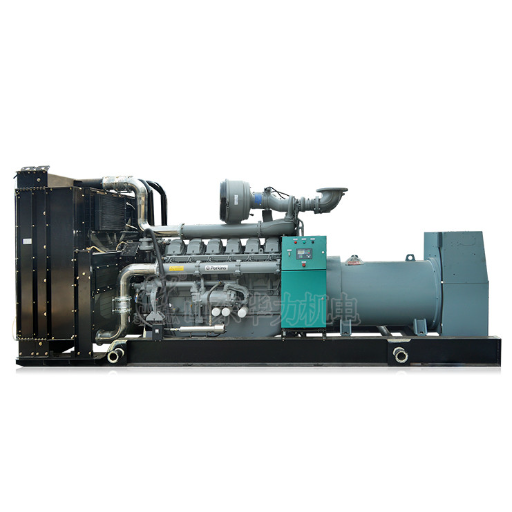
For most plants, the answer is a dip of 20% or less during a motor start, with recovery within 6 seconds, which is ISO 8528 performance class G2. MacAllister Power Systems’ motor-starting toolbox applies the same rule to real genset selections. If the bus also feeds PLCs, VFDs, or contactors, hold the dip under 15% (class G3). A dip deeper than 35% drops contactors and stops equipment, and that’s not a gray area.
| Limit | Value | What it means |
|---|---|---|
| Classic 30% rule | 30-35% dip | Motor will likely start, but sensitive gear on the bus may misbehave |
| Shared bus | 15-20% dip | Recommended ceiling where PLCs, lighting, and contactors share the bus |
| Contactor dropout | >35% dip (below 65% rated) | Contactors and ATS drop out; loads restart uncontrolled |
| ISO 8528-5 G2 | Max −20%, recover ≤6s, steady ±1.5% | Pumps, fans, hoists, general plant |
| ISO 8528-5 G3 | Max −15%, recover ≤4s, steady ±1.0% | Telecom, hospitals, data centers |
| NEMA MG 1 | ≤20% during start incl. cables, ≤5% after | Motor design reference for terminal voltage |
Two rules make the table practical. First, the limits apply to the motor’s terminal during the start, not to the generator’s steady-state regulation. Second, the deeper the dip, the longer the recovery takes, so depth and duration have to be judged together.
The Two Dips You Must Tell Apart
Every generator manufacturer quotes voltage dip twice, and the two numbers describe different events. Confusing them is how a set with “1% regulation” still manages to kill a PLC.
Instantaneous Dip (IVD) Is What Equipment Feels
The instantaneous voltage dip (IVD) is the deepest point of the sag, measured in the first cycle or two after the motor energizes. This is the event your contractors, PLCs, and lights actually experience. When an engineer says “the generator voltage dipped 25%,” they almost always mean the IVD. It’s also the number that Buckeye Power Sales’s IVD vs SVD paper argues should drive motor-starting decisions.
Sustained Dip (SVD) Understates the Event
The sustained voltage dip (SVD) is measured after the transient settles, usually a second or more into the start. It’s the number that looks good on datasheets, because by then the AVR has fought back. A set can show a 5% SVD and still have a 25% IVD.
If the spec sheet only quotes sustained numbers, you’re looking at the wrong figure for a motor start. The full IVD versus SVD distinction, and how to read both from a datasheet, is covered in our guide on how to read a generator specification sheet.
The 90% Recovery Rule
Depth is only half the story. As Avtron Power’s ISO 8528 testing guide makes clear, recovery performance is graded alongside dip depth. The practical recovery rule: voltage should climb back to 90% of rated within one to three seconds, and a fast digital AVR restores it in 0.1-0.5 seconds.
ISO 8528 grades this as recovery time, 6 seconds for G2 and 4 seconds for G3. It’s just as binding as the dip depth itself. A slow recovery exposes equipment to undervoltage for far longer than the event seems to last.
How Long Does the Dip Last?
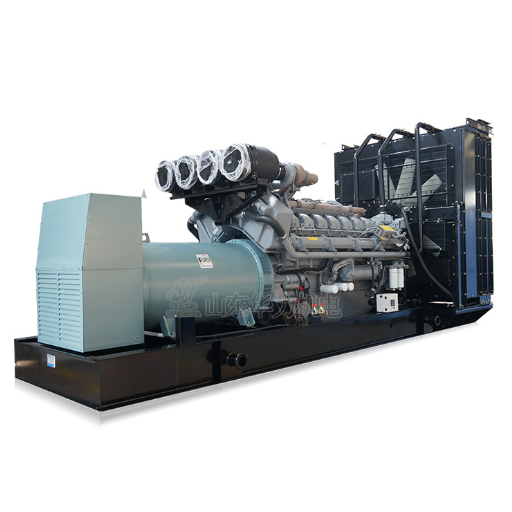
The transient voltage dip on a generator is short by clock time and long by equipment time. The whole event fits in the table below.
| Event | Typical time |
|---|---|
| Voltage dip depth (IVD) | 0.01-2 seconds |
| Recovery to within 5% of rated | 1-3 seconds |
| Fast digital AVR recovery | 0.1-0.5 seconds |
| ISO 8528 G2 recovery | up to 6 seconds |
| ISO 8528 G3 recovery | up to 4 seconds |
| Frequency dip floor | about 57 Hz on a 60 Hz system |
| Generator AVR recovery time in practice | 0.1-6 seconds depending on class |
The frequency dip deserves a special mention because it only happens on generator power. When the motor loads the engine harder than it can instantly deliver, the set slows. Frequency sags toward 57 Hz before the governor catches up. That adds another failure mode: motors, clocks, and drives that tolerate a voltage sag can still trip on frequency.
How to Calculate Your Voltage Dip
You can estimate your dip in two lines, without a full power study. The simplified formula is:
Dip % ≈ (motor starting kVA) ÷ (motor starting kVA + generator short-circuit kVA) × 100
where the generator short-circuit kVA equals the set rating divided by X”d, the subtransient reactance, usually 0.12-0.15. That short-circuit figure is the same one your generator short-circuit protection scheme is designed around.
A worked example makes it concrete. Take a 75 kW water pump started direct-on-line (DOL) on a 250 kVA set with an X”d of 12.5%:
- Pump full-load current is about 105 A at 480 V, three-phase
- DOL inrush at 6× full load is about 630 A
- Starting kVA = √3 × 480 × 630 ÷ 1,000 ≈ 524 kVA
- Generator short-circuit kVA = 250 ÷ 0.125 = 2,000 kVA
- Dip ≈ 524 ÷ (524 + 2,000) ≈ 21%
That 21% dip sits right at the G2 boundary, which matches what the plant sees: the pump starts, but everything else on the bus complains. For the full SkVA math, NEMA locked-rotor codes, and starting-method multipliers, see our motor starting kVA guide. It has the complete formula set and a sizing table.
Want a number for your own set? Send us your motor nameplate and your generator’s kVA rating. Our engineers run this calculation for clients every week and will tell you exactly where your dip lands.
What Actually Breaks When Voltage Dips
Equipment fails at different depths, and knowing the order helps you triage a real event.
- Contactors and ATS: drop out below about 65% of rated voltage, meaning a dip of over 35%. They also restart uncontrollably when voltage returns.
- PLCs and VFDs: many reset at dips of just 15-20%, which wipes programs and restarts processes.
- Lighting: visibly dims at a 10-20% dip, which is why “the lights flicker” is usually the first complaint.
- Other motors: a motor already running can stall or pull more current as voltage sags, cascading the dip.
- UPS and sensitive electronics: transfer to battery or drop loads at dips that barely faze a motor.
The contactor dropout voltage matters more than most engineers expect, because the damage compounds. Marta, the plant manager at a water treatment facility, learned this the hard way. Every time the 60 kW chiller started, the feed-pump contactor dropped out, reclosed, and dropped again.
After about ninety seconds of that chatter, the contacts welded shut. A motor start that lasted one second destroyed a contactor rated for years of service. The fix wasn’t a new contactor. It was stopping the dip that caused the chatter.
How to Stop the Voltage Drop When a Motor Starts
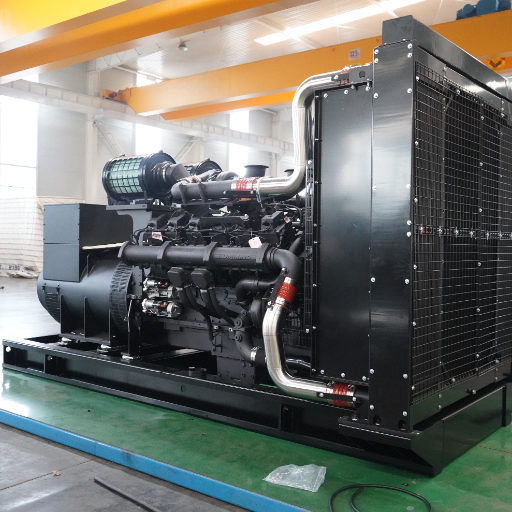
The fixes form a ladder, from cheapest to most structural. Work down the list before you buy a bigger generator, because most dip problems are starting-method problems, not capacity problems.
- Sequence and stagger starts. Start the largest motor first, let the set recover, then start the next. A 20-second delay between starts often eliminates the worst dips entirely.
- Use a soft starter, VFD, or star-delta. Cutting the starting current from 6-8× full load to 2-3× cuts the dip roughly in half. This is usually the highest-impact fix on an existing installation.
- Specify PMG excitation and a fast AVR. A permanent-magnet generator (PMG) supplies the AVR from an independent source, so the field keeps forcing even under deep dips and voltage recovers faster. It also removes the dip-induced AVR stall that some excitation systems suffer.
- Right-size the alternator, not just the engine. Motor starting is a reactive demand, so a bigger alternator with lower X”d sags less, even if the engine kW is unchanged.
- Staged loads. Break a large load into groups that start one at a time, on a timer or the controller’s load-shed logic.
Dan, the engineering manager at a packaging plant, was ready to buy a 500 kVA set to start a 160 kVA compressor direct-on-line. A soft starter cut the compressor’s starting demand enough to keep his existing 300 kVA set, and the plant saved roughly 40% of the upgrade cost. He also used the budget to specify a PMG alternator on a new set and buy margin for future loads.
Before you upsize the set, run the numbers. Our guide on how to choose a diesel generator size walks through the whole sizing decision. The spec-sheet guide above shows where to find X”d and transient specs on any datasheet. Compute the dip first, then buy.
Frequently Asked Questions
Why does my generator voltage drop when a motor starts?
The motor draws 5-8 times its full-load current at start, and a generator’s impedance is 5-10 times higher than that of the utility grid, so the alternator’s voltage sags. The AVR cannot correct the first few cycles, which is why the dip is deepest right at the start.
How much voltage drop is acceptable when a motor starts?
20% or less for a normal plant (ISO G2), and under 15% for sensitive loads like PLCs and contactors (ISO G3). A dip deeper than 35% drops contactors, which sit below 65% of rated voltage.
What is the 30% rule for generator voltage dip?
The classic rule of thumb says a motor will usually start if the dip stays under 30-35%. It’s an “it will start” threshold, not a comfort zone. For shared buses with sensitive equipment, hold the dip to 15-20% instead.
What is an instantaneous vs sustained voltage dip?
Instantaneous dip (IVD) is the deepest sag in the first cycle or two, which is what the equipment feels. Sustained dip (SVD) is measured after the AVR recovers, typically a second later, and it understates the event. Use IVD for motor-starting decisions.
Can a soft starter fix generator voltage drop?
Yes, in most cases. A soft starter or VFD cuts starting current from 6-8× full load to about 2-3×, which roughly halves the dip. It’s usually the highest-impact fix before you upsize the generator.
Why do my lights dim when the motor starts?
Lighting responds to the instantaneous voltage dip. A dip of 10-20% makes lights visibly dim, and it’s usually the first visible sign that a motor start is loading the generator. The dip is deeper than it looks to the eye.
How big should a generator be to start a motor?
The full answer requires the SkVA math and NEMA locked-rotor codes, which the calculation section above covers. As a rough rule, IEEE 399 suggests a motor of 10-15% of the set’s kVA for simple islanded systems, while well-configured sets with PMG and fast AVR can start motors up to 30-40% of rating.
Conclusion
Here is the bottom line. A motor start drops generator voltage by 15-30% for one or two seconds, and the depth plus the recovery time is what breaks equipment.
Hold the dip under 20% (G2) for normal plants and under 15% (G3) for sensitive loads. Judge starts on the instantaneous dip, not the sustained spec. And fix the event at the source, with staggered starts, soft starters, PMG excitation, and the right alternator, instead of paying for a bigger set than you need.
At Shandong Huali Electromechanical, we build diesel generator sets from 8 kVA to 4,000 kVA with PMG and fast-AVR options, and we factory load-test every unit under stepped loads before delivery. If you’re commissioning a new set, our load bank testing guide explains the voltage-regulation checks we run.
If you already have a set that dips too deep when a motor starts, send us the motor nameplate and the set’s rating. We’ll compute your dip and tell you whether a soft starter, a PMG upgrade, or a different set is the right fix. Request a sizing review today.
