
A Guaranteed Technical Particulars (GTP) schedule is the annexure in a tender where the bidder commits to specific, measurable values for the generator set offered: output, fuel consumption, voltage regulation, temperature rise, and more. Once the contract is awarded, those values stop being a form and become binding performance guarantees, verified by test and enforced by penalty.
That second half is the part nobody explains. Search for a guaranteed technical particulars generator template and you will find hundreds of blank tender forms, with no one explaining what happens when a guaranteed number does not hold at the site test.
Key Takeaways
- A GTP schedule is a contract document, not a datasheet. Where it conflicts with the bill of materials, the GTP generally governs.
- Guaranteed fuel consumption must be declared at 50%, 75%, and 100% load, in g/kWh or L/h, at defined reference conditions. A single headline figure is close to meaningless.
- Tolerances come from two places: IEC 60034-1 for how declared values are tested, and the contract for what shortfall costs. The standard alone won’t protect you.
- An incomplete GTP is one of the fastest ways to lose a tender. Writing “as per IEC” against a numeric field is a rejection trigger, not a shortcut.
- In published utility tenders, shortfalls escalate from a correction window and one retest, to liquidated damages, to outright rejection.
What a Guaranteed Technical Particulars Schedule Actually Is
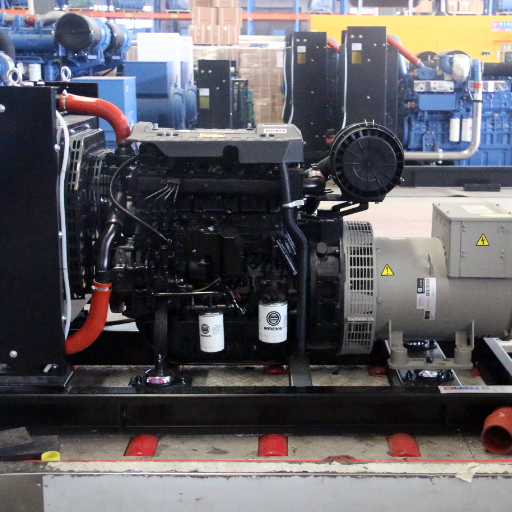
A GTP schedule is a numbered list of parameters that the bidder must complete with real figures for the equipment offered. It isn’t a brochure, and it’s not a summary of one. Every line is a commitment.
The word “guaranteed” carries legal weight here. Standard tender clauses state that all data entered in the schedule are guaranteed values that cannot be departed from during project implementation, and that after award the technical schedules become part of the contract documents. A false entry, whether found during evaluation or during execution, can be treated as fraud or breach of contract.
Three documents travel together in a technical bid, and confusing them causes real problems:
- The datasheet describes the product in general, often at its most favourable rating point and reference conditions.
- The GTP schedule states what this specific unit will do, in the numbers the buyer asked for.
- The compliance statement answers each tender clause with “comply,” “deviate,” or “alternative offered,” with a page reference to supporting evidence.
Both documents sit inside a wider bid package. Our guide to the generator set specification for tender covers how the whole submission fits together and where each document carries the most weight.
Where the GTP and the bill of materials disagree, the GTP generally takes precedence. That precedence rule is why experienced bidders treat the schedule as the most consequential page of the submission, not an administrative afterthought.
The Fields on a Generator GTP Schedule, and Why Each One Is Guaranteed
Every tender’s guaranteed technical particulars format differs, but the parameters cluster into eight groups. Understanding why each group is guaranteed matters more than memorising any one layout.
| Group | Typical fields | Why it is guaranteed |
|---|---|---|
| Set data and rating | Manufacturer, model, country of origin, duty class (ESP, PRP, COP), rated kVA and kW, voltage, current, power factor, frequency, speed | Fixes what “500 kVA” actually means. Without a duty class, the rating is ambiguous |
| Electrical performance | Voltage regulation, frequency regulation, transient dip and recovery time, insulation class, temperature rise, alternator efficiency | Decides whether the set can carry your load, not just start it |
| Engine | Make and model, cylinders, bore and stroke, aspiration, governor type, cooling method, exhaust temperature at rating | Establishes the prime mover behind the rating |
| Fuel | Guaranteed consumption at 50%, 75%, and 100% load, in g/kWh or L/h, plus lube oil consumption | The largest single line in lifecycle cost |
| Noise and emissions | dB(A) at one metre, emissions standard | Permit and site compliance |
| Physical | Dry weight with canopy, dimensions, enclosure type, IP rating | Foundation design, transport, and corrosion life |
| Protection and control | AMF and ATS provision, breaker ratings, safety shutdowns, instrumentation | Defines the boundary of the scope of supply |
| Testing and documentation | Type test reports, factory and site test protocol, warranty and guarantee period | Defines how the guarantee will be proven |
Set Data and Rating Class
The duty class is the field that quietly changes everything else on the form. Emergency standby power permits no overload. Prime power allows a 10% overload for one hour in twelve, with the 24-hour average load factor held at or below 80%. A guaranteed output figure means nothing until you know which of those regimes it was declared under.
This is also where a buyer should look for the performance class. If the application is a data centre or a hospital, ISO 8528-5 class G3 is commonly specified. Our guide to ISO 8528-5 performance classes explains what separates G1 from G4 and when the higher class is worth paying for.
Electrical Performance and Temperature Rise
Voltage regulation and temperature rise are the two electrical fields most likely to be quietly missed at test, because both drift with ambient conditions. A temperature rise guarantee quoted without stating the ambient and the cooling arrangement is unenforceable in practice.
In September 2025, a bid manager named Ravi, working for a generator assembler in Pune, lost a 320 kVA hospital tender without a single technical objection being raised. His engine and alternator were the strongest offered.
His GTP schedule carried the entry “as per IS 1460” against four fuel consumption fields instead of figures. The evaluation committee ruled the schedule incomplete and the bid unresponsive. He lost on paperwork, not on engineering.
Guaranteed Fuel Consumption: How the Number Is Produced and Where It Is Abused
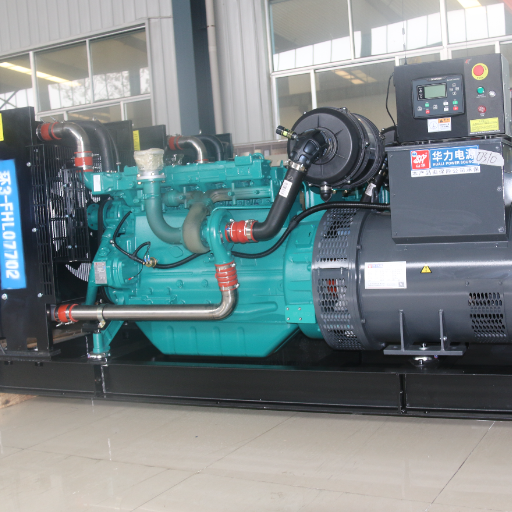
Fuel is where guaranteed technical particulars earn their reputation, because fuel is where the money is. On a prime power set running thousands of hours a year, fuel dominates ownership cost. A 5% consumption advantage can outweigh a 15% price difference within two to three years.
Consumption appears on a GTP schedule in one of two units, and the choice matters:
- g/kWh is specific consumption. It is comparable across machine sizes and is the form most engineers prefer for evaluation.
- L/h is absolute consumption. It’s what the site actually buys and stores, but it’s only comparable between sets of the same rating.
Converting between them requires a fuel density convention. The figure used in the industry is 0.86 kg/l. Quote litres per hour without stating the density you assumed, and you’ve left an argument on the table: at 0.84 kg/l, a 200 g/kWh figure converts to a visibly different flow rate.
The second abuse is the single load point. A manufacturer that publishes one headline consumption figure almost always measured it at the most flattering point. A genuine guarantee states consumption at 50%, 75%, and 100% load, because a set that is efficient at full load and poor at half load is the wrong machine for a site that runs at part load.
Elena Duarte, a procurement engineer in Manila, opened two bids for the same 500 kVA standby package in March 2026. Both quoted “200 g/kWh”. One manufacturer had measured it at 100% load on a fresh engine at reference conditions.
The other had measured it at 75% load on a run-in unit, and declared it as a single figure with no load point stated. The schedules looked identical. The machines were not.
Tolerances: What Counts as Meeting a Guarantee
This is the question both sides ask, and it has two separate answers. Bidders want to know how much deviation is forgiven. Buyers want to know when to reject.
How declared values are tested is governed by IEC 60034-1, the standard for rating and performance of rotating electrical machines. The current edition, IEC 60034-1:2026, was published in March 2026 and replaced the 2022 edition. It sets out the test methods by which declared values are established, which is why a guarantee that names no test method is difficult to enforce.
What conditions a rating applies to is governed by ISO 8528-1, which defines the reference conditions for generating set ratings: 100 kPa barometric pressure, 25 °C ambient temperature, and 30% relative humidity. A guaranteed output quoted outside those conditions isn’t directly comparable to one quoted inside them.
That leads to the clause that silently invalidates more guarantees than any other: derating. Output falls by roughly 4% for every 10 °C above the reference temperature, and about 1% for every 100 m of altitude. A 500 kVA set guaranteed at sea level and 25 °C is not a 500 kVA set on a site at 1,800 m and 45 °C. It is meaningfully smaller.
Our guide to generator derating for altitude and temperature works through that calculation for a specific site.
The practical rule for anyone reviewing guaranteed technical particulars: a guarantee without an ambient temperature, an altitude, and a derating method is not a guarantee. It’s a number waiting to be argued about.
How Guaranteed Values Are Verified: The Test That Settles It
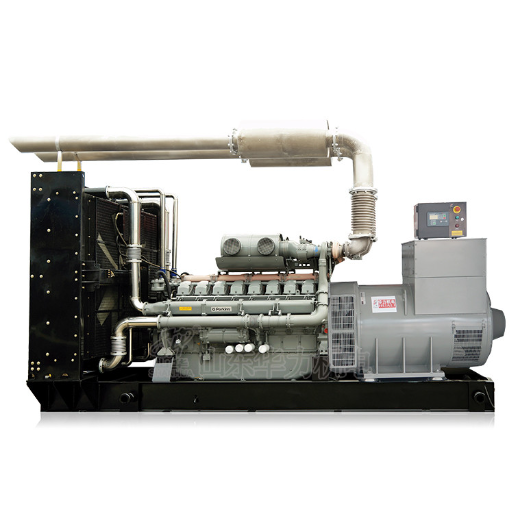
A guarantee is only as good as the test behind it. Four different tests get confused with each other, and only some of them settle a performance guarantee.
- Type tests are performed once on a representative design and establish what the product family can do.
- Routine tests are performed on every unit before it leaves the factory.
- Factory acceptance tests (FAT) are witnessed tests on the specific unit, against the guaranteed values.
- Site acceptance tests (SAT) repeat the critical measurements after installation, where altitude, ambient, fuel quality, and installation losses all apply.
Performance guarantees are settled by the FAT and the SAT, not by the type test. The distinction matters because a type test report attached to a bid proves what the design can do, not what the delivered unit does. If you want a step-by-step view of how these witnessed tests are planned, sequenced, and signed off, our generator acceptance testing procedure guide walks through the FAT and SAT protocols in detail.
The test is run at the guaranteed load points, not at whichever point flatters the machine. It uses calibrated instruments with current certificates, and the correction curves used to adjust results back to reference conditions must be submitted before the test, not after it. A manufacturer that produces correction factors only once the numbers are known hasn’t run a fair test.
The practical tool for this is a resistive load bank, which applies a controlled, measurable load and holds it. If you want to understand what a set looks like when it comes up short under that load, our article on what happens when a generator fails a load bank test walks through it.
What Happens When a Guaranteed Value Is Missed
This is the part that never appears in a brochure, and it follows a fairly consistent ladder across published utility and infrastructure tenders.
- Correction window. The supplier is given a defined period, commonly around two weeks, to identify and correct the defect.
- One retest. Typically a single retest is permitted, and any test made necessary by a failure to meet guarantees is carried at the supplier’s cost.
- Liquidated damages. If the shortfall persists, damages are calculated per unit of shortfall. In published tender documents, a common structure is 0.50% of the unit price for each 0.10% by which the tested value falls below the guaranteed value, pro-rated below that, often with a ceiling around 10% of the unit price.
- Rejection. Beyond a defined threshold, the equipment is refused outright rather than penalised. Published terms include rejection where tested efficiency or output is 2.00% or more below the guaranteed value, and, for diesel sets specifically, where the fuel rate deviates by more than +5% of the guaranteed rate or prime power output falls below guaranteed output.
Those percentages come from real procurement documents rather than from the standards. That distinction is worth holding onto: IEC and ISO define how you measure. The contract defines what a shortfall costs. A bidder who reads only the standard has read half the risk.
Filling In a Guaranteed Technical Particulars Schedule Without Over-Committing
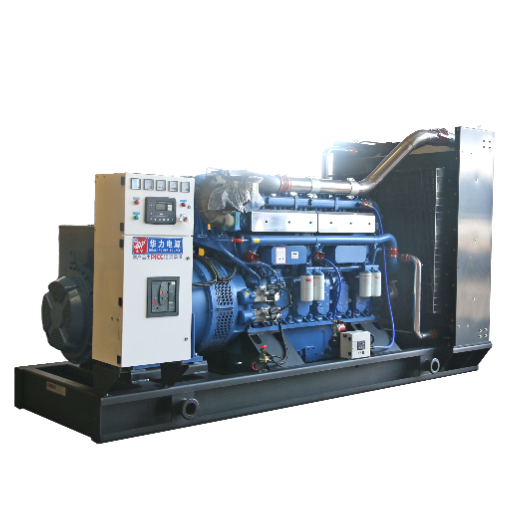
Here is the tension no marketing page admits. A tight guarantee helps win the tender and creates liability on every unit shipped. A loose guarantee protects the factory and loses the bid.
There’s no clever way around that trade-off, but there is an honest way to manage it.
Declare at reference conditions and state the derating method explicitly. A guarantee of 400 kW at 100 kPa, 25 °C, and 30% relative humidity, with the derating curve attached, protects both parties. It’s defensible at test and it doesn’t pretend the site is at sea level.
Attach the evidence. Guaranteed figures are expected to be supported by datasheets, type test reports, and manufacturer documentation submitted with the bid. An unsupported guarantee is one of the most common reasons a technically sound bid is ruled unresponsive. In a guaranteed technical particulars schedule, an unsupported number is treated as a claim rather than a commitment.
Never leave a field blank, and never write “as per IEC” in place of a number. Tender clauses are explicit that an item left unfilled, or answered only with a reference to a standard, makes the GTP incomplete and the tender liable to rejection.
In 2024, a Huali engineer named Wei was asked to guarantee a fuel consumption figure at a load point the engine had never been tested at, for a tender in West Africa where winning mattered. He declined, and proposed a warranted figure at the three load points the factory could actually measure and hold.
The bid was not the lowest on paper. It won on evaluation, because the schedule was complete, supported, and defensible. A guarantee you cannot keep is worse than a modest one you can.
Frequently Asked Questions
What is the difference between a GTP schedule and a datasheet?
A datasheet describes a product family in general terms, often at its most favourable rating point. A GTP schedule states what the specific unit offered will do, at the conditions the buyer specified. The datasheet supports the bid. The GTP becomes the contract.
Can a tender reject a bid for an incomplete GTP?
Yes, and it happens routinely. Standard clauses treat any item left unfilled, or answered with a general reference to a standard instead of a figure, as an incomplete GTP, and such tenders are liable to be rejected. Because a valid schedule is usually a pass or fail gate, a bid can be ruled unresponsive before its technical merits are ever scored. That language appears in utility and government tender documents across Asia, the Gulf, and Africa, which is why the schedule deserves more attention than the price sheet.
What tolerance applies to guaranteed generator fuel consumption?
There’s no single tolerance that applies to all contracts. The measurement method comes from standards such as IEC 60034-1, while the permitted deviation and the consequence of exceeding it are set by the contract. Published diesel set tenders commonly reject where the fuel rate deviates by more than +5% from the guaranteed figure. Read the contract, not just the standard.
Is the GTP binding after the contract is awarded?
Yes. On award, the technical schedules become part of the contract documents, and the values entered cannot be departed from during implementation. That is why the schedule should be completed by the manufacturer or with manufacturer sign-off rather than filled in optimistically by a sales team. For the wider document package and how each piece fits into a complete tender submission, our generator set specification guide is a useful reference alongside our article on how to read a generator specification sheet.
Conclusion: The Page That Turns a Bid Into a Contract
A Guaranteed Technical Particulars schedule is the only part of a generator bid where a manufacturer writes down numbers it can be held to. Everything else is narrative. This is arithmetic, and it is the part that gets tested.
The rules that matter are short. Guarantee fuel consumption at three load points, in a stated unit, at stated reference conditions. State the derating method or the guarantee means nothing.
Support every figure with a datasheet or type test report, and never leave a field blank. Understand that the standards tell you how a value is measured while the contract tells you what a shortfall costs.
Shandong Huali manufactures diesel generator sets from 8 kVA to 4,000 kVA with Cummins, Perkins, Weichai, and Yuchai engine options, built under ISO 9001 and ISO 14001 certified processes. Our engineers complete guaranteed technical particulars schedules for international tenders every week, and we would rather tell you what we cannot guarantee than write a number we cannot hold.
