
N+1 generator redundancy means installing one more generator than the load requires, so that any single unit can fail or be taken offline without interrupting power. The design decision that actually determines whether you get that availability is how you configure and parallel those units, not how many you buy.
Here is where most projects go wrong. A facility specifies N+1, buys the spare generator, draws it on the single-line diagram, and considers redundancy solved. Then commissioning arrives, and the plant cannot start, synchronize, load, and fuel all its units in the sequence the design assumed.
Adding a generator is the easy half. Making the plant able to use it is the engineering half, and it is the part most guides skip.
This guide covers the configuration choices that matter and the failure modes N+1 leaves in place. It also covers the fuel limit that quietly caps your runtime, and how to prove the whole system works before you sign off. If you’re still deciding between one large unit and a paralleled set, start with our comparison of one large generator against a paralleled system. Come back here for the design details.
Not sure which redundancy level your site actually needs? Our engineers will review your critical load and target before you commit to a specification.
Key Takeaways
- N+1 generator redundancy only delivers availability if the plant can start, synchronize, load, and fuel the remaining units within the transfer window. Capacity alone guarantees nothing.
- The most common configurations are 2 x 100% and 3 x 50%. Both are N+1, but they differ sharply in part-load efficiency, footprint, and how much margin you keep during maintenance.
- The paralleling bus and shared control logic are single points of failure that N+1 does not remove. Redundant controllers and bus segregation are what close that gap.
- Fuel autonomy is the real ceiling on redundancy. Adding generators without adding fuel storage leaves your runtime exactly where it was.
- Proving N+1 works means locking one unit out and load bank testing the remainder at full site load. An untested N+1 plant is an assumption, not a design.
N+1 vs N+2 vs 2N: What the Levels Mean for a Generator Plant
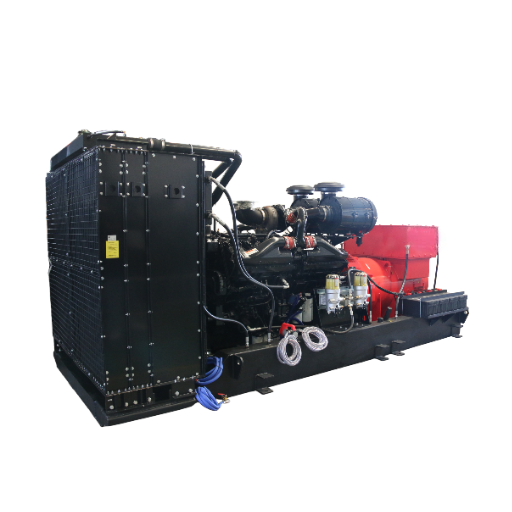
N, N+1, N+2, and 2N describe how much spare capacity you install beyond what the load needs. In a generator plant the notation is borrowed from data center topology, where it was written for UPS systems and power distribution rather than rotating machinery.
| Configuration | Units for a 1,000 kW load | Spare capacity | Can you maintain one unit under load? | Typical use |
|---|---|---|---|---|
| N | 1 x 1,000 kW | None | No | Non-critical, scheduled shutdowns acceptable |
| N+1 | 2 x 1,000 kW | One unit | Yes | Data centers, hospitals, telecom |
| N+2 | 3 x 1,000 kW | Two units | Yes, with margin | High-tier facilities, remote sites |
| 2N | 2 x 1,000 kW in independent systems | Full duplicate plant | Yes, on isolated systems | Tier IV, fault-tolerant designs |
The tier language around these levels is widely used. Tier III is generally associated with N+1 and concurrent maintainability; Tier IV with 2N and fault tolerance. Treat that as a starting point rather than a rule, since tier definitions describe outcomes, not equipment counts.
If you want the base definition of the notation itself, Wikipedia’s entry on N+1 redundancy covers it well. What follows here is the generator-specific engineering that the general definitions leave out.
Why Generator Levels Do Not Map Cleanly onto UPS Levels
Grafting UPS redundancy onto generators misleads, because the two devices fail differently. A UPS holds charge in a battery string, and its transfer is electronic and effectively instant.
A generator is a rotating machine. Before it carries anything it must start, reach rated speed and voltage, synchronize with the bus, close its breaker, accept load, and then run for hours on stored fuel. Those steps take seconds, not milliseconds, and each can fail independently.
So generator availability depends on the transition sequence completing. That is a mechanical and control problem, not a capacity problem.
Evaluating redundancy options for a specific site? Send us your load profile and our engineers will review the configuration against your critical load and fuel requirements.
The Three Ways to Build N+1 Generator Redundancy
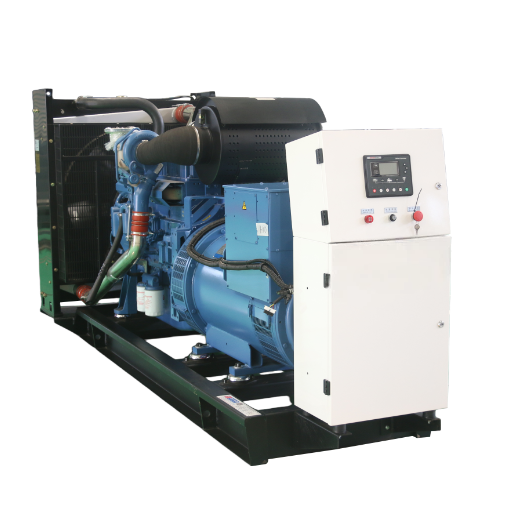
Once you commit to N+1 generator redundancy, you still have to choose how to divide the capacity. For a 1,000 kW critical load, the two practical answers are 2 x 1,000 kW and 3 x 500 kW (or 4 x 333 kW). Both satisfy N+1. They behave very differently.
N+1 of Full-Capacity Units (2 x 100%)
Two units, each sized to carry the entire load alone. One runs, one stands by.
This is the simplest N+1 plant you can build. You need two generators, one paralleling point or transfer arrangement, and half the control complexity of a larger system. Upfront cost and footprint are the lowest of any N+1 option.
The tradeoff appears during maintenance. When you take one unit out of service, the remaining unit runs at 100% with no margin at all. If it faults, you are dark.
You also can’t match capacity to a partial load. For most of the year you run a large engine well below its efficient band.
N+1 of Part-Capacity Units (3 x 50%, 4 x 33%)
Three units, each sized at roughly half the load. Two carry the site, one is spare.
Here the redundancy is finer-grained. During maintenance of one unit, two remain, carrying the load at moderate load factors rather than at their ceiling. Part-load efficiency improves, because the control system can run two units at a comfortable share instead of one oversized engine at low load.
Generators run most efficiently between 60% and 80% load. Sustained operation below roughly 30% risks wet stacking and fuel waste, a failure mode covered in our guide to preventing wet stacking.
The cost is complexity and service burden. Three engines mean three sets of filters, oil changes, batteries, and cooling maintenance. Three units also need more floor area and more paralleling switchgear.
Choosing Between Them
| Factor | 2 x 100% | 3 x 50% |
|---|---|---|
| Upfront cost | Lower | Higher |
| Footprint | Smaller | Larger |
| Part-load efficiency | Poor | Better |
| Margin during maintenance | None | One unit of headroom |
| Service points | Two engines | Three engines |
| Control complexity | Lower | Higher |
A practical rule: for smaller standby plants where the load isn’t life-critical and maintenance can be scheduled into a window, 2 x 100% is often the better value. As the critical load grows and the cost of an outage rises, the finer granularity of 3 x 50% starts to earn its complexity back. That shift tends to happen in the low thousands of kVA, which is the same territory where standby power systems generally start justifying a paralleled architecture.
Paralleling: What Has to Be True Before N+1 Works At All
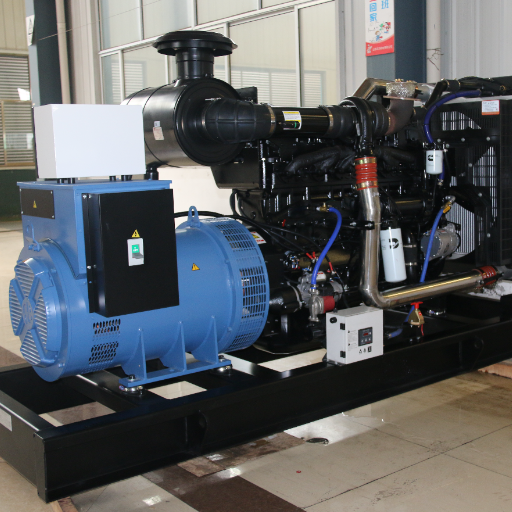
Paralleling is what converts a collection of generators into a plant that can share load. It is also where most N+1 designs carry risks they have not accounted for.
Synchronizing Controllers and Load Sharing
To run in parallel, each generator needs to match the bus voltage, frequency, and phase angle before its breaker closes. Synchronizing controllers handle this, and they also manage how load is divided between running units.
Load sharing has to stay stable as load changes. If two units disagree about their share, one can drift toward overload while the other loafs. The plant then trips on the unit that was actually working hardest. Isochronous and droop control are the two common approaches, and the choice interacts with how your site’s load varies through the day.
This is also the point where controller compatibility becomes a real procurement question. Generators from different manufacturers can be paralleled successfully. But matched governors, automatic voltage regulators, and controllers supplied as a package remove an entire category of commissioning risk. When Shandong Huali supplies a paralleled set, the units ship with matched synchronizing gear for exactly this reason.
The Common Bus Is the Single Point of Failure N+1 Hides
Here is the uncomfortable part. In most N+1 plants, all units feed one bus. That bus, its switchgear, and the shared control logic are not duplicated. If the bus faults, every generator you bought is irrelevant.
The consulting-specifying engineer makes this point directly. In a simple paralleling scheme, the common bus and control cabinet become the reliability weak link. The redundancy you paid for doesn’t protect against them.
Mitigations exist. Segregated bus sections with bus ties reduce the exposure. So do redundant controllers and hardwired backup logic that can run the plant if the primary control layer fails. Each one adds cost, and a design that claims N+1 without addressing the shared bus claims less than it appears.
Breaker Failure and Bus Segregation
A breaker that fails to open or close on command can defeat a redundancy scheme on its own. In a segregated design, the plant can isolate a section rather than lose everything. This is worth raising with your switchgear supplier early, because retrofitting segregation after the switchgear is built is expensive.
Marcus found this out on a municipal water treatment project. His N+1 design used three units on a single bus, and the specification was approved without discussion of the bus itself. Nine months after commissioning, a fault in the paralleling switchgear took the entire plant offline despite two healthy generators sitting ready. The rebuild cost more than the original switchgear, and the outage had nothing to do with how many generators he had bought.
Fuel Autonomy Is the Redundancy Ceiling
This is the question almost no N+1 specification answers, and it is the one that decides whether your redundancy is real.
N+1 generator redundancy gives you redundant capacity. It does not give you redundant runtime. Runtime is set by how much fuel you can store and how quickly you can replenish it. Those numbers do not change when you add a generator.
A Worked Example
Take a site with 1,000 kW of critical load, N+1 configured as 2 x 1,000 kW, and a 2,000-liter fuel tank.
A diesel generator consumes roughly 0.2 liters of fuel per kWh produced at full load, so the running unit burns approximately 200 liters per hour. At that rate, a 2,000-liter tank gives you about 10 hours of runtime.
Now add the second generator. Your redundancy has increased. Your runtime has not. It is still about 10 hours, because only one unit carries the load at a time and fuel comes from the same tank.
Sites that need 24 hours of autonomy need a tank roughly 2.4 times larger, or a refueling arrangement with a contractually guaranteed delivery window. Both are legitimate answers. Assuming that N+1 doubles your runtime is not.
Fuel Storage, Day Tanks, and Polishing
Diesel degrades. Stored fuel absorbs water, develops microbial growth, and loses combustibility over time. A tank that has held the same fuel for two years may not deliver the runtime its nameplate volume promises.
Fuel polishing keeps stored diesel within specification. Day tanks isolate the immediate supply to the engines from the bulk storage.
NFPA 110 ties this together by classifying generator systems according to how many hours they must carry the load without refueling. A Class 48 system, for example, must run 48 hours before resupply. If your specification doesn’t state a class, your fuel autonomy is undefined, and the N+1 redundancy you calculated is undefined with it.
Our diesel generator fuel consumption guide covers the burn-rate calculations in more detail.
Sequence of Operation: The First 10 Seconds After a Utility Loss
When utility power fails, an N+1 generator plant runs through a fixed sequence. Understanding it is how you find the weak links in a design.
- Start signal. The transfer switch or plant controller signals all available generators to start.
- Crank and accelerate. Each unit cranks and reaches rated speed and voltage. This takes roughly 10 seconds for most diesel sets.
- Synchronize. Controllers match voltage, frequency, and phase across units before any breaker closes.
- Close to bus. The first unit closes and establishes the bus. Remaining units close as they synchronize.
- Share load. The controller distributes load across running units according to the sharing scheme.
- Transfer. The transfer switch moves the critical load to the generator bus.
- Settle and monitor. Frequency and voltage stabilize, and the plant runs under continuous supervision.
Two things commonly break this sequence in practice. The first is that a unit starts but fails to synchronize, usually because of a controller setting or a wiring issue, leaving the plant with less capacity than the design assumed. The second is that the start signal reaches the units, but the transfer does not complete inside the window the critical load can tolerate. That’s a coordination problem between transfer switch timing and generator start time, not a generator problem at all.
This is why an N+1 generator redundancy design should be tested against the sequence, not commissioned by starting each generator individually and declaring success.
How to Prove N+1 Generator Redundancy Works
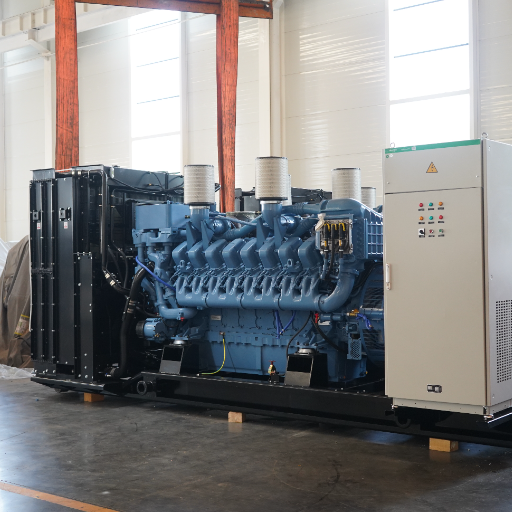
N+1 generator redundancy that has never been tested is a design assumption. Demonstrating that it works takes deliberate testing beyond a routine start.
- Lock one unit out. Take a generator fully out of service, not just stopped. The redundancy claim is about a unit being unavailable, so the test has to reproduce that.
- Load bank the remainder to full site load. Prove the surviving units carry 100% of the critical load, not a token percentage.
- Verify load sharing under that load. Confirm the running units divide load as designed and none drifts toward overload.
- Interrupt the plant’s primary control layer. If the design claims redundant or backup control, prove the plant runs on the backup.
- Test fuel autonomy at realistic load. Run long enough to confirm the tank truly delivers the hours you specified, then confirm the refueling plan works.
- Repeat for each unit. Every generator is the spare at some point, so every unit needs to be the one locked out.
Steps 1 through 3 are the ones that matter most and the ones most often skipped, because they require load bank equipment and a scheduled outage window. Our guide to load bank testing diesel generators covers the equipment and procedure, and the acceptance testing procedure covers how to build this into a factory and site test plan.
Priya learned why this matters on a colocation fit-out. The plant passed its commissioning with each generator started individually and verified as good. Eight months later, during the first real outage, two units came online and the third failed to close.
The site survived on the two that worked, and purely by luck the load was below their combined capacity. The fault was a synchronizing setting that individual start tests could never have caught. An afternoon with the right test would have found it.
N+1 Generators for Data Centers
Data centers are where N+1 generator redundancy is most often specified, and where the assumptions are likely to be tested by reality.
The load profile differs from other facilities in ways that matter. IT load is dense, sensitive to power quality, and often bridged by UPS systems during the generator start window. The generator plant therefore gets a few seconds of grace before load transfers. That relaxes the start-time requirement, but not the capacity or fuel requirement.
Data center redundancy also increasingly runs on published reliability targets. Single-generator accepted reliability is commonly cited in the range of 98% to 99%, while an N+1 paralleled configuration reaches roughly 99.96% to 99.99%, with N+2 pushing toward 99.999% or higher. Those figures come from Kohler’s paralleling whitepaper and are worth reading in context, since they originate with a manufacturer rather than an independent standards body.
Containerized and Modular N+1 Packages
Modular approaches suit data centers because capacity can be added as tenants sign on instead of being overbuilt on day one. Containerized generator sets arrive with the engine, alternator, controls, and often the paralleling gear in a single enclosure. That shortens site installation and moves integration work into the factory, where it’s easier to test.
For a facility built around containerized N+1 capacity, our data center power solutions cover the configurations we supply, and our standby generator range covers the unit-level specifications.
Frequently Asked Questions
How many generators do I need for N+1?
N+1 means one more unit than the load requires. If one generator can carry the full load, you need two. If two are needed to carry it, you need three. The count depends on how you divide capacity, not on the load size alone.
Is N+1 better than 2N for generators?
N+1 is sufficient for most critical facilities including data centers and hospitals. 2N duplicates the entire plant on independent systems and suits fault-tolerant designs where no shared component is acceptable. 2N costs substantially more and needs roughly double the footprint.
Can N+1 generators share a single fuel tank?
Yes, and most do. The consequence is that adding generators does not extend runtime, because fuel capacity sets the limit regardless of how many units are installed. If your specification calls for a defined autonomy period, size the tank for that period rather than assuming redundancy covers it.
What is the difference between N+1 generator redundancy and UPS N+1?
A UPS is a static device with a battery string, so its transfer is electronic and effectively instant. A generator is a rotating machine that must start, synchronize, and accept load over several seconds, and it runs on stored fuel. Generator redundancy therefore depends on the start and synchronization sequence completing, not only on installed capacity.
How often should an N+1 generator plant be tested?
Monthly no-load running confirms each unit starts. Proving redundancy requires periodic testing that locks one unit out and load banks the remainder at full site load, typically annually and after any change to the paralleling control system.
Want to see how redundancy interacts with duty rating? Our guide to prime vs standby generator rating explains which rating applies to your configuration.
Conclusion
N+1 generator redundancy is a design problem, not a purchase. The spare unit is the visible part, and it is the part that rarely fails to arrive. What determines whether you actually get availability is everything around it.
Here is what to carry into your next specification:
- Configure the plant, not just the count. Choosing between 2 x 100% and 3 x 50% changes your maintenance margin, part-load efficiency, and service burden.
- Address the common bus. The paralleling bus and shared control logic are single points of failure that N+1 does not remove. Redundant controllers and bus segregation are the fix.
- Size fuel for autonomous hours, not for capacity. N+1 does not extend runtime. Only storage or guaranteed resupply does.
- State an NFPA 110 class. Without a defined autonomy requirement, your fuel autonomy is undefined and so is your redundancy.
- Test with a unit locked out. This is the only test that demonstrates redundancy rather than assuming it.
Shandong Huali Electromechanical Co., Ltd. manufactures diesel generator sets from 8 kVA to 4,000 kVA with paralleling capability, matched synchronizing controllers, and full OEM/ODM customization, including containerized packages for data center projects.
Send us your load profile and redundancy target. We will review the configuration against the fuel and bus questions that decide whether it holds up.
