
A generator spare parts inventory is the controlled stock of replacement components you keep on hand to keep diesel generator sets available, maintainable, and compliant with their service schedules. It is not just a parts list; it is a set of policies that decides what to stock, how much to hold, when to reorder, and how to track consumption.
Most generator failures resulting in days—rather than hours—of downtime do not stem from rare or complex technical issues but from minor oversights: a missing sensor, an out-of-stock automatic voltage regulator (AVR), or a failure to reorder fuel filters. A maintenance manager at a Zambian copper mine once told us that the operation suffered a full three days of downtime simply because a starter solenoid worth $47 was missing from inventory. Although the part arrived via air freight within 48 hours, the financial loss caused by the shutdown exceeded the mine’s entire annual budget for spare parts.
This guide gives you a complete system for managing generator spare parts inventory. You will learn which parts to classify as critical, how to set min/max levels and reorder points, how to track stock, and how to adapt the policy for standby, prime, and remote-site duties.
Key Takeaways
- A generator spare parts inventory prevents short, expensive downtime by controlling the parts most likely to fail or wear.
- Critical spares fall into engine, fuel, cooling, lubrication, air/exhaust, and electrical systems; filters alone can make up 60-70% of routine consumption.
- ABC analysis separates critical long-lead items (A), operational fast-movers (B), and cheap consumables (C) so you do not over-manage low-value stock.
- Reorder Point = (Average Demand × Lead Time) + Safety Stock; safety stock should rise with downtime cost and supplier lead-time uncertainty.
- Match the inventory policy to the duty cycle: standby sites need control spares, prime-power sites need overhaul kits, and remote sites need longer safety stock.
What Is a Generator Spare Parts Inventory?
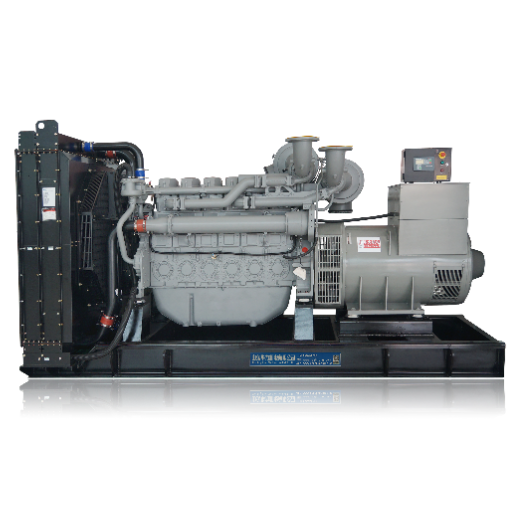
A generator spare parts inventory is the organized stock of components, consumables, and sub-assemblies kept specifically to support the operation, maintenance, and repair of one or more generator sets. It turns a passive “we might need this someday” parts list into an active inventory policy with classification, minimum and maximum levels, reorder triggers, and tracking records.
The difference matters. A parts list tells you what exists. An inventory tells you what to buy, when to buy it, and how much to keep. It also links directly to the preventive maintenance schedule, because most generator parts are not consumed randomly; they are consumed on predictable intervals based on running hours, calendar time, or condition monitoring.
For a single standby unit at a small facility, the inventory may fit on one shelf: a set of filters, a spare AVR, a fan belt, and a couple of sensors. For a fleet of prime-power units at a remote mine, the inventory can fill a storeroom and include engine overhaul kits, turbochargers, and alternator rotors. The principles are the same; only the scale changes.
Why Spare Parts Inventory Matters for Generator Reliability
Generator reliability is not only about the quality of the engine and alternator. It is also about whether the right part is available at the right time. Diesel generator maintenance schedules assume that filters, belts, gaskets, and sensors will be replaced on time. If the part is missing, the schedule slips, and small problems become large ones.
The cost imbalance is extreme. Carrying a 120startersolenoidontheshelfmightcost120startersolenoidontheshelfmightcost20 per year in capital and storage. A single failed start at a hospital or data center can cost thousands of dollars per minute. At a mine or offshore platform, the cost can run into six figures per day. That is why the decision is not “should we stock parts?” but “which parts, and how many?”
Industrial inventory benchmarks put the annual carrying cost of stocked parts at roughly 20-30% of inventory value. That includes capital, storage space, insurance, and obsolescence. Against that, the stockout cost of a critical failure often dwarfs the carrying cost. The goal of a good inventory policy is to hold enough of the right parts without turning the storeroom into a museum of obsolete components.
Critical Generator Spare Parts List by System
The first step in building a generator spare parts inventory is to know what belongs on the shelf. The table below groups parts by system and suggests a starting stocking class based on typical lead time and downtime impact.
| System | Typical Parts | Typical Lead Time | Suggested Class |
|---|---|---|---|
| Engine | Pistons, rings, liners, bearings, gasket kits, cylinder head | 4-16 weeks | A/B |
| Fuel system | Injectors, injection pump, fuel filters, fuel lines, lift pump | 1-8 weeks | A/B |
| Cooling system | Water pump, thermostat, radiator, hoses, fan belt | 1-6 weeks | B |
| Lubrication system | Oil pump, oil cooler, oil pressure sensor, oil filter | 1-4 weeks | B/C |
| Air/exhaust system | Air filter, turbocharger, exhaust manifold, muffler | 1-8 weeks | B |
| Electrical system | AVR, starter motor, alternator, battery, sensors, controller | 2-8 weeks | A/B |
| Consumables | Air filter, oil filter, fuel filter, oil, belts, seals | 1-4 weeks | C (bulk) |
Filters are the highest-volume items. Depending on the site, air, oil, and fuel filters can account for 60-70% of routine generator spare parts consumption by volume. They are cheap, short-lead, and predictable, so they are usually Class C items bought in bulk or on a vendor-managed agreement.
Electrical and control components sit at the other end of the scale. An AVR, a starter, or a controller module can fail with little warning and stop the set immediately. These are Class A or B items: keep at least one spare, store it in a clean, dry location, and track its condition. For more detail on keeping the electrical side reliable, see our generator battery maintenance guide.
How to Classify Generator Spare Parts: ABC Analysis

ABC analysis is a way to separate the parts that deserve tight control from the parts that can be managed more loosely. It is based on the Pareto principle: roughly 10-20% of SKUs usually drive 70-80% of inventory value or risk.
| Class | Share of SKUs | Share of Value/Risk | Control Level | Examples |
|---|---|---|---|---|
| A | ~10-20% | ~70-80% | Tight control; monthly review; one spare minimum; dual-source if possible | AVR, starter, alternator rotor, engine controller, critical casting |
| B | ~30% | ~15-25% | Standard min/max; quarterly review; single preferred supplier | Water pump, injectors, turbocharger, thermostat |
| C | ~50-60% | ~5% | Bulk or vendor-managed; semi-annual review; simple reorder | Filters, belts, seals, gaskets, oil, coolant |
Class A decisions should be made with the maintenance manager and the site operations manager in the room. These are the parts whose absence stops the site. Class C decisions can often be automated through a standing purchase order with a local supplier.
Some teams add XYZ analysis on top of ABC to account for demand variability. X items have stable demand, Y items fluctuate, and Z items are intermittent. A part that is Class A and Class Z, such as a turbocharger that fails unpredictably, needs the highest safety stock because both the impact and the demand uncertainty are high.
Setting Min/Max Levels and Reorder Points
Once parts are classified, you need numbers: minimum stock, maximum stock, and reorder point. The basic formula for the reorder point is:
Reorder Point = (Average Demand × Lead Time) + Safety Stock
For example, suppose you operate 10 standby generator sets and each uses one air filter every six months during routine service. Average demand is roughly 1.7 filters per month. If the supplier lead time is four weeks and you want a safety stock of two filters, the reorder point is:
(1.7 × 1) + 2 = 3.7 → round up to 4 filters
When on-hand stock drops to four, you place an order. The maximum level might be set at a three-month supply, or roughly eight filters, to avoid overstocking.
| Part | Monthly Demand | Lead Time (months) | Safety Stock | Reorder Point | Max Level |
|---|---|---|---|---|---|
| Air filter | 1.7 | 1 | 2 | 4 | 8 |
| Oil filter | 1.7 | 1 | 2 | 4 | 8 |
| Fuel filter | 1.7 | 1 | 2 | 4 | 8 |
| AVR | 0.05 | 2 | 1 | 1 | 2 |
| Starter solenoid | 0.08 | 1 | 1 | 1 | 2 |
Safety stock is not a guess. It should rise when three things are true: the part is critical, the supplier lead time is long or unreliable, and the cost of a stockout is high. For a remote mining site, a one-month safety stock for AVRs may be sensible. For a city hospital with next-day parts delivery, the same part may need no safety stock at all.
Tracking Tools: Spreadsheet vs. CMMS vs. ERP
Small fleets can manage a generator spare parts inventory with a well-structured spreadsheet. The minimum fields are part number, description, system, supplier, unit cost, location, on-hand quantity, minimum level, maximum level, reorder point, last issue date, and last receipt date. A shared spreadsheet with a simple traffic-light rule, red below minimum and yellow at reorder point, is often enough for five to ten units.
Larger fleets should move to a CMMS or EAM module. Tools such as UpKeep and similar platforms add barcode or QR scanning, automatic reorder alerts, work-order integration, and multi-site visibility. The extra value is not the database; it is the link between the diesel generator maintenance schedule and the parts room. When a 500-hour service is due, the system can reserve the required filters and gaskets before the technician arrives.
ERP systems add procurement, accounting, and supplier management into the same workflow. They make sense when generator maintenance is part of a larger plant maintenance program and when purchase orders must flow through a centralized procurement team.
No matter which tool you use, data cleanliness is critical. A part recorded under three different descriptions will be ordered twice or not at all. Standardize descriptions, units of measure, and storage locations before you scale up.
Inventory Policies for Different Generator Duties
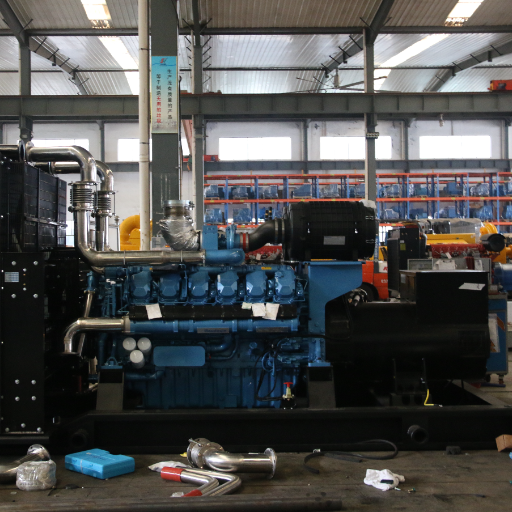
The right generator spare parts inventory depends on how the generator is used. A standby hospital unit and a prime-power mine unit have very different failure modes and consumption patterns.
Standby and Emergency Duty
Standby units run rarely but must start reliably. The inventory should emphasize electrical and control components: AVR, starter, battery, charger, sensors, and controller modules. Consumables are still needed, but the volumes are low. Follow the NFPA 110 generator maintenance requirements for testing intervals and stock the parts needed for those tests.
Sharing strategic spares works well here. A regional hospital group we support runs two 500kVA standby sets at each of four sites. Instead of stocking a starter and AVR at every location, the facilities manager, Grace, keeps one shared starter and one shared AVR in climate-controlled storage at the central depot, a 90-minute drive from the furthest site. That pooling policy cut the group’s spare parts spend by about 40% without adding measurable risk, because genuine start failures are rare and the shared spares can reach any site the same day.
Prime and Continuous Duty
Prime-power units accumulate running hours quickly. Filters, oil, belts, coolant hoses, and turbochargers become fast-movers. Engine overhaul kits, gasket sets, and cylinder components move into Class A or B because they will be needed on a predictable hour-based schedule. Sites running prime power should also watch for generator wet stacking prevention, since light loading accelerates carbon buildup and increases parts consumption.
Remote, Mining, and Telecom Sites
Remote sites cannot rely on next-day delivery. Safety stock for critical items should cover the longest realistic lead time plus a buffer for customs, weather, or courier delays. Multi-site fleets can share strategic spares across locations: one spare alternator rotor or one spare controller can cover several units if logistics allow rapid transport. For guidance on sizing the generator itself for these conditions, see how to choose diesel generator size.
Chinese Engine Platforms
Weichai, Yuchai, and Shangchai engines share many common parts with Cummins and Perkins platforms, but part numbers and specifications differ. A good inventory system stores the OEM part number, the engine manufacturer’s part number, and any cross-reference to aftermarket equivalents. This avoids ordering the wrong injector, gasket set, or controller for the engine in front of you.
Common Mistakes That Waste Money
Even well-run maintenance teams make predictable inventory errors. Avoid these five:
- Treating all parts as equally critical. Not every part needs a safety stock. Class C consumables should be managed with simple min/max rules or vendor-managed inventory.
- Stocking parts for obsolete gensets. When a generator is retired, the parts that fit only that model should be liquidated or scrapped. They tie up capital and storage space. A telecom operator learned this the hard way: their procurement team bought a three-year supply of a specific fuel filter for 60 tower sites, then the generator supplier changed the engine model mid-contract. Roughly half the stock, worth about $8,000, fit nothing in the fleet. A six-month BOM and part-number review would have caught the change before the bulk order was placed.
- Ignoring supplier lead-time drift. A supplier that once delivered in two weeks may now take six. Recalculate reorder points when lead times change.
- Decoupling inventory from the PM schedule. If the maintenance calendar says six sets need oil filters next month, the parts room should know that before the first work order is printed.
- Skipping cycle counts. A small inventory with accurate records is more useful than a large inventory that nobody trusts. Count Class A items monthly, Class B quarterly, and Class C twice a year.
For troubleshooting the failures that drive parts consumption, our diesel generator troubleshooting guide covers the most common root causes.
How Often Should You Review the Inventory?
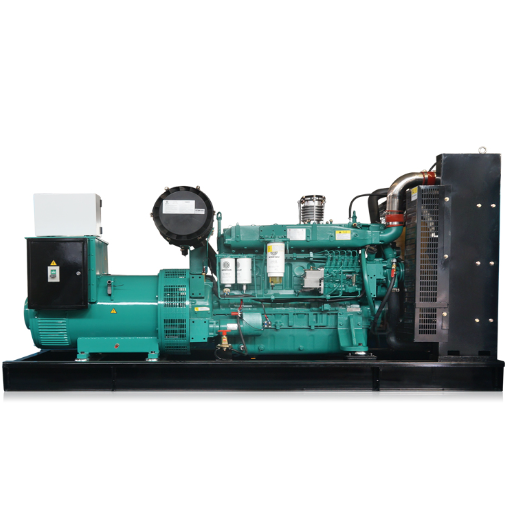
A generator spare parts inventory is not a one-time exercise. Set these review cadences:
- Monthly: Class A items, cycle counts, open purchase orders, and any part whose consumption spiked unexpectedly.
- Quarterly: Class B items, supplier lead-time review, and obsolete-stock check.
- Annually: Full ABC reclassification, budget review, and alignment with the next year’s preventive maintenance plan.
Every review should ask two questions: did we run out of anything we should have had, and did we hold anything we did not need? The answers adjust the next cycle’s min/max levels and safety stock.
Frequently Asked Questions
What are the most critical spare parts for a diesel generator?
The most critical items are the ones whose failure stops the set and takes weeks to replace: AVR, starter motor, engine controller, alternator rotor or exciter, fuel injection pump, and major engine castings. For standby units, add the battery and charger. These should be Class A spares with tight control.
What spare parts should I keep for a standby generator?
Focus on starting and control reliability: battery, battery charger, starter motor, AVR, controller module, and key sensors, plus a basic set of filters and belts for scheduled service. Standby units fail to start far more often than they fail while running, so electrical and control spares deliver the most protection per dollar.
How do I decide what spare parts to keep in stock?
Use ABC analysis. Class A parts are critical, long-lead, and high downtime cost. Class B parts are operationally important with moderate usage. Class C parts are cheap consumables such as filters, belts, and seals. Combine this with the duty cycle: standby sites stock more electrical spares, prime-power sites stock more engine overhaul materials.
What is ABC analysis in spare parts inventory?
ABC analysis ranks parts by criticality and value so you don’t manage a 5gasketwiththesameeffortasa5gasketwiththesameeffortasa2,000 controller. Class A items, roughly 10-20% of SKUs, are critical long-lead parts that get monthly review and a minimum of one spare. Class B items are important fast-movers managed with standard min/max rules. Class C items are cheap consumables managed in bulk or through vendor-managed agreements.
What is a good reorder point formula for generator parts?
Reorder Point = (Average Demand × Lead Time) + Safety Stock. Average demand comes from your maintenance history. Lead time comes from the supplier. Safety stock rises for critical parts, long lead times, and high stockout costs.
How much should I budget for a generator spare parts inventory?
Plan for two figures: the purchase value of the stock itself and the annual carrying cost, which typically runs 20-30% of that value for capital, storage, insurance, and obsolescence. A small standby fleet might hold 2,000−5,000inparts;aprime−powerminingfleetcanjustify2,000−5,000inparts;aprime−powerminingfleetcanjustify50,000 or more. Weigh any figure against your site’s downtime cost per hour before deciding it is too expensive.
Should I buy OEM or aftermarket generator spare parts?
OEM parts guarantee fit, performance, and warranty support. Aftermarket parts can reduce cost, but only if they meet the same specifications and come from a supplier with traceable quality. For Class A electrical and fuel-system components, OEM is usually the safer choice. For Class C consumables, a certified aftermarket source is often acceptable.
How often should generator spare parts be checked?
Count Class A items monthly, Class B items quarterly, and Class C items once or twice a year. Review min/max levels and supplier lead times every quarter, and re-run the full ABC classification annually alongside next year’s preventive maintenance plan.
How does spare parts inventory link to preventive maintenance?
The preventive maintenance schedule drives parts demand. When you know that ten generators need oil and filters every 250 hours, you can pre-position those parts. Linking the schedule to the inventory prevents technicians from discovering missing parts after they have already started the job.
Where can I buy generator spare parts for Weichai, Yuchai, or Cummins engines?
Buy through the engine OEM’s dealer network or through a generator manufacturer with part-number cross-referencing capability. Huali stocks and sources genuine and certified aftermarket parts for Weichai, Yuchai, Shangchai, Cummins, Perkins, and Stamford platforms, with part-number verification before shipping. Always provide the engine serial number when ordering to avoid receiving a part that almost fits.
Conclusion
A well-managed generator spare parts inventory is one of the cheapest insurance policies against generator downtime. The parts themselves are rarely expensive. The downtime they prevent almost always is.
The system comes down to four disciplines:
- Classify your parts with ABC analysis so critical long-lead items get tight control and cheap consumables don’t absorb management time.
- Set levels with real numbers: min/max thresholds and reorder points calculated from actual demand and supplier lead times, not guesswork.
- Track consumption honestly, whether that means a disciplined spreadsheet for five units or a CMMS linked to your maintenance calendar for fifty.
- Review on a fixed cadence: monthly counts for Class A, quarterly lead-time checks, and an annual reclassification tied to next year’s maintenance plan.
Above all, match the stocking strategy to the duty cycle. Standby units need reliable control spares, prime-power units need fast-moving engine parts, and remote sites need deeper safety stock that survives the longest realistic supply delay. Get those alignments right, and the parts room stops being a cost center and starts being what it should be: a reliability tool.
At Shandong Huali Electromechanical Co., Ltd., we manufacture and support Huali diesel generator sets from 8kVA to 4000kVA and supply genuine and certified aftermarket spare parts for Cummins, Perkins, Weichai, Yuchai, Shangchai, and Stamford platforms. Our warranty and after-sales support team can help you build a parts inventory, cross-reference part numbers, and set reorder points that fit your actual operating conditions.
Ready to build your generator spare parts inventory plan? Send us your fleet list, running hours, and site locations, and our engineers will recommend a minimum stock list with reorder points. Contact the Huali parts team today → For the broader maintenance framework, see our complete diesel generator maintenance checklist.
