
Generator room fire safety requirements center on fire-rated construction: 2-hour-rated walls, floors, and ceilings for Level 1 emergency systems under NFPA 110, or 1-hour ratings for standard engine rooms under NFPA 37. Beyond the rating, compliant rooms need fail-open ventilation, fuel shutoff protection, defined clearances, and usually a dedicated fire suppression system.
Here is why these rules exist. A diesel fuel line under pressure can develop a pinhole leak that sprays atomized fuel onto a turbo housing running near 500°C. Whether that moment becomes a service call or a building fire depends on design choices made years earlier.
If you design, build, or manage generator installations, you already know the requirements live scattered across half a dozen codes. This guide pulls them into one place. We cover the fire risks, the governing codes, room construction, ventilation, suppression selection, and fuel safety, in the order a project actually meets them.
At Shandong Huali Electromechanical, we have designed generator installations for hospitals, data centers, and government projects in more than 20 countries over 25 years. Fire-safe room design is part of every system we deliver.
Key Takeaways
- Level 1 emergency generator rooms require 2-hour fire-resistance-rated construction (NFPA 110); standard engine rooms require 1 hour (NFPA 37).
- Fire dampers are prohibited in generator ventilation; louvers and dampers must fail open, and ventilation must be powered by the emergency system.
- Indoor fuel tanks are limited to 660 gallons unless installed in a dedicated fire-rated room, and thermal fuel shutoffs (fusible links at 70-100°C) are standard practice.
- Clean agent suppression (FM-200, Novec 1230) is generally preferred over sprinklers for enclosed generator rooms, with detection interlocked to dampers, fans, and fuel shutoff.
- Clearances are code, not convenience: 5 ft from openings outdoors, 3 ft access indoors, 36 inches between multiple units.
Why Generator Rooms Catch Fire
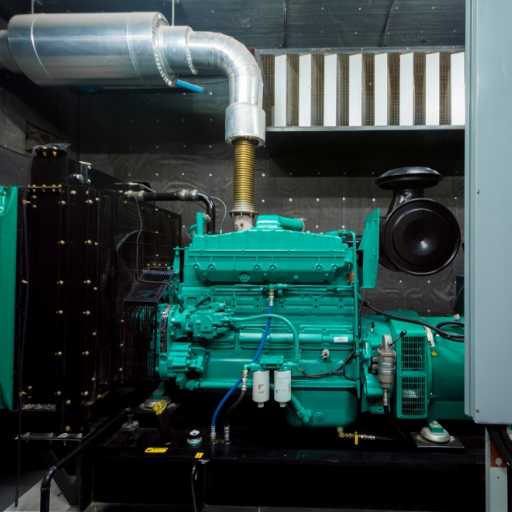
Every requirement in this guide traces back to a handful of failure modes. Understand them, and the codes stop feeling arbitrary.
- Fuel spray and leakage. Diesel under injection pressure can atomize through a pinhole leak in a line or fitting. The spray ignites on hot surfaces like exhaust manifolds and turbo housings, which run near 500°C.
- Oil mist and leaks. Crankcase breather vapor and lube oil leaks can ignite near exhaust components at roughly 200°C.
- Electrical faults. Short circuits, arcing battery cables, and faulty wiring provide their own ignition energy.
- Unburned fuel in the exhaust. Failed injectors or incorrect timing can push raw fuel into hot exhaust, causing backfires and exhaust fires, often during load bank testing.
- Aging components. Brittle hoses, corroded fittings, and clogged filters turn small weaknesses into leaks. Most generator fires are maintenance failures before they are design failures.
The pattern matters: fuel plus hot surface is the classic combination. Good room design keeps the two apart, detects trouble early, and cuts fuel before suppression is ever needed.
Fire is one of several hazards a generator installation has to manage, so if you want the wider view, our guide to generator safety tips covers the electrical, fuel, and exhaust risks that sit alongside the fire rules in this article.
The Codes That Govern Generator Room Fire Safety
No single document covers generator room fire safety requirements. The framework stacks like this:
| Code | What It Governs | Key Requirement |
|---|---|---|
| NFPA 110 | Emergency and standby power systems | 2-hour room rating for Level 1 systems |
| NFPA 37 | Stationary combustion engines | 1-hour room rating; clearances; exhaust placement |
| NFPA 30 | Flammable and combustible liquids | Fuel tank limits and containment |
| NFPA 13 / 15 | Sprinkler and water-spray systems | Water-based suppression design |
| NFPA 2001 | Clean agent suppression | Agent concentration, hold time, room integrity |
| NFPA 20 | Fire pump installations | When the generator drives a fire pump |
| NEC Articles 700/702 | Emergency and standby wiring | Electrical installation of the system |
Your authority having jurisdiction (AHJ) decides how these apply locally. Treat the AHJ as a design partner and involve them early, especially on suppression choices.
NFPA 110: Emergency and Standby Power
NFPA 110 applies where lives depend on the generator: hospitals, emergency lighting, fire alarm systems. Section 7.2.1.1 requires Level 1 generator rooms to have 2-hour fire-resistance-rated walls, floors, and ceilings. The standard also demands that the room serve only the emergency system, that ventilation come from outside through rated ductwork, and that alarms report to a remote annunciator.
NFPA 37: Stationary Combustion Engines
NFPA 37 is the baseline for all stationary engine installations. It sets the 1-hour room rating for standard engine rooms, outdoor clearances of 5 feet from building openings and combustible walls, and exhaust outlets at least 10 feet from openings and air intakes.
Generator Room Construction and Fire Rating Requirements
Fire-Resistance Ratings
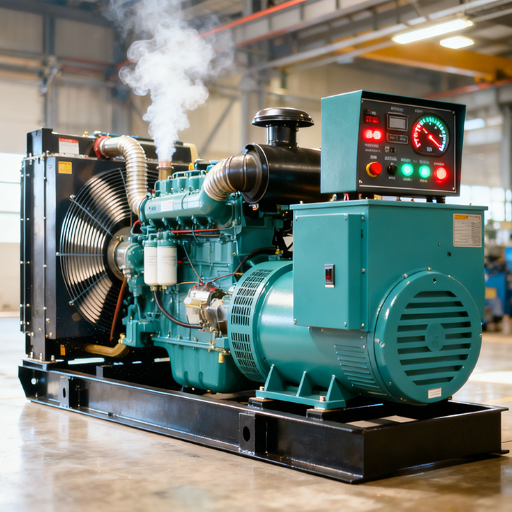
What fire rating does a generator room need? For Level 1 emergency power systems, NFPA 110 requires 2-hour fire-resistance-rated walls, floors, and ceilings. For standard stationary engine installations, NFPA 37 requires a 1-hour rated enclosure. Doors, penetrations, and ductwork must carry ratings consistent with the barrier they pass through.
A rating is only as good as its weakest penetration. Cable trays, pipe sleeves, and door undercuts all need listed firestopping. Inspections fail on these details more often than on the walls themselves.
Clearances and Separation
Clearances keep heat, flame, and people apart:
- Outdoor units: at least 5 feet from building openings, combustible walls, and overhangs (NFPA 37)
- Indoor access: at least 3 feet at the front and sides for safe operation and maintenance (NFPA 110)
- Multiple units: at least 36 inches between generator sets
A data center expansion in 2024 learned the third rule the hard way. The project added a second generator to an existing room to hit N+1 redundancy. During plan review, the AHJ measured 22 inches between the sets, short of the 36-inch minimum. Moving one unit meant new foundations, new cable runs, and a six-week delay that dwarfed the cost of laying the room out correctly on day one.
What May (and May Not) Be in the Room
A generator room is not a storage room. Codes restrict the space to equipment serving the generator system itself. Paint, packaging, spare filters in cardboard boxes, and cleaning supplies all add fuel load to a room engineered as a fire barrier.
The most dangerous item in many generator rooms is not the generator. It is the storage. A 2-hour-rated room loses its purpose the day it becomes a warehouse.
Generator Room Ventilation and Exhaust Requirements
Generator room ventilation requirements serve two masters: the engine needs combustion and cooling air, and the fire strategy needs the room to behave predictably. The rules resolve the conflict firmly in favor of reliability.
Key requirements:
- Air from outside. Ventilation air must come directly from outdoors, through ductwork rated to match the room (2 hours for Level 1).
- No fire dampers. Standard fire dampers are prohibited in generator ventilation paths. Motor-operated louvers must fail open, spring-driven to open on power loss. A closed damper overheats the room and kills the generator exactly when the building needs it most.
- Powered by the emergency system. Ventilation fans must run on generator power, not utility power.
- Exhaust placement. Outlets must sit at least 10 feet from doors, windows, and air intakes (NFPA 37).
- Temperature control. Level 1 outdoor enclosures must stay at or above 40°F, and rooms need high-temperature alarms reported to the annunciator.
Exhaust placement is a discipline of its own, and getting stack routing, termination height, and clearances right keeps combustion gases from re-entering the building. Our dedicated guide to generator exhaust safety walks through the outlet placement rules in more depth than the 10-foot minimum alone.
That placement matters because the exhaust carries carbon monoxide, and an enclosed room or nearby air intake can turn a routine run into a poisoning risk. If your installation involves tight spaces or occupied areas close by, read our guide to generator carbon monoxide safety alongside these ventilation rules.
A hospital facilities team once disabled a ventilation-failure alarm after repeated nuisance trips during a humid summer. Months later, a louver actuator failed closed during a nighttime outage. The room overheated, the generator derated and tripped, and the wing ran on battery-backed lighting for 40 minutes. The alarm everyone muted was the first link in the fire safety chain.
Generator Room Fire Suppression Systems
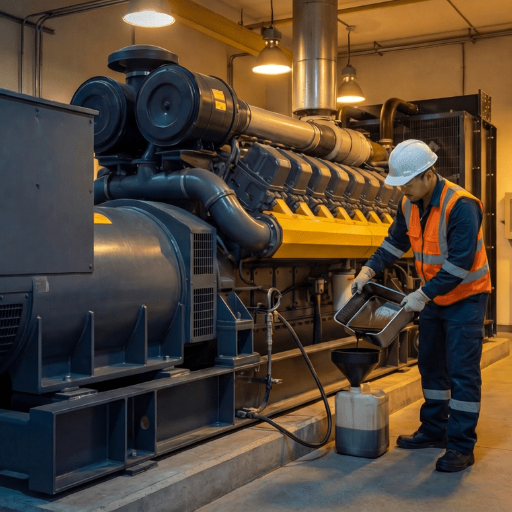
Do generator room fire safety requirements mandate a suppression system? For most enclosed rooms, yes in practice, because sprinklers alone struggle with the actual fire risk: pressurized fuel spray burning on hot surfaces. The AHJ makes the final call, but here is how the options compare.
Clean Agents (Preferred for Enclosed Rooms)
Clean agents flood the room, extinguish fire chemically, and leave no residue on equipment:
| Agent | Design Concentration | Residue | Occupied-Space Safe | Relative Cost |
|---|---|---|---|---|
| FM-200 (HFC-227ea) | 7-8% | None | Yes, at design levels | Moderate |
| Novec 1230 (fluoroketone) | 5.6% | None | Yes, at design levels | Premium |
| Inert gas blends | 34-50% | None | Yes | Moderate (more cylinders) |
| CO2 flooding | 34%+ | None | No (asphyxiation hazard) | Low |
FM-200 is fast and proven but carries a high global warming potential. Novec 1230 offers near-zero environmental persistence at a premium price. Inert gas is clean and people-safe but needs more storage cylinders. CO2 works but requires pre-discharge alarms and delays because of the asphyxiation risk.
Design follows NFPA 2001. The agent must be retained for a minimum 10-minute hold time, which means the room must be tight. A door-fan test verifies leakage, and penetrations need intumescent seals.
Water-Based Options
Sprinklers (NFPA 13) are often required by the building code regardless, and they handle ordinary combustibles well. Their limits are fuel spray fires and equipment damage. Water mist systems cool hot surfaces effectively and use far less water, but need stainless piping and treated water. Foam-water spray suits outdoor sets and fuel pool fires around day tanks.
Detection and Interlocks
Suppression is only as good as its trigger logic. Best practice combines UV/IR flame detectors aimed at the engine skid with rate-of-rise heat detectors at the ceiling, using two-stage logic to prevent false discharge. On discharge, the sequence should:
- Shut ventilation dampers and fans to retain the agent
- Close the automatic fuel shutoff at the day tank
- Signal the fire alarm system and remote annunciator
Note the deliberate conflict with the fail-open ventilation rule: dampers fail open for cooling, but close on suppression discharge. The cause-and-effect matrix resolves this, and the AHJ will review it.
The Shutdown Paradox
Sometimes the generator must keep running during a fire. If it feeds a fire pump (NFPA 20) or life-safety loads, shutting it down on the first alarm can be the wrong move. Define explicitly, in writing, which alarms shut the generator down and which let it run. This single design decision separates thoughtful installations from checkbox installations.
Fuel System Fire Safety
Fuel is the room’s primary hazard, and the rules are specific:
- Indoor tanks are limited to 660 gallons unless the tank sits in its own dedicated fire-rated room
- Day tanks need containment, overflow protection, level monitoring, and a remote fill shutoff
- Thermal fuel shutoffs using fusible links rated at 70-100°C cut fuel flow automatically in a fire
- A remote emergency stop must be accessible from outside the room
- Separation: at least 5 feet between fuel tanks and ignition sources
Bulk storage beyond the day tank brings its own layer of environmental and fire rules. Our companion guide to diesel fuel storage regulations covers bunding, separation distances, and spill prevention in detail.
Fire Safety for Containerized and Outdoor Generators
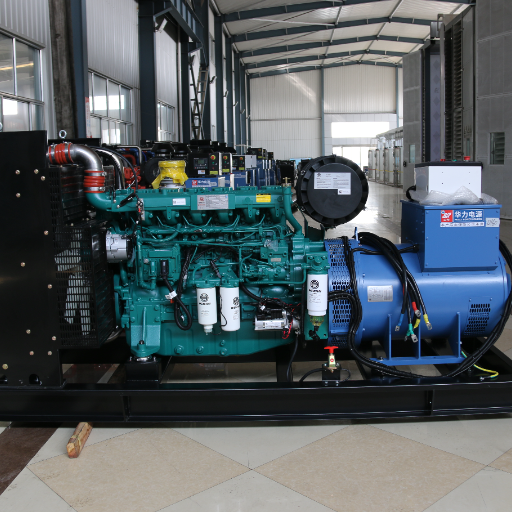
Not every generator lives in a room. Containerized and canopy sets move the fire strategy into the enclosure itself, and the design questions change:
- Enclosure construction should use noncombustible materials with tested fire performance
- Clearances still apply: 5 feet from openings and combustible walls, with exhaust routed away from the building
- Ventilation is engineered in, with louvers and fans designed as a system rather than improvised on site
- Suppression retrofit is possible, typically compact aerosol or small clean agent systems sized to the enclosure volume
This is where factory-built units earn their keep. A containerized generator arrives with ventilation, exhaust routing, and clearances already engineered and tested as one package. At Huali, our containerized and silent sets ship with documented enclosure designs, which removes most of the site-built fire risk from the equation. If you are weighing room-built against containerized, our guide to choosing the right diesel generator covers the full trade-off.
Generator Room Fire Safety Checklist
Audit your installation against these ten points:
- Fire rating confirmed: 2-hour for Level 1 (NFPA 110), 1-hour standard (NFPA 37), including doors and penetrations.
- Room dedicated to the generator system; no storage, no unrelated equipment.
- Clearances verified: 5 ft outdoor, 3 ft indoor access, 36 in between units.
- Ventilation from outside through rated ductwork, powered by the emergency system.
- No fire dampers; louvers fail open, with discharge interlocks documented.
- Exhaust outlets at least 10 ft from openings and intakes.
- Fuel safety in place: 660-gallon indoor limit, day tank containment, fusible-link shutoff, remote emergency stop.
- Suppression selected with the AHJ, designed for a 10-minute hold time, room integrity tested.
- Detection and cause-and-effect matrix documented, including which alarms shut the generator down and which must not.
- Alarms live and tested: ventilation failure, high temperature, and annunciator signals verified on schedule.
Frequently Asked Questions
What fire rating does a generator room need?
Level 1 emergency power systems require 2-hour fire-resistance-rated walls, floors, and ceilings under NFPA 110. Standard stationary engine rooms require a 1-hour rating under NFPA 37. Doors, dampers, and penetrations must match the barrier rating.
Does a generator room need a fire suppression system?
In most enclosed installations, yes. Building codes usually require sprinklers at a minimum, and the specific hazard of pressurized fuel spray on hot surfaces pushes most designs toward clean agent systems such as FM-200 or Novec 1230. The authority having jurisdiction makes the final determination.
Can I store materials in a generator room?
No. Codes restrict generator rooms to equipment serving the generator system. Stored materials add fuel load, block access clearances, and can void the room’s fire strategy. Storage is one of the most common inspection failures.
Are fire dampers allowed in generator room ventilation?
No. Standard fire dampers are prohibited because a closed damper overheats the room and disables the generator during an emergency. Ventilation louvers must fail open, typically spring-operated to open and motor-closed, with defined behavior during suppression discharge.
Is a sprinkler system enough for a generator room?
Usually not by itself. Sprinklers control ordinary combustibles but perform poorly against pressurized fuel spray fires and can damage electrical equipment. Most enclosed generator rooms add clean agent suppression with interlocked detection, while keeping sprinklers for the broader building strategy.
Conclusion: Fire Safety Is Designed In, Not Bolted On
Generator room fire safety requirements exist because the failure modes are well known: fuel meets hot surface, ventilation fails closed, a rated room becomes a storage closet. The codes answer each one, but only if the design treats them as a system rather than a checklist of unrelated rules.
Key takeaways:
- Match the fire rating to the system: 2 hours for Level 1 (NFPA 110), 1 hour standard (NFPA 37)
- Ventilation must fail open and run on emergency power; fire dampers are prohibited
- Cap indoor fuel at 660 gallons, with containment, thermal shutoff, and a remote emergency stop
- Choose suppression for the real hazard, fuel spray on hot surfaces, and verify the 10-minute hold
- Write the cause-and-effect matrix: know which alarms shut the generator down and which must never
- Keep the room for the generator; storage defeats the rating
Shandong Huali designs and manufactures diesel generator sets from 8 kVA to 4000 kVA, including containerized systems with engineered ventilation and documented enclosure designs. Our engineers support room layout, clearance planning, and installation reviews for projects worldwide.
Share your room drawings or site conditions, and our team will flag fire safety gaps before your AHJ does. For critical applications like hospitals and data centers, see why reliability standards are even stricter in our article on backup power for data centers.
