
Generator exhaust safety comes down to managing three things: the toxic gases in the exhaust stream, the extreme heat of the exhaust path, and the design of the system that carries both away from people. Get any one of them wrong and the consequences range from carbon monoxide poisoning to structural fire to an engine that destroys its own turbocharger.
Exhaust kills two ways. Fast: a generator in an enclosed space can push carbon monoxide past 1,000 parts per million in minutes, twenty times the workplace limit. Slow: the World Health Organization’s cancer agency classifies diesel exhaust as a Group 1 human carcinogen, the same category as asbestos. And between those two, the pipe itself runs hot enough to ignite the building around it.
If you install, manage, or buy generators, you have probably noticed the guidance is split. Consumer manuals warn about CO and nothing else; engineering blogs cover pipe sizing and nothing else. This guide treats exhaust as one system: what is in the gas, how hot the hardware gets, how to design the piping safely, and what emissions rules add on top.Exhaust is one piece of a bigger safety picture, so for the electrical, fuel, and handling hazards that sit alongside it, our guide to generator safety tips works as a companion resource.
At Shandong Huali Electromechanical, we engineer exhaust systems into every containerized and silent diesel generator set we ship, from flex connectors to stack termination. This is the same design logic, written down.
Key Takeaways
- Generator exhaust contains carbon monoxide, nitrogen oxides, and diesel particulate matter; CO kills about 100 people a year in the US, and diesel exhaust is an IARC Group 1 carcinogen.
- Exhaust temperatures reach 300-600°C on diesel sets and up to 750°C at turbocharged manifolds; combustibles must stay at least 9 inches away (NFPA 37) or be protected by insulation.
- Never attach a DIY extension to a portable generator’s muffler: added backpressure and leak joints push exhaust into occupied spaces, the exact outcome the modification was meant to prevent.
- Stationary systems must respect the engine’s backpressure limit (typically 15-25 in. H₂O), use correctly sized and supported piping, and pass walls and roofs through listed thimbles.
- EPA Tier 4 and EU Stage V aftertreatment (DOC, DPF, SCR) is safety-relevant hardware: regeneration heat, SCR light-off delays, and delete-kit penalties of $44,539 per day all belong in the safety conversation.
What’s in Generator Exhaust (and Why It Kills)
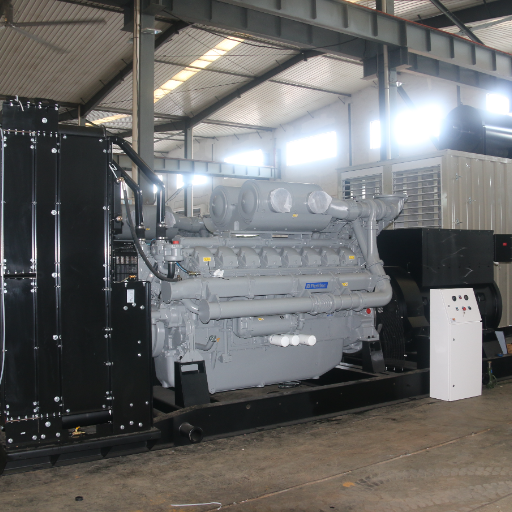
Every liter of diesel or gasoline a generator burns comes out the tailpipe as a mixture worth understanding before you route it anywhere.
Carbon Monoxide: The Fast Killer
Carbon monoxide is colorless, odorless, and produced by every combustion engine. Portable generators alone kill about 100 people a year in the US, according to the Consumer Product Safety Commission, more than any other consumer product. CO binds to hemoglobin roughly 240 times more readily than oxygen, so victims lose coordination and consciousness before they recognize the flu-like symptoms.
The exposure math is unforgiving. OSHA’s permissible exposure limit is 50 ppm as an 8-hour average. A generator in an enclosed space can exceed 1,000 ppm in minutes, and concentrations in that range can incapacitate a person in about five minutes.For placement distances, alarm setup, and the poisoning symptoms to watch for, our dedicated guide to generator carbon monoxide safety walks through each one in detail.
Is Diesel Generator Exhaust Dangerous? The Slow Killer
Diesel exhaust carbon monoxide levels run lower than those produced by gasoline engines, but “lower” is not a safety margin. A diesel set in a basement still kills. What diesel adds is a longer list of chronic hazards:
- Diesel particulate matter (DPM): fine soot that penetrates deep into lung tissue
- Nitrogen oxides (NOx) and sulfur dioxide: respiratory irritants that aggravate asthma and cardiovascular disease
- Benzene, formaldehyde, and PAHs: known or suspected carcinogens in the gas phase
The Canadian Centre for Occupational Health and Safety notes that diesel exhaust is among the most common workplace carcinogen exposures worldwide. For facilities teams running weekly load tests in enclosed rooms, ventilation is not a comfort feature; it is the exposure control.
How Hot Does a Generator Exhaust Get?
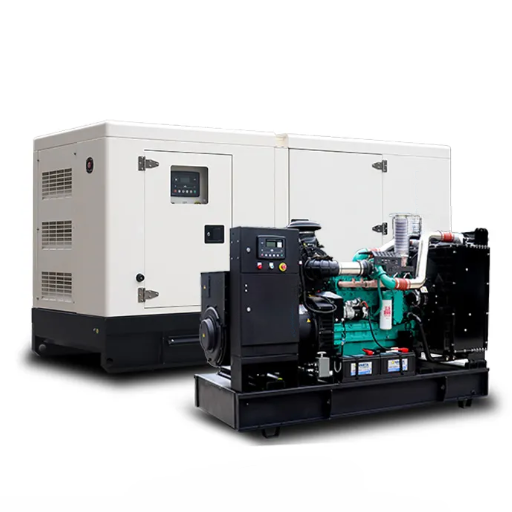
Generator exhaust temperature depends on engine type and load. Gasoline portables run 300-500°F at idle and up to 1,200°F at full load. Diesel sets run 300-600°C (570-1,110°F) in normal operation, with turbocharger housings and manifolds reaching 750°C. Natural gas units typically see 400-490°C after the turbo.
| Generator Type | Low Load | Rated Load | Hottest Component |
|---|---|---|---|
| Gasoline portable | 150-260°C (300-500°F) | up to 650°C (1,200°F) | Muffler shell |
| Diesel (naturally aspirated) | 300-400°C | 450-600°C | Exhaust manifold |
| Diesel (turbocharged) | 300-450°C | 500-600°C | Turbo housing, up to 750°C |
| Natural gas | 350-400°C | 400-490°C | Post-turbo piping |
These numbers drive two safety rules. First, contact burns: exhaust components cause severe burns instantly, long after shutdown. Second, ignition: NFPA 37, the standard for stationary combustion engines, requires at least 9 inches of clearance between exhaust piping and combustible material, or insulation and guarding that keeps surface temperatures below ignition points.
Dry grass, packaging, timber, and fuel containers all ignite well below 500°C. Treat the entire exhaust path, not just the outlet, as a no-storage zone.
Can You Extend a Generator Exhaust Pipe? (The DIY Trap)
No. Never attach a generator exhaust extension or aftermarket ducting to a portable generator’s muffler. Thousands of people every month search for a way to do exactly this, usually to run a portable unit in a garage or shed “with the fumes vented outside.” Manufacturer manuals forbid it explicitly, and the reasons are mechanical, not legal boilerplate.
An extension fails three ways at once:
- Backpressure. Every added foot of pipe and every bend increases exhaust resistance. The engine works harder, runs hotter, and loses power. Turbocharged engines suffer accelerated wear.
- Leak joints. Slip-fit connections and hose clamps on a vibrating, heat-cycling pipe will leak. Each leak becomes a CO injection point, usually inside the structure you were trying to protect.
- Heat. Dryer-vent hose, PVC, and thin-wall ducting cannot survive 300°C, let alone 600°C. The extension itself becomes the fire load.
In early 2025, a homeowner in Michigan ran a portable generator in his garage during an ice storm outage, with a flexible duct kit leading outside through a window gap. The kit’s slip joint separated against the door frame within the first hour. His family’s CO alarms, installed two months earlier, went off at 2 a.m. with readings over 400 ppm in the hallway. Everyone survived. The fire marshal’s report noted the duct had not reduced CO in the garage at all; it had added a leak path at head height.
The legitimate version of “extending exhaust” exists, and it is called a stationary installation: engineered piping, calculated backpressure, listed components, and sealed joints. The next section covers exactly that.
Diesel Generator Exhaust System Design for Stationary Sets
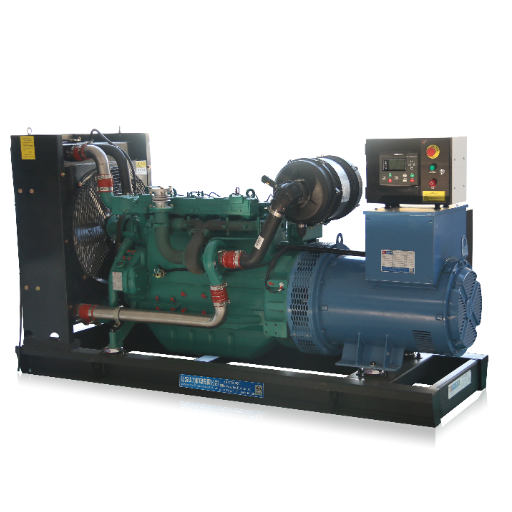
Fixed installations turn the muffler outlet into a designed system. The rules below come from NFPA 37, engine manufacturer data sheets, and hard-won commissioning experience. For room-level requirements like ventilation and fire ratings around the same installation, our guide to generator room fire safety requirements covers the companion layer.
Generator Exhaust Backpressure: The Hidden Safety Variable
Exhaust backpressure is the resistance the exhaust system puts against the engine, measured in inches of water column or kilopascals. Most industrial engines allow 15-25 in. H₂O (roughly 4-6 kPa); turbocharged engines commonly specify 7-10 kPa at rated load. Design to no more than 90% of the limit, because soot fouling adds resistance over the system’s life.
Exceeding the limit is a safety issue, not just a performance one. Backpressure raises exhaust gas temperatures, stresses every joint and gasket toward leaking, and in enclosed installations pushes CO into occupied space through the weakest connection. A typical budget looks like this: flex connector around 0.5 in. H₂O, silencer 3-8 in., elbows and friction 1-3 in., and a 40-foot vertical stack adding another 4-6 in.
Piping Rules: Sizing, Support, and Slope
The piping itself follows a short list of non-negotiables:
- Never smaller than the engine outlet. Target exhaust velocity of 8,000-12,000 feet per minute. A 500 kW set typically needs 12-14 inch pipe; undersizing is the most common backpressure failure.
- Flex connector first. A stainless steel bellows between the turbo outlet and rigid piping absorbs vibration and thermal expansion. The engine must never carry pipe weight.
- Independent support. Hang or stand the piping on its own structure, with spring hangers or sliding supports for expansion of about 1 mm per meter per 100°C.
- Slope and drains. Pitch horizontal runs at least 3 degrees away from the engine, with condensate drains at low points. Water sitting in a silencer corrodes it and adds backpressure.
- One engine, one system. Never share an exhaust system between generators, or with boilers or other appliances. Shared systems leak exhaust into idle equipment and make backpressure unpredictable.
Clearances, Thimbles, and Penetrations
The rules for generator exhaust pipe clearance get specific where the pipe meets the building. NFPA 37 requires:
- 9 inches minimum to combustibles along the run, or insulation and guarding to control surface temperature
- Wall penetrations through combustible construction: a ventilated metal thimble at least 12 inches larger in diameter than the pipe
- Roof penetrations: a listed thimble at least 6 inches larger in diameter, extending 9 inches above and below the roof structure
- Gas-tight joints throughout, so exhaust cannot migrate into occupied space
A facilities engineer named Priya learned the value of the last rule during a 2025 walk-through at a distribution center. She spotted faint soot streaks around a flex-connector clamp above the standby set. Soot on the outside means exhaust on the outside. The generator room shared an air handling zone with the packing floor, and the unit was due for its quarterly two-hour load test the following week. A $200 clamp-and-gasket repair, made that afternoon, closed a leak path that would have run at full flow for two hours.
Termination: Where the Exhaust Finally Leaves
The outlet must terminate outside, with hot gases and sparks directed away from combustible materials and building openings. Keep termination points at least 10 feet from doors, windows, and ventilation intakes, more where wind patterns push exhaust back toward the building. Use a rain cap or curved stack tip rather than a flat cover that restricts flow, and aim for exit velocity around 35 m/s so soot and heat clear the roofline instead of recirculating into intakes.
On containerized and silent sets, the silencer and much of this routing are engineered at the factory, which removes most site-built risk. The silencer still does double duty as a noise-control device, and its acoustic grade interacts with backpressure; our guide to generator noise regulations covers that trade-off.
Emissions Compliance and Aftertreatment
The third layer of generator exhaust safety is legal: what leaves the stack is regulated, and the hardware that cleans it has safety implications of its own.
The Two Frameworks That Matter
In the US, the EPA’s Tier 4 standards govern nonroad diesel engines, cutting NOx and particulates roughly 90% from Tier 3 levels and requiring ultra-low sulfur diesel (15 ppm maximum) to protect aftertreatment. Emergency standby sets get operating-hour exemptions for actual outages but are limited to about 50 hours per year of testing and maintenance use.
In the EU, Stage V under Regulation 2016/1628 adds a particle number limit that effectively mandates a diesel particulate filter on engines from 19 to 560 kW. Buyers serving both markets should note the divergence: US Tier 4 can be met without a DPF in some categories; Stage V cannot.
What the Hardware Does (and What It Demands)
- DOC (diesel oxidation catalyst): converts CO and unburned hydrocarbons to CO₂ and water. The simplest device, and the one that directly reduces the CO hazard at the source.
- DPF (diesel particulate filter): traps soot, then burns it off in regeneration cycles that run the substrate at 600°C or hotter. A DPF raises exhaust-system temperatures and backpressure as it loads, so the backpressure budget must include it, with a bypass and pressure-limiting protection where required.
- SCR (selective catalytic reduction): injects urea (DEF/AdBlue) to convert NOx to nitrogen and water. SCR needs heat to work: catalyst light-off takes 20-25 minutes at low load, which means a standby set on a short weekly exercise run may emit untreated NOx for its entire run. Spec exercise schedules accordingly. This matters most where weekly exercise is the operating norm, as in data center generator systems.
One warning belongs in every procurement conversation: DPF and DEF “delete” kits are illegal in the US under the Clean Air Act, with civil penalties reaching $44,539 per day per violation, and they strip out the very hardware that controls the particulates this article opened with.
Emissions hardware also changes maintenance: DPF ash loading, DEF quality, and sensor health belong on any generator maintenance checklist alongside oil and filters.
Generator Exhaust Safety Checklist
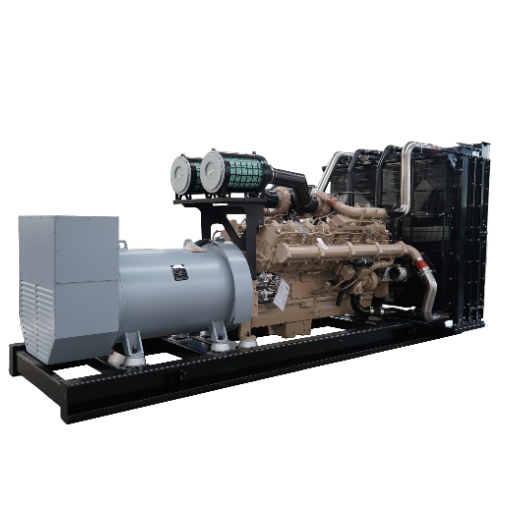
Walk the exhaust path with these ten points, at commissioning and at every major service:
- Placement: portable units outdoors only, 20+ feet from structures, exhaust directed away from openings and workers.
- Clearances: 9 inches minimum to combustibles along the entire exhaust path, or insulation and guarding in place.
- No DIY extensions on portable equipment; any fixed extension is an engineered system with a backpressure calculation.
- Backpressure verified against the engine data sheet at commissioning, at or below 90% of the limit, including aftertreatment.
- Joints gas-tight: no soot streaks at clamps or flanges; flex connector intact and carrying no pipe weight.
- Slope and drains: horizontal runs pitched away from the engine, condensate drains clear.
- Penetrations listed: wall and roof thimbles sized per NFPA 37, insulation intact.
- Termination correct: 10+ feet from openings and air intakes, rain cap or curved tip, no recirculation into the building.
- Aftertreatment healthy: DPF backpressure readings trending normally, DEF quality verified, no delete or bypass tampering.
- CO monitors are working in generator rooms and adjacent occupied areas, tested on schedule.
For portable units on temporary sites, the placement and monitoring items overlap with our construction site generator safety guide, which covers the site-geometry side of the same hazard.
Frequently Asked Questions
Does a diesel generator produce carbon monoxide?
Yes. Diesel engines produce less carbon monoxide than gasoline engines, but still emit lethal concentrations in enclosed or poorly ventilated spaces. A diesel generator running indoors can exceed 1,000 ppm CO within minutes, against an OSHA workplace limit of 50 ppm. Diesel exhaust also carries particulates and NOx that gasoline exhaust does not.
How hot does a generator exhaust get?
Diesel generator exhaust runs 300-600°C (570-1,110°F) in normal operation, with turbocharger housings reaching 750°C. Gasoline portables run 300-500°F at idle and up to 1,200°F at full load. Components stay hot enough to cause severe burns and ignite combustibles well after shutdown.
Can I vent my generator exhaust outside from a garage?
No. Attaching ductwork or an extension kit to a portable generator’s muffler increases backpressure, creates leak joints, and introduces materials that cannot survive exhaust temperatures. Manufacturer manuals prohibit it, and the modification typically increases indoor CO rather than reducing it. Generators belong fully outdoors, 20+ feet from the building.
What pipe material is used for generator exhaust?
Schedule 10 or Schedule 40 carbon steel is standard for industrial runs, with stainless steel (304 or 316) for flex connectors, corrosive environments, and high-temperature sections. Joints use flanges or welded connections with high-temperature gaskets. Never use PVC, dryer vent, or thin-wall ducting anywhere in an exhaust path.
How far should the exhaust terminate from windows and air intakes?
At least 10 feet, per NFPA 37, and farther where site wind patterns push exhaust back toward the building. Termination should also clear the roofline with enough exit velocity, around 35 m/s, to prevent soot and hot gas from recirculating into ventilation intakes.
Do standby generators need a DPF?
It depends on the market and application. EU Stage V effectively requires a DPF on engines from 19-560 kW. US Tier 4 rules for emergency standby sets are less prescriptive, but many local air districts and California CARB rules impose their own requirements. Where a DPF is fitted, the exhaust design must budget for its backpressure and regeneration heat.
Conclusion: Generator Exhaust Safety Means Treating the Exhaust as a System
Generator exhaust safety fails in the gaps between disciplines: the homeowner who treats a code problem as a hardware-store problem, the installer who sizes pipe for performance and forgets the leaks, the buyer who specs aftertreatment without budgeting its backpressure. The fast killer, the slow killer, and the fire risk all travel the same pipe.
Key takeaways:
- CO kills fast, diesel particulates kill slowly, and both demand outdoor placement and real ventilation
- Exhaust runs 300-750°C: 9-inch clearances, listed thimbles, and no storage along the path
- Never extend a portable generator’s exhaust; stationary extensions are engineered systems
- Respect the backpressure budget, including the silencer, stack height, and aftertreatment
- Tier 4 and Stage V hardware is safety equipment too: no deletes, no bypasses, and maintain it
- Soot streaks at a joint are an exhaust leak; inspect the path every service
Shandong Huali designs and manufactures diesel generator sets from 8 kVA to 4000 kVA, including containerized and silent configurations with factory-engineered exhaust systems, documented backpressure budgets, and emissions packages matched to your market. If you are planning a new installation, our guide to choosing the right diesel generator covers the full selection process.
