
Generator grounding requirements come down to one question: how does the generator connect to your equipment? If you plug tools and appliances directly into the generator’s own outlets, the frame itself satisfies the grounding requirement under NEC 250.34(A), and no ground rod is needed. Connect the generator to building wiring or install it permanently, and grounding electrodes, correct neutral bonding, and code-sized conductors become mandatory.
Here is the counterintuitive part: the ground rod is the most over-installed and under-tested accessory in portable power. Most people who drive one never needed it. Most people who need one never verify it works.
Ask five generator owners whether you need to pound a copper rod into the earth and you will get five different answers. This guide replaces the guesswork with a 10-second scenario matrix, the code logic in plain language, and the only install-and-verify walkthrough you will find outside an electrician’s trade journal. At Shandong Huali, we have manufactured and commissioned generator sets from 8 kVA to 4000 kVA for over 25 years, and grounding verification is part of every installation we hand over.
Key Takeaways
- Cord-and-plug use only (extension cords straight into the generator): no ground rod required. NEC 250.34(A) lets the frame serve as the ground reference.
- Connect to building wiring and the rules change: a permanently installed or separately derived system needs its own grounding electrode under NEC 250.30.
- A compliant ground rod is an 8-foot copper-clad rod, bonded with a correctly sized conductor, tested to 25 ohms or less per NEC 250.53.
- Bonded vs floating neutral decides your transfer switch type. Get it wrong and you create parallel neutral paths and nuisance GFCI trips.
- Industrial standby sets add another layer: neutral grounding resistors, high-resistance grounding, and commissioning tests before handover.
Generator Grounding Requirements: The Quick Answer
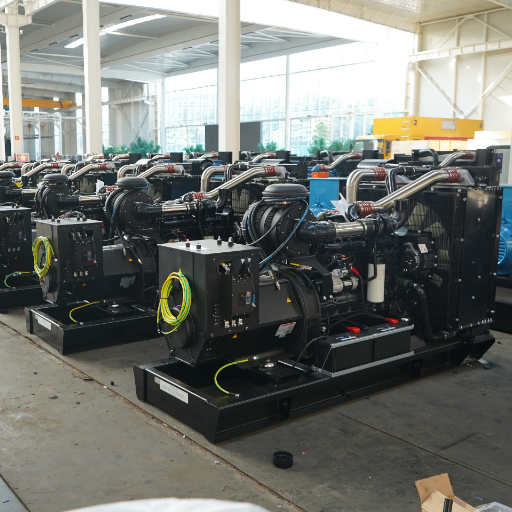
A generator needs an external ground rod only when it connects to a structure or operates as a separately derived system. Portable generators powering cord-connected equipment through their own receptacles are exempt, because the generator frame already serves as the grounding electrode. Find your setup in this table:
| Your Setup | Ground Rod Required? | Why |
|---|---|---|
| Extension cords into generator outlets only | No | NEC 250.34(A): frame is the ground reference |
| Portable unit + interlock or transfer switch, solid neutral | Usually no new electrode | Building’s existing electrode system serves |
| Transfer switch with switched neutral (3-pole/4-pole) | Yes | Separately derived system, NEC 250.30 |
| Permanently installed standby generator | Yes | NEC Article 250 grounding electrode system |
| Construction site use (OSHA jurisdiction) | Bonding mandatory; rod depends on setup | OSHA 1926.404(f) |
Connecting through a transfer switch? The grounding design and the switch type are decided together.
Grounding vs Bonding: Two Words That Decide Everything
Half the confusion around generator grounding requirements comes from two terms people use interchangeably. They are not interchangeable.
What Grounding Does
Grounding (called earthing outside North America) connects the electrical system to the earth itself. It stabilizes voltage during faults, lightning, and line surges, and it gives fault current a reference path into the soil.
What Bonding Does
Bonding connects metal parts together: the generator frame, the equipment grounding conductor, the neutral at one designated point. Bonding is what lets a breaker see a fault and trip. A fault on an unbonded frame may just sit there, energized, waiting for a hand.
The One-Bond Rule
A system gets exactly one neutral-to-ground bond. Two bonds create parallel neutral paths, where return current splits across the ground wire, and that current can energize frames, trip GFCIs randomly, and defeat the protection the bond was built to provide. Every mistake in the troubleshooting stories below traces back to this rule.
Bonded Neutral vs Floating Neutral Generator: How to Tell What You Have
Your generator’s neutral configuration determines which transfer equipment it can safely pair with. There are three ways to check:
- Read the spec sheet or manual. Manufacturers state “neutral bonded to frame” or “floating neutral” explicitly.
- Use a multimeter. With the generator off, measure continuity between the neutral slot of an outlet and the frame ground. Continuity means bonded; no continuity means floating.
- Look for a neutral-ground bonding plug. If the manual suggests one for certain applications, your unit almost certainly has a floating neutral.
Why it matters: a bonded-neutral generator feeding a panel through a switch that also switches the neutral creates a second neutral-to-ground bond, the exact violation of the one-bond rule. The wrong pairing also produces the parallel neutral paths behind generator backfeeding dangers, where return current and fault current end up on conductors nobody expects.
Dave, a facilities manager in Ohio, learned the practical version of this in 2025. He bought a bonded-neutral portable unit and an interlock kit, then drove a brand-new ground rod beside his garage because a forum told him to. His inspector passed the installation but flagged the rod: the generator was never a separately derived system, so the extra electrode was unnecessary, and it had to be bonded into the existing electrode system to avoid becoming a hazard of its own. Twenty minutes with the scenario table above would have saved him a Saturday and a correction notice.
When Generator Grounding Requirements Demand a Ground Rod
Separately Derived Systems (NEC 250.30)
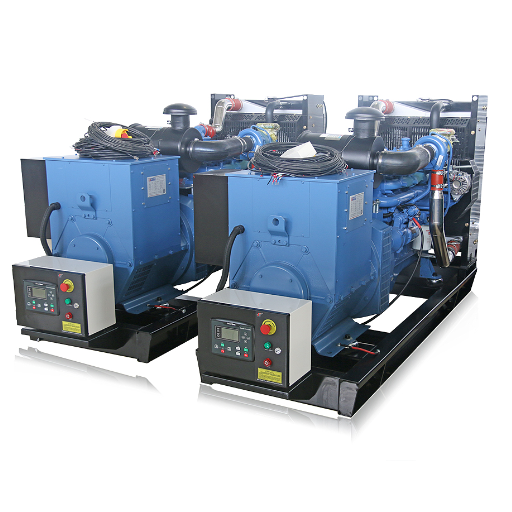
When a transfer switch switches the neutral conductor, the generator becomes a separately derived system: an independent source with no direct neutral connection back to the utility service. Under NEC 250.30 it must have its own grounding electrode connection and its own single neutral-to-ground bond. This is the scenario where “the house ground rod already exists” stops being a complete answer.
Permanently Installed Standby Generators
Any fixed standby installation falls under NEC Article 250 in full: a grounding electrode system at the generator, a grounding electrode conductor sized per Table 250.66, and bonding of all non-current-carrying metal parts. There is no portable exemption for a unit bolted to a pad.
Construction Sites and OSHA 1926.404
OSHA’s construction standard overlaps with the NEC but does not mirror it. OSHA 1926.404(f) requires effective bonding of the neutral conductor to the generator frame on sites, and GFCI protection is expected wherever cord-and-plug equipment is in use. Inspectors on regulated sites will ask about both, regardless of what the NEC exempts.
Grounding is only one piece of a compliant jobsite setup, so if you run gensets on active worksites, our guide to construction site generator safety covers the GFCI, bonding, and placement rules OSHA inspectors check most.
How to Install and Verify a Generator Ground Rod
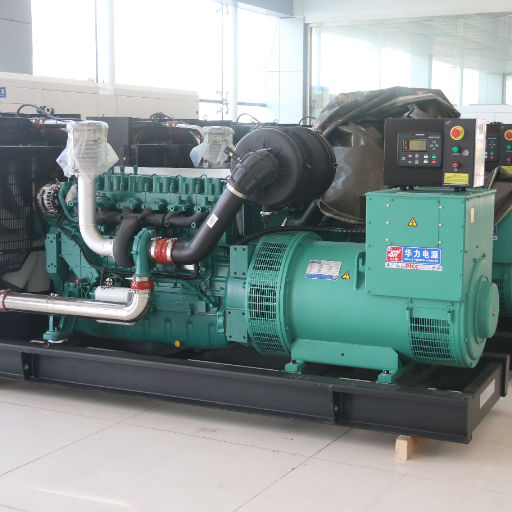
When your setup does require an electrode, follow these seven steps to install and verify a generator ground rod:
- Select the rod: an 8-foot (2.4 m) copper-clad steel ground rod, 5/8 inch diameter, listed for grounding use.
- Choose the location: within 1 to 2 meters of the generator, in soil that stays reasonably moist, clear of buried utilities. Call your utility locate service first.
- Drive the rod vertically until no more than a few inches remain above grade. Rocky soil allows driving at up to a 45-degree angle, or burial in a 30-inch trench, per NEC 250.53.
- Attach the conductor: for small generators, #8 AWG bare copper handles up to roughly 60 amps; larger sets follow NEC Table 250.66. Use a listed acorn-style clamp, and torque it to spec.
- Bond to the generator’s grounding terminal, not to a random frame bolt. Paint-starved or rusty contact points defeat the connection.
- Test the result: measure with an earth ground tester or clamp-on ground resistance tester. The NEC target is 25 ohms or less.
- If resistance exceeds 25 ohms, drive a second rod at least 6 feet away and bond the two together. That is the code-accepted fix, and it resolves most failures.
That last step is the one nobody does. A rod you have never tested is a decoration, not an electrode.
5 Grounding Mistakes That Create the Hazard You Were Avoiding
- Double neutral bonds. Bonding neutral to ground at both the generator and the panel splits return current onto the grounding conductor. A roofing crew we supplied in 2024 chased “bad GFCIs” for a week before an electrician found the real cause: a bonded-neutral generator paired with a neutral-switching transfer switch. One unbonded link later, the trips stopped.
- Multiple unbonded ground rods. Two rods that are not bonded together can sit at different voltages during a fault. Touch the equipment connected to each, and your body becomes the bonding jumper.
- Bonding to the house electrode while utility-connected. Without proper transfer equipment, this creates parallel paths with the utility neutral, the same family of error as backfeeding.
- Undersized or corroded conductors. A #14 wire on a ground rod, or a green-crusted clamp, adds resistance exactly where you cannot afford it. Include the clamp and conductor in every generator maintenance checklist inspection.Grounding checks work best as part of a wider routine, so pair them with our broader generator safety tips to keep electrical, fuel, and fire hazards in check too.
- Skipping GFCI protection. Where a ground rod is omitted under the portable exemption, GFCI devices are your shock protection layer. OSHA expects them on construction sites; common sense expects them everywhere else.
Grounding for Industrial and Standby Diesel Generator Sets
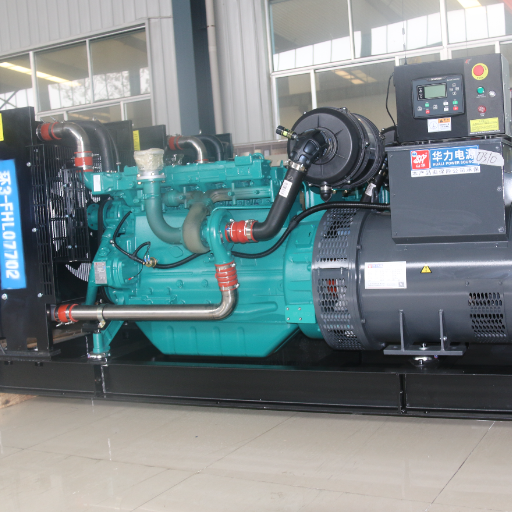
Above portable scale, grounding stops being an accessory question and becomes a system design decision.
Solidly Grounded vs High-Resistance Grounded Systems
Solid grounding bonds the neutral directly to earth: simple, and it trips faults fast, but a single ground fault takes the whole system offline. High-resistance grounding inserts a resistor between neutral and earth, limiting fault current to a few amps so the system can keep running through a first fault while alarms locate it. Hospitals, continuous-process plants, and data center backup power systems choose high-resistance grounding precisely because an unplanned trip costs more than the fault.
Neutral Grounding Resistors (NGR)
The resistor at the heart of that design is the NGR, sized to the system voltage and the fault-current limit. On medium-voltage and large low-voltage diesel sets, the NGR is specified alongside the alternator, not retrofitted later. When you are choosing a diesel generator for prime or standby duty, the grounding method belongs in the same conversation as kVA and fuel tank size.
Commissioning Tests: What Gets Verified Before Handover
A 500 kVA standby set we commissioned in 2025 illustrates the process. The site soil was dry and sandy, and the first electrode test read 41 ohms against the 25-ohm target. The crew drove a second rod 8 feet from the first, bonded the pair, and re-tested at 19 ohms. Insulation resistance, neutral bonding point, and NGR continuity were verified the same afternoon, and the report went into the handover file. That is what “tested before delivery” means in practice: the grounding system gets measured, not assumed.Before any technician touches these connections for testing or later maintenance, the machine must be safely isolated, so follow our generator lockout tagout procedures to de-energize and lock out the set first.
Generator Grounding Requirements FAQ
Do I need to ground my generator if I only use extension cords?
No. Grounding a portable generator with a ground rod is not required under NEC 250.34(A) when the unit powers cord-and-plug equipment through its own receptacles, provided the frame bonds the equipment grounding terminals. The frame itself serves as the grounding electrode. Adding a rod in this scenario is optional, not required.
What happens if you don’t ground a generator?
Where grounding is required and skipped, fault current has no low-impedance path, so breakers may not trip and the generator frame can stay energized at dangerous voltage. Where grounding is not required (cord-and-plug portable use), the bonded frame already provides the protection the code asks for, and skipping the rod carries no penalty.
What size ground rod do I need for a generator?
The standard electrode is an 8-foot (2.4 m) copper-clad rod, 5/8 inch in diameter. The conductor to it is typically #8 AWG copper for generators up to about 60 amps, with larger sets sized from NEC Table 250.66. Resistance to earth should measure 25 ohms or less; otherwise, add a second rod at least 6 feet away.
Can I connect my generator to my house ground rod?
If the generator connects through transfer equipment that keeps the neutral solid (not switched), the building’s existing electrode system already serves the installation, and no separate rod is needed. Never bond a generator to the house electrode while it also feeds the panel without transfer equipment; that creates parallel neutral paths and shock hazards.
Do inverter generators need to be grounded?
Inverter generators follow the same NEC 250.34(A) rules as conventional portables. Cord-and-plug use needs no ground rod. Most inverter units have floating neutrals, which matters when pairing them with transfer equipment or ground-sensing devices like some RV surge protectors; a neutral-ground bonding plug is the usual fix.
What are generator earthing requirements outside the US?
Outside North America, IEC 60364 governs earthing arrangements, most commonly TT and TN-S systems. The principle matches the NEC: an earth electrode at the source, protective bonding of exposed metalwork, and a single neutral-earth connection point. Local wiring rules (BS 7671 in the UK, AS/NZS 3000 in Australia) fill in the specifics, so verify with a licensed electrician in your jurisdiction.
The Connection Decides the Code
Generator grounding requirements look complicated until you reduce them to the logic the NEC actually uses: how the generator connects decides what the ground must do. Cord-and-plug into the generator’s own outlets, and the bonded frame has you covered, no rod required. Feed a building, and electrodes, neutral bonding, and conductor sizing become code obligations, with 25 ohms as the number that proves the work.
Three actions cover nearly every reader. Identify your setup in the scenario table. If your configuration needs an electrode, install it to spec and test it, because an unverified rod is no protection at all. And if you are specifying a permanent standby system, bring grounding design into the project early, not as a field fix after the pad is poured.
At Shandong Huali Electromechanical Co., Ltd., every generator set we ship, from portable canopies to 4000 kVA containerized systems, arrives with grounding documentation and commissioning support built in. Contact our team to design a power installation that passes inspection the first time.
