
A generator set specification defines the machine across six parameter families: power rating, duty class, electrical performance, engine and fuel data, environmental ratings, and testing and documentation. Every expensive buying mistake traces back to one of those families being misread.
Two data sheets land in the same inbox. Both say “500 kVA diesel generator set.” One is $20,000 cheaper. Everything that explains the gap is printed on both sheets: duty class, insulation grade, IP rating, governor type, and whether the fuel figures are guaranteed or merely typical. It is visible to anyone who can read them.
If you have ever stared at a genset data sheet and wondered which numbers actually matter, you are not alone. Spec sheets are written by engineers, for engineers, and the important distinctions hide in qualifiers. This guide teaches the reading: every parameter family, what good looks like, and what each line costs you when it is wrong.
At Shandong Huali Electromechanical, we publish complete diesel generator specifications for every set we build, from 8 kVA portables to 4000 kVA industrial units. This is how our own engineers read a competitor’s sheet, and how we want customers to read ours.
Key Takeaways
- A generator set specification has six parameter families: power rating, duty class, electrical, engine/fuel, environmental, and testing/documentation. Compare all six or you are not comparing the machines.
- Duty class decides lifespan: ESP sets run 200-500 hours a year with no overload; PRP sets run unlimited hours with a 10% overload allowance. Same nameplate kVA, very different machines.
- ISO 8528 now includes DCP, a duty class written for data center applications, and most spec comparisons still ignore it.
- The most dangerous word on a spec sheet is “typical.” A typical value is marketing; a guaranteed value is a contract.
- Motor-starting kVA at a stated voltage dip, not running load, is the number that decides whether your largest load actually starts.
What Is a Generator Set Specification?
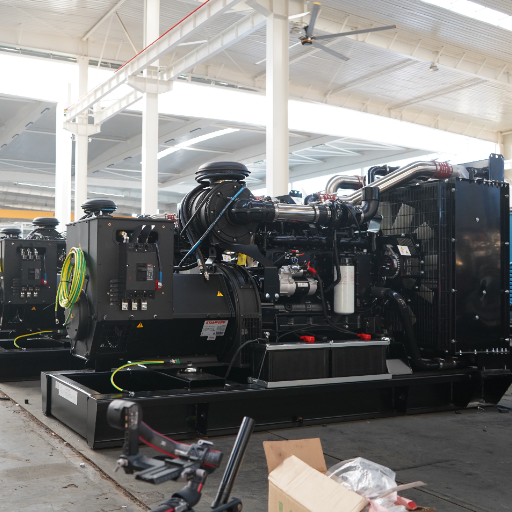
A generator set specification is the complete technical definition of a genset: the combination of an engine and an alternator built as one machine. Per ISO 8528, the governing standard family, the nameplate must state the electrical and mechanical ratings, specifying the ambient reference conditions for those ratings.
Beyond the nameplate, a full generator set specification or data sheet covers six parameter families:
- Power rating: kVA, kW, and power factor
- Duty class: how many hours, at what load profile, with what overload allowance
- Electrical performance: voltage, frequency, regulation, waveform quality
- Engine and fuel: speed, governor, consumption, starting system
- Environmental ratings: temperature, altitude, noise, enclosure protection
- Testing and documentation: what was proven, and what is guaranteed in writing
One distinction matters more than any other on the page. Values come in three flavors: nameplate (the rating under standard reference conditions), guaranteed (contractually binding, testable at acceptance), and typical (a marketing average you cannot enforce). Buyers who cannot tell these apart find out the difference after commissioning.
Generator Nameplate Ratings: The Minimum ISO 8528 Requires
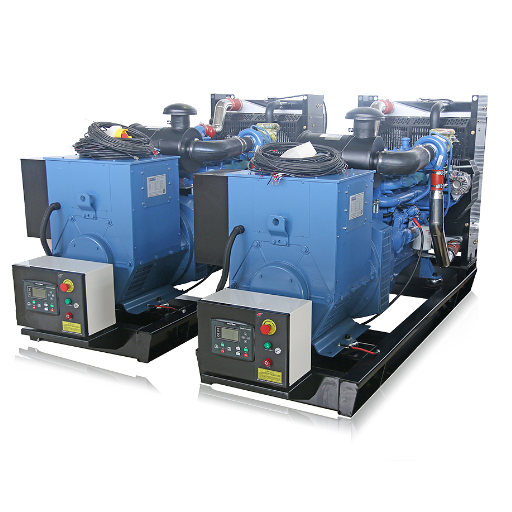
The generator nameplate rating block is the legally defined core of the spec. ISO 8528 requires these fields at minimum:
| Nameplate Field | What It Tells You | Example |
|---|---|---|
| Rated power (kVA/kW at stated PF) | Apparent and real output at reference conditions | 500 kVA / 400 kW, 0.8 PF |
| Duty class | The operating profile the rating is valid for | PRP |
| Voltage and frequency | The electrical output standard | 400 V, 50 Hz, 3-phase |
| Rated speed | Engine speed, which implies pole count | 1500 RPM (4-pole) |
| Reference conditions | The altitude and temperature the rating assumes | 25°C, 100 m |
| Manufacturer, model, serial | Traceability for warranty and parts | HL500P, s/n 2608-114 |
A data sheet that adds guaranteed values at site conditions, fuel consumption at four load points, and transient data builds on this minimum. A sheet that stops at the nameplate block is telling you to ask more questions.
Power Ratings: kVA, kW, and the 0.8 Power Factor
The first number on every sheet is the power rating, and it is quoted in kVA, not kW, for a reason. kVA is apparent power, the alternator’s thermal and magnetic limit. kW is real power, the work actually delivered. The conversion runs through power factor:
kW = kVA × power factor
ISO 8528 sets the nameplate reference power factor at 0.8 for three-phase industrial sets. So a 500 kVA nameplate means 400 kW of real power. If this relationship still feels slippery, our guide to generator kva vs kw works through the power triangle and the conversion math in full, so you can compare loads against the right figure every time.Quote your 380 kW load against a “500” nameplate and you are fine; quote it against a sheet where the kW figure assumed unity power factor and you have a problem.
Watch for three traps in this family. Sheets that headline kW without stating the power factor. Ratings quoted at 1.0 PF for single-phase sets being compared against 0.8 PF three-phase machines. And alternator-only kVA presented as genset rating, when the engine cannot sustain it.
Duty Ratings: ESP, PRP, COP, LTP, and DCP
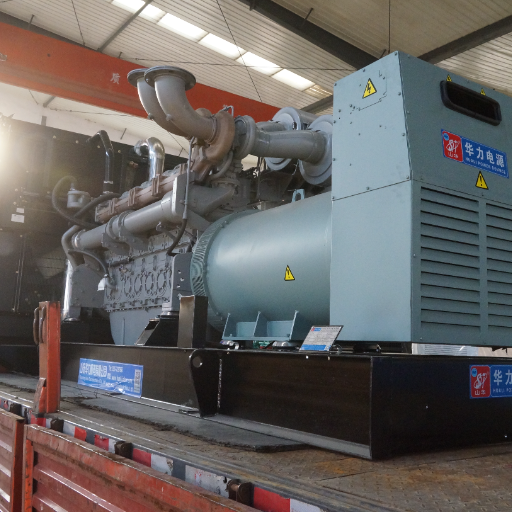
The duty class is where two identical-looking 500 kVA machines become a $20,000 price gap. ISO 8528-1 defines the classes, and every class is a different engine build, cooling package, and expected lifespan:
| Class | Duty Profile | Overload Allowance | Hours/Year | Typical Use |
|---|---|---|---|---|
| ESP (Emergency Standby) | Emergency backup, variable load | None | 200-500 | Hospitals, offices, grid backup |
| PRP (Prime) | Unlimited hours, variable load | 10% for 1 hour in 12 | Unlimited (24-hr average ≤75-80% of PRP) | Mining, construction, off-grid |
| COP (Continuous) | Constant base load | None | Unlimited | Power plants, remote facilities |
| LTP (Limited-Time) | Limited running hours | None | ~500 | Peak shaving, seasonal duty |
| DCP (Data Centre) | Data center backup, variable load | Per manufacturer declaration | Per application | Data center generator systems |
For the full run-time, load, and overload rules behind each of these classes, and why they make the same nameplate kVA mean different sustainable output, see our guide to the ISO 8528 generator rating. DCP is the newest class, introduced in the ISO 8528-1:2018 revision, and the one most comparison guides still omit. It exists because data center duty does not fit the ESP mold: long outage runs at high load with aggressive availability targets. If you are specifying for a data hall and your sheet says ESP with a hand-written hours clause, DCP was written for exactly your case.
The classic failure in this family is buying an ESP-rated set for prime duty because it is cheaper. It is cheaper because it is built for 200 hours a year. Run it 4,000 and you will own a rebuild.
Electrical Specifications: Voltage, Frequency, and Regulation
The electrical family of a generator set specification comes down to three linked numbers: voltage, frequency, and speed. For 50 Hz markets, a 4-pole alternator runs at 1500 RPM; for 60 Hz, 1800 RPM. A sheet quoting 400 V/50 Hz describes a different machine than 480 V/60 Hz, and conversion between them is a factory decision, not a field adjustment.
Check the phase count while you are here. Single-phase sets (typically under 20 kVA) often carry a 1.0 power factor reference, while three-phase industrial sets use 0.8. Comparing a single-phase kW figure against a three-phase kW figure without checking the PF basis is a quiet way to buy 20% less generator than you need.
Voltage regulation tells you how tightly the set holds voltage as the load changes. The range across real data sheets is wide: premium alternators with quality AVRs hold ±0.25%, while standard tender-grade sets quote ±2%. Sensitive loads, medical imaging, server PSUs, and lab instruments live at the tight end of that range.
Two more lines worth reading. THD (total harmonic distortion) should be under 5%, ideally under 3% for sensitive electronics. And the AVR type matters: a brushless, self-excited alternator with a digital AVR behaves very differently under step loads than an older analog setup.
Alternator Specifications: Insulation Class, IP Rating, and Winding
The alternator is where spec sheets hide longevity. Three lines decide it:
- Insulation class. Class H (180°C rating) gives thermal headroom that Class F (155°C) does not. In hot climates or high-altitude sites where cooling air is thin, that headroom is alternator life.
- IP rating. IP23 is the standard drip-proof build. Dusty, coastal, or wash-down environments need IP44 or higher, and a sheet that says only “IP23” for a desert site is telling you the alternator will eat sand.
- Winding pitch. A 2/3 pitch winding suppresses third harmonics; it is standard on quality industrial alternators and absent on budget ones.
To read every alternator line the way an engineer does, from insulation class and IP rating to excitation type and subtransient reactance, see our dedicated guide to the alternator specification for generator.A composite example from procurement reviews our engineers run shows why this family rewards attention. A buyer, call her Priya, compared two quotes for a coastal facility and found the cheaper one saved 8%. Reading the alternator lines, she caught Class F insulation and IP23 protection on a salt-air site, where the dearer quote carried Class H and IP54 plus anti-corrosion coating. The “savings” were two alternator rewinds waiting to happen.
Engine and Fuel Specifications
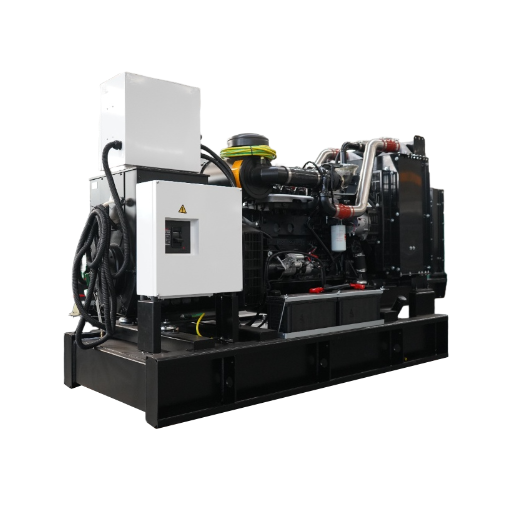
Engine lines worth reading, in order of how often they hide problems:
Governor type. Mechanical governors hold frequency within about 3-5%; electronic governors hold 0.25-1% and enable isochronous parallel operation. Above 100 kVA, or anywhere frequency-sensitive loads run, electronic is the correct spec.
Fuel consumption basis. Consumption should be stated at 25%, 50%, 75%, and 100% load, in L/hr or g/kWh, and labeled guaranteed or typical. A single “fuel consumption: 105 L/hr” line with no load point and no qualifier is unenforceable.
Starting system and coolant. 24 V DC electric start with battery and charger is the industrial norm; check whether the battery charger is included. Water cooling with a tropical-rated radiator matters anywhere ambient temperatures exceed 40°C.
One more engine-adjacent line: sustained operation below about 30% load causes wet stacking, where unburned fuel fouls injectors and exhaust. A spec that oversizes the set “for safety” creates a maintenance problem instead. Our generator maintenance checklist covers the operating discipline that keeps load in the healthy band.
Environmental Ratings: Derating, Noise, and Enclosure
Every rating on the sheet assumes reference conditions, roughly 25-40°C at near sea level. Real sites differ, and output falls: a working rule of thumb is 3% per 300 m of altitude and 3% per 5°C above a 40°C baseline. These losses compound faster than most buyers expect, so before you trust a nameplate for a hot or high-elevation site, work through the full curves in our guide to generator derating altitude temperature. A 1000 kVA nameplate at 2,000 m and 45°C is not a 1000 kVA machine.
The question to ask of any sheet: are the quoted ratings at reference conditions or at my site conditions? Guaranteed values should be stated at site conditions. If the sheet is silent, the values are reference-condition numbers.
Noise needs the same care, because the measurement distance changes the number. Sound pressure falls with distance, so a figure quoted at 7 meters runs roughly 10-17 dB lower than the same source measured at 1 meter, depending on directivity and reflections. Competitor sheets mix the two distances freely. A “72 dB(A)” canopy measured at 7 m can be louder than a “75 dB(A)” canopy measured at 1 m. Local generator noise regulations then add site-level limits on top of the equipment figure.
Enclosure type rounds out the family: open skid, weather-protective canopy, silent canopy, or container. The choice drives noise, weather protection, security, and service access all at once.
Emissions and Compliance: Certifications on the Sheet
One block of a generator set specification is legal, not mechanical: the emissions and certification lines. In the US, nonroad diesel engines fall under EPA Tier 4 Final; in the EU, Stage V under Regulation 2016/1628; China applies its own Stage III and IV nonroad standards. The sheet should explicitly name the emissions tier, because the tier decides whether the set can legally be sold, installed, or permitted in your market.
Compliance marks matter the same way. CE for Europe, ISO 9001 for the manufacturing process, and IEC 60034 conformity for the alternator are all verifiable claims, and all worth verifying. A sheet that says “international standards” without naming them has told you nothing. Emissions hardware also feeds back into the spec itself: a set with a diesel particulate filter needs its backpressure budgeted in the exhaust design, and our generator exhaust safety guide covers that interaction.
Transient Performance: Motor Starting and Step Loads
Running load rarely kills a generator. Starting load does. A direct-on-line motor pulls 6-8 times its full-load current for the first seconds, and the set must absorb that without a voltage collapse that trips everything else. If your load schedule includes large motors, our guide to generator motor starting kva shows the two ways to calculate that starting demand and check the voltage dip before you fix a rating.Starting method changes the math: star-delta starting cuts the draw to roughly 2 times full-load current, and a VFD (variable frequency drive) brings it near 1.5 times, which is why the starting method belongs in any load schedule you hand a supplier.
A serious generator set specification states this directly: motor-starting kVA at a defined voltage dip, commonly 30%. Caterpillar sheets quote it, and it is the single most useful transient number a buyer can demand. If a sheet has no motor-starting figure, ask for one. “It depends” is an acceptable engineering answer; silence is not.
Step-load acceptance is the sibling metric: how much load the set can take in one hit, and how fast voltage and frequency recover. ISO 8528-5 grades this behavior in performance classes G1 through G4, from basic lighting loads (G1) up to severe-demand applications (G4), with G3 the norm for hospitals and data centers. For the exact voltage and frequency tolerances each class must hold, and how to pick the right one for your loads, see our breakdown of the generator performance class G1 G2 G3 G4. The class compresses a page of transient behavior into one character, which is why tenders specify it.
How to Read a Generator Spec Sheet: Annotated Walkthrough
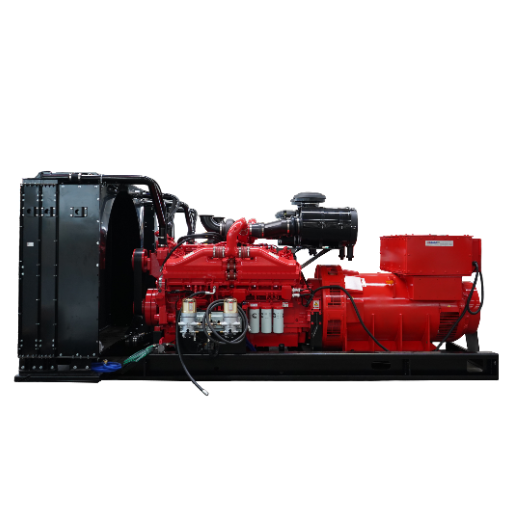
Put the families together on one document.The condensed pass below is the quick version; for a full field-by-field method with the red flags that disqualify a sheet outright, see our guide on how to read generator specification sheet. Here is the condensed pass our engineers run on an unfamiliar sheet, using a 500 kVA industrial unit as the example:
- Header block: model, engine make, alternator make. Check both brands; a known engine with a no-name alternator is a red flag.
- Rating line: “500 kVA / 400 kW, 0.8 PF, PRP.” Confirm the duty class word is present. No class means ESP assumptions at best.
- Conditions line: “Ratings at 40°C, 1000 m.” Compare to your site. Ask for guaranteed values at site conditions.
- Electrical block: 400 V, 50 Hz, regulation ±1%, THD <5%, brushless AVR. All standard-good.
- Alternator block: Class H, IP23, 2/3 pitch. Upgrade IP for harsh sites.
- Consumption block: four load points, labeled “guaranteed.” If it says “typical,” request guaranteed figures in writing.
- Transient line: motor-starting kVA at 30% dip. Present here; frequently absent elsewhere.
- Test and warranty block: FAT protocol, warranty duration, response commitments. Vague here means expensive later.
Eight lines, two minutes, and you know whether the sheet deserves a serious read. The full line-by-line method, with the red flags that disqualify a sheet entirely, gets its own guide in this series.
Testing, Documentation, and What to Demand With the Quote
The last family separates paper specifications from proven machines. Three documents matter:
- Factory acceptance test (FAT) records: certified results before shipment, against stated protocols, not a sentence saying “tested.” For larger sets, add a site acceptance test (SAT) with a defined load profile and witnessed results. For the load steps, the pass/fail line, and the evidence pack that closes each gate, our guide to the generator acceptance testing procedure walks through both the factory and site tests in full.
- Guaranteed Technical Particulars (GTP): the filled-in schedule where the supplier commits the genset technical data to binding values for every parameter, turning the data sheet from brochure into contract.If you have never built one, our guide to the guaranteed technical particulars generator schedule shows exactly which values to demand so a supplier cannot walk a claim back after award.
- Certifications and references: ISO 9001 manufacturing, type test reports for the alternator and controller, and contactable installations of comparable size.
A supplier who will not complete a GTP schedule is telling you which of their numbers were typical.
From Specification to Procurement
Once you can read a spec, the next step is writing one, or evaluating bids against one. That is a discipline of its own: rating classes become tender clauses, GTP schedules become evaluation instruments, and lifecycle cost scoring replaces lowest-price comparisons. Our guide to writing a generator set specification for tender walks the full clause-by-clause framework, so the reading skill you just built turns into a document bidders cannot dodge.
If you are earlier in the process and still sizing the purchase itself, start with our guide to choosing the right diesel generator and return here when the data sheets arrive.
Generator Set Specification Checklist
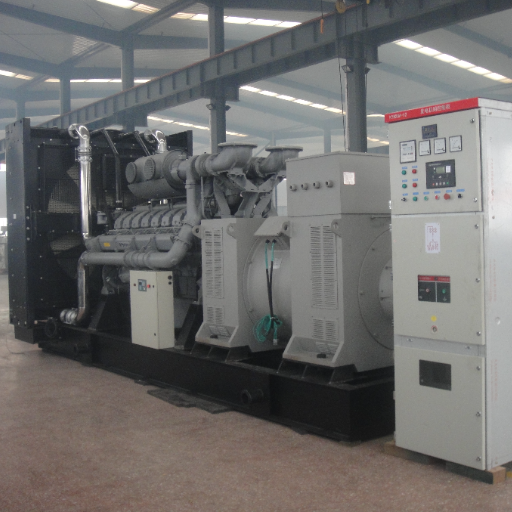
Run any genset specification or data sheet through these twelve checks:
- Duty class named (ESP, PRP, COP, LTP, or DCP), not just a kVA figure.
- kVA and kW both stated, with the power factor explicit (0.8 reference).
- Voltage, frequency, and speed match your grid and site.
- Voltage regulation stated as a number, ±1% or better for sensitive loads.
- Insulation class H and IP rating matched to your environment.
- Governor type electronic at 100 kVA and above, or for frequency-sensitive loads.
- Fuel consumption at four load points, labeled guaranteed, not typical.
- Ratings at your site conditions, or a derating basis stated.
- Noise figure with its measurement distance (1 m and 7 m are not interchangeable).
- Motor-starting kVA at a stated voltage dip, or a commitment to provide it.
- Performance class per ISO 8528-5 where load quality matters (G3 for critical).
- FAT records, GTP schedule, and certifications available with the quote, including the emissions tier for your market (EPA Tier 4 Final, EU Stage V, or China Stage III/IV).
Frequently Asked Questions
What is a generator set specification?
A generator set specification is the complete technical definition of a genset: power rating, duty class, electrical performance, engine and fuel data, environmental ratings, and testing documentation. Per ISO 8528, the nameplate alone must state the ratings plus the reference conditions they assume.
What is a generator nameplate rating?
A generator nameplate rating is the legally defined output block ISO 8528 requires on every genset: rated kVA and kW at a stated power factor, duty class, voltage, frequency, speed, and the reference conditions those values assume. It is the floor of a specification, not the whole of it; guaranteed site-condition values and test records complete the picture.
What does 0.8 power factor mean on a generator?
Power factor is the ratio of real power (kW) to apparent power (kVA), and ISO 8528 uses 0.8 as the reference for three-phase industrial sets. A 500 kVA nameplate therefore delivers 400 kW. Single-phase sets often use a 1.0 reference, so always check the PF basis before comparing kW figures across sheets.
What is the difference between kVA and kW on a generator?
kVA is apparent power, the alternator’s total capacity; kW is real power, the usable work. Real power equals kVA times power factor, and ISO 8528 uses a 0.8 reference: a 500 kVA set delivers 400 kW. Compare loads in kW against the sheet’s kW figure, not its kVA headline.
What does ESP rating mean on a generator?
ESP (Emergency Standby Power) is the ISO 8528 duty class for emergency backup: 200-500 hours per year at variable load, with no overload allowance. It suits grid-backup applications. Using an ESP-rated set for prime or continuous duty voids warranties and shortens engine life dramatically.
What is DCP (Data Centre Power) rating?
DCP is the newest ISO 8528 duty class, defined for data center applications where sets run long outages at high load with strict availability targets. It replaces the older practice of specifying ESP with custom hours clauses, which left both buyer and supplier arguing over what the rating meant.
What voltage regulation is good for a generator?
Standard industrial sets hold ±2%; quality alternators with digital AVRs hold ±0.5-1%; premium units reach ±0.25%. Sensitive loads such as medical and IT equipment should see ±1% or better, stated as a guaranteed value rather than a typical one.
What IP rating should an outdoor generator have?
IP23 is the standard drip-proof alternator build and suffices under a canopy in mild environments. Dusty, coastal, or exposed installations need IP44 or higher. Match the rating to the worst week of your site’s year, not the average one.
Conclusion: The Spec Sheet Is the Machine
Reading a generator set specification is a learnable skill, and it is the cheapest due diligence in power procurement. Six parameter families, three kinds of values, and twelve checklist checks separate the buyers who compare machines from the buyers who compare headlines.
Key takeaways:
- Compare all six families: power rating, duty class, electrical, engine/fuel, environmental, testing
- Duty class is destiny: ESP, PRP, COP, LTP, and DCP describe different machines at the same kVA
- kW = kVA × 0.8 on any standard industrial sheet; compare loads in kW
- Demand guaranteed values at your site conditions, and treat “typical” as unwritten
- Motor-starting kVA at a stated voltage dip is the transient number that matters
- FAT records, a completed GTP schedule, and references turn a brochure into a contract
Shandong Huali manufactures diesel generator sets from 8 kVA to 4000 kVA and publishes complete data sheets with guaranteed values, four-point fuel consumption, and motor-starting figures for every unit. Our engineers review third-party specifications weekly.
Send us any generator data sheet or draft specification, and our engineering team will return a line-by-line assessment: what is guaranteed, what is missing, and what to challenge before you sign.
