
The industrial diesel generator which has a 1,000 kW capacity differs from the commercial unit which carries the same price tag. The industrial unit is built for 15,000+ hours, extreme load swings, and remote field maintenance. The commercial unit is not. Many buyers only identify product differences after equipment failures lead to production shutdowns.
Shandong Huali Electromechanical Co., Ltd. has been producing industrial diesel generators which range from 8 kVA to 4,000 kVA for more than 25 years. Our company has provided diesel generators to customers who operate mines in Africa and data centers in Southeast Asia and manufacturing facilities throughout the Middle East. We understand which factors determine dependable long-term investments and which elements lead to excessive maintenance expenses.
The guide describes the industrial diesel generator definition while explaining which global brands achieve success in various applications and which methods exist to assess specifications and total ownership costs and manufacturer assistance. The engineers’ client advisory framework which you will learn will match their specific needs.
Want to gain a comprehensive understanding of diesel generators? (Read A Complete Guide to Diesel Generators) to delve deep into their classification, uses, and selection tips.
What Is an Industrial Diesel Generator?
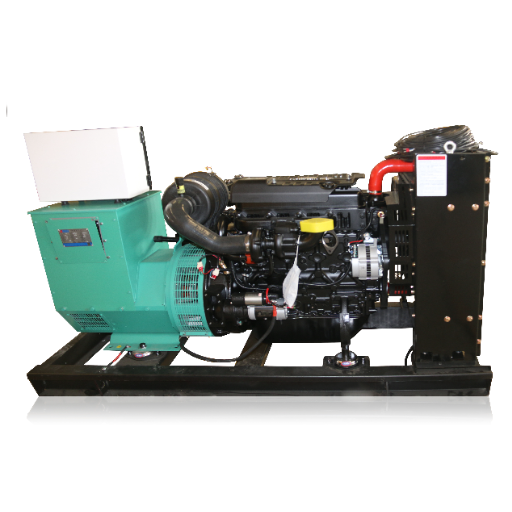
The industrial diesel generator serves as a powerful energy generation system which commercial and industrial sectors use because they need dependable power that runs for long periods while handling different operational demands. The units provide power output which starts at 100 kW and extends beyond 2,000 kW because their design includes strong components that enable them to operate continuously or almost continuously.
Unlike residential or light commercial generators, an industrial diesel generator must conform to strict operational standards. The most important is ISO 8528-1, which defines four power ratings:
- Emergency Standby Power (ESP): For utility failure only, with limited annual runtime
- Limited-Time Running Power (LTP): For prime power but with limited annual hours
- Prime Power (PRP): For continuous operation at variable load with unlimited hours
- Continuous Operating Power (COP): For constant base-load operation with unlimited hours
NFPA 110 Level 1 requires critical facilities like hospitals and data centers to start their units and achieve full load capacity within 10 seconds after power outages. The existence of these standards results from the fact that industrial operations experience financial losses of thousands of dollars for every minute of downtime.
Top Industrial Diesel Generator Brands and Their Strengths
Not every industrial diesel generator brand excels in every environment. Here is how the major players compare based on real-world deployment experience.
Caterpillar
Caterpillar leads the market for heavy construction equipment and mining machinery. Their industrial diesel generators are designed to operate in demanding conditions while providing the widest international service coverage of any manufacturer. The company provides power solutions that start at 7.5 kVA and extend beyond 7,000 kVA. Caterpillar equipment maintains higher resale value than almost all competing brands. The trade-off results in higher costs for customers.
Cummins
Cummins leads in load acceptance and transient response. This makes their industrial diesel generators the default choice for data centers, hospitals, and any application with sudden load swings. Cummins offers strong emissions compliance (EPA Tier 4 Final, EU Stage V) and a worldwide parts network. Power ranges cover 20 kVA to 2,000+ kVA.
Kohler
Kohler provides backup power systems which serve both healthcare facilities and commercial buildings. The company’s products operate silently while delivering reliable performance during emergency situations. The North American support network provides excellent service, but international coverage remains less extensive than what Caterpillar and Cummins offer.
MTU (Rolls-Royce Power Systems)
MTU combines advanced emissions technology with high power density to deliver its products. Their industrial diesel generators are preferred for data centers, marine applications, and large-scale prime power installations which require both performance excellence and space efficiency.
John Deere
John Deere occupies the agricultural and rural industrial niche. Their engines are reliable in the 30 kW to 500 kW range, with a strong dealer network in agricultural regions. They are less common in urban data centers or high-spec manufacturing.
Perkins
Perkins is the fuel-efficiency leader among major brands. The company supplies industrial diesel generators which customers use to power telecom towers, commercial buildings and light-to-medium industrial standby operations. The costs for parts and maintenance intervals fall between the expenses of premium Western brands and the cheaper value-tier products.
Chinese OEMs (Weichai, Yuchai)
Chinese manufacturers have established themselves as genuine competitors for industrial diesel generator production. Weichai and Yuchai provide dependable engines which require basic maintenance and maintenance costs less than their competitors. Parts networks are expanding rapidly across Asia, Africa, and Latin America. These brands are increasingly competitive for construction sites, emerging market infrastructure, and applications where basic field maintenance is the only option.
Your brand selection needs to match your operational requirements and your working conditions and your maintenance needs. The “best” industrial diesel generator does not exist as an all-encompassing solution.
Zambia’s copper mining operation procurement manager Marcus discovered this fact through personal experience. His project required primary power needs for a new processing line which existed 800 kilometers away from the nearest authorized Cummins service center. He chose a Weichai-powered industrial diesel generator after assessing fuel logistics and technician availability and parts delivery times. The simpler mechanical design allowed his on-site team to handle routine maintenance. After three years and 18,000 operating hours, the unit has required no major overhauls.
How to Choose the Right Industrial Diesel Generator
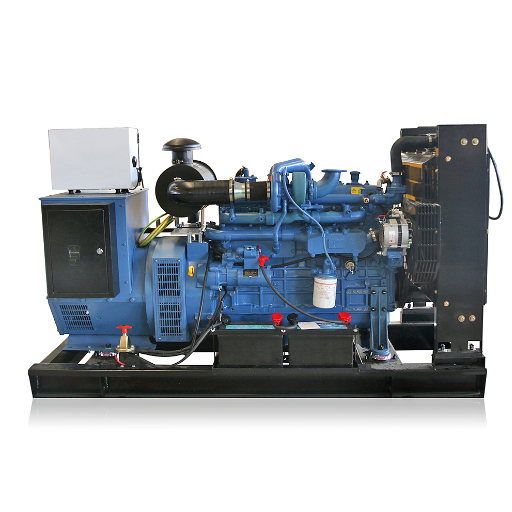
Selecting the right industrial diesel generator requires moving beyond brand names and comparing engineering specifications to your operational reality.
Match the Power Rating to Your Duty Cycle
The most common mistake buyers make is using a standby-rated unit for prime-power duty. Standby engines are not built for continuous heat cycling. Their cooling systems and alternator thermal limits and fuel injection mapping are designed for emergency operation on rare occasions.
If your facility needs continuous power where grid supply is unreliable, specify Prime Power (PRP) or Continuous Operating Power (COP). The generator needs to only operate during utility failures, so Standby Power (ESP) provides sufficient power at a lower initial cost.
Calculate Real Power Requirements
Start by listing every piece of equipment the industrial diesel generator must support. Record both running power and starting power. Electric motors, compressors, and elevators can draw 5 to 7 times their running current during direct start-up. A 22 kW elevator motor may require a generator rated at 154 kW or higher to handle the inrush.
Distinguish between kilowatts (kW), which measure real power, and kilovolt-amperes (kVA), which measure apparent power. For most three-phase industrial units, active power in kW equals 0.8 times the kVA rating.
Add 20% to 25% headroom above your calculated peak load. This prevents chronic low-load operation, which causes wet stacking, carbon buildup, and premature engine wear.
Account for Environmental Derating
Altitude and temperature reduce generator output. For naturally aspirated diesel engines, expect approximately 2% to 3% power loss per 1,000 feet above sea level. Hot ambient temperatures and poor ventilation compound the problem. Always derate your selection for these conditions, or you will end up with an undersized unit.
Evaluate Fuel Strategy and Efficiency
Fuel is the largest lifetime cost for any industrial diesel generator. Ask your supplier for fuel consumption curves at 50%, 75%, and 100% load. Over 10,000 operating hours, a more efficient engine that costs more upfront will almost always pay for itself in fuel savings.
Tank sizing should be based on your maximum required runtime without refueling. For data centers and hospitals, NFPA 110 mandates a minimum of 24 hours of fuel on site at full load.
Check Cooling and Environmental Fit
Water-cooled systems are the standard for industrial loads above 15 kW. They handle continuous heavy-duty cycles and hot climates far better than air-cooled alternatives.
Enclosure selection depends on your site:
- Open-frame: Lowest cost, best cooling, requires a dedicated generator room or low-noise area
- Silent canopy: Reduces noise to 65–75 dBA at 7 meters; essential for urban and residential-adjacent sites. If your primary concern is noise compliance rather than shipping or weatherproofing, our silent diesel generator guide explains when canopy units are the better choice.
- Containerized: Provides weather protection, integrated fuel tanks, and rapid transport; standard for data centers and military deployments.For a deeper comparison of generator enclosure types and configurations, see our complete containerized generator guide.
Dust, humidity, and salt air also affect component selection. Mining and desert sites need enhanced air filtration. Coastal sites require corrosion-resistant enclosures.
Industrial Applications: Matching Specs to Environments
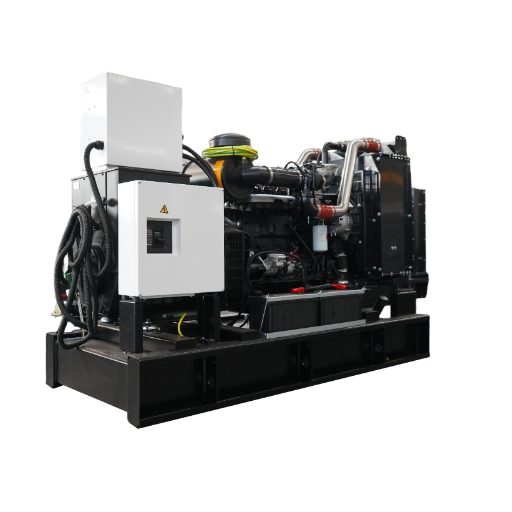
The specifications that matter in a hospital are completely different from those in a copper mine.
Manufacturing and Factories
Manufacturing plants need either standby power for grid backup or continuous power for off-grid facilities. Load profiles often vary with production shifts, making Prime Power (PRP) the safest choice for variable-load environments.
Key priorities include voltage stability for sensitive CNC and automation equipment, sufficient surge capacity for motor starting, and parallel capability for future expansion. Factories rarely run at 100% capacity around the clock, so fuel efficiency at partial load matters.
Mining and Heavy Construction
Mining and construction environments are harsh. Dust, vibration, and temperature extremes are normal. Trailer-mounted and skid-based units provide the mobility these industries need.
For these applications, prioritize rugged enclosures with high IP ratings for dust and water ingress protection, large fuel tanks for multi-day operation, engines tolerant of variable fuel quality, and simple mechanical designs that can be serviced with basic tools in remote locations.
Data Centers
Data centers demand the highest reliability standards. Uptime Institute Tier III and Tier IV certifications require facilities to maintain operational capacity through all available backup systems without limit to time. The new Data Center Continuous (DCC) rating system permits industrial diesel generators to operate at their full power capacity without interruption for an indefinite period while handling different operational demands.
Look for ISO 8528-5 Class G3 or G4 performance for tight voltage and frequency regulation, 100% step-load acceptance, 24 hours of on-site fuel storage, masterless paralleling capability for N+1 redundancy, and automatic transfer switch integration. For more details, see [backup power generator guide].
Healthcare and Critical Infrastructure
Hospitals and emergency facilities are governed by NFPA 110 Level 1. The industrial diesel generator must start and accept full rated load within 10 seconds of a utility failure. Fuel must support at least 24 hours of continuous operation.
Additional requirements include low-noise enclosures to meet hospital zoning, redundant starting systems, remote monitoring with alarm transmission, and compliance with local emissions regulations.
Elena, the infrastructure director at a colocation facility in São Paulo, spent months evaluating industrial diesel generators for a Tier IV expansion. She initially focused on price, but after reviewing uptime requirements, she shifted her criteria to DCC rating, G3 transient response, and the supplier’s ability to provide factory-witnessed load bank testing. The unit she selected cost 15% more upfront. It has since delivered flawless performance through three extended grid outages, protecting millions of dollars in client SLA commitments.
Total Cost of Ownership: The Real Numbers
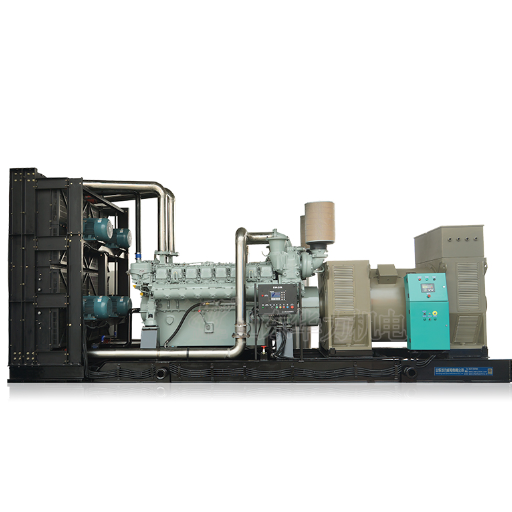
The purchase price of an industrial diesel generator is often less than one-third of its lifetime cost. Smart buyers evaluate total cost of ownership (TCO) across a 10-year horizon.
Fuel costs dominate the equation. A 1,000 kW unit running at 75% load can consume 200+ liters of diesel per hour. Over 5,000 operating hours, a 5% improvement in fuel efficiency can save tens of thousands of dollars.
Maintenance costs include oil changes, filter replacements, coolant checks, and periodic inspections. Industrial engines typically require service every 250 to 500 operating hours. Large units can cost 800to800to2,000+ per service event.
Parts availability affects both cost and downtime risk. Before you buy, confirm that critical components like alternator windings, injectors, and control modules are available in your region within days, not weeks.
Warranty terms vary from one year on basic units to three to five years on premium brands. Clarify what is covered: engine block, alternator, control system, and labor.
Finally, consider resale value. A well-maintained Caterpillar or Cummins unit retains value far better than an obscure brand. When you spread the total cost over the generator’s usable life, the cheapest upfront option is rarely the most economical.
Working with an Industrial Diesel Generator Manufacturer
Not all suppliers are equal. A trading company may quote a lower price, but they cannot control quality, customize configurations, or guarantee after-sales support. Working directly with a manufacturer offers clear advantages.How to Choose a Diesel Generator Manufacturer,Please Read the Diesel Generator Manufacturer Guide.
Integrated production control means every unit is built and tested under the same quality standards. At Shandong Huali Electromechanical Co., Ltd., each industrial diesel generator undergoes 100% testing in a national standard testing center before delivery. This includes load bank testing, voltage regulation verification, and thermal performance checks.
OEM/ODM customization matters when standard models do not fit your project. A manufacturer with engineering expertise can adjust voltage, frequency, enclosure dimensions, control systems, and paint specifications to meet your exact requirements.
Engineering support ensures you get the right unit the first time. Look for a supplier with an in-house team that can review your load list, calculate derating factors, and recommend the optimal configuration.
Global logistics and after-sales service complete the picture. Confirm that the manufacturer can handle export documentation, container loading, and on-site commissioning. Ask about spare parts stocking, technical training, and warranty claim procedures in your region.
For additional guidance on generator selection, read our article on [how to choose a diesel generator for industrial use]. And follow our [diesel generator maintenance guide]to protect your investment over the long term.
Conclusion
The process of selecting an appropriate industrial diesel generator requires decision makers to evaluate four essential factors which include selecting a generator brand that suits their operational requirements and environmental conditions together with making precise load assessments and choosing suitable power and cooling specifications and evaluating complete ownership expenses which extend beyond initial purchase costs.
The global market provides consumers with unprecedented product selection which includes Western premium brands that operate extensive service networks and Chinese original equipment manufacturers who supply durable products at reduced financial investment. The best choice is not the most expensive brand. The optimal selection occurs when you choose the brand together with its specific configuration which matches your actual business requirements.
Industrial diesel generators serve as operational continuity investments which last between 10 to 15 years. The unit you select today will either protect your facility for the next decade or become a source of fuel inefficiency, downtime, and unexpected repair costs.
Shandong Huali Electromechanical Co., Ltd. produces industrial diesel generators which have power capacities ranging from 8 kVA to 4,000 kVA for clients who operate in construction, mining, data centers, healthcare, and manufacturing across the globe. Our engineering team can examine your load profile to identify the suitable brand and configuration, while also preparing a tailored pricing estimate for you.
