
A mobile generator suits a load that moves, a site with no permanent infrastructure, or a project that needs power before civil works are finished. A stationary generator suits a permanent load, high capacity, and long unattended running. The deciding factor isn’t the size of the machine. It’s whether the site is permanent.
That distinction gets missed more often than it gets argued about. Most projects settle the question by default. Someone draws a generator room on the site plan, and from that point the comparison is closed, because a decision that was never made is hard to revisit.
This guide treats it as a deliberate decision. You’ll get the difference between the two in engineering terms and the situations where each one wins. You’ll also get a side-by-side comparison you can take to a project meeting, plus the costs that appear on the invoice when the deployment model turns out to be wrong.
Choosing between a trailer-mounted set and a permanent installation? Send us the site plan, the load schedule, and the project timeline. Our engineers will tell you which model your site actually suits before you commit to foundations.
Key Takeaways
- The decision is about permanence, not power. A 500 kVA load can be served either way, and the right answer depends on whether the load stays put.
- Form factor and duty rating are separate axes. Mobile versus stationary describes how the set is sited. Standby versus prime describes how hard it works.
- A mobile generator takes the civil-works critical path out of your schedule, which matters more than the machine price on short projects.
- A stationary installation avoids repeated mobilization, and it becomes the cheaper option once a site is permanent and the load is heavy.
- Containerized packages sit between the two: permanent-grade weather protection without a permanent building.
- The most expensive outcome is a stationary installation on a site that later moves, because the civil works can’t be recovered.
The Real Difference Is Whether the Site Is Permanent
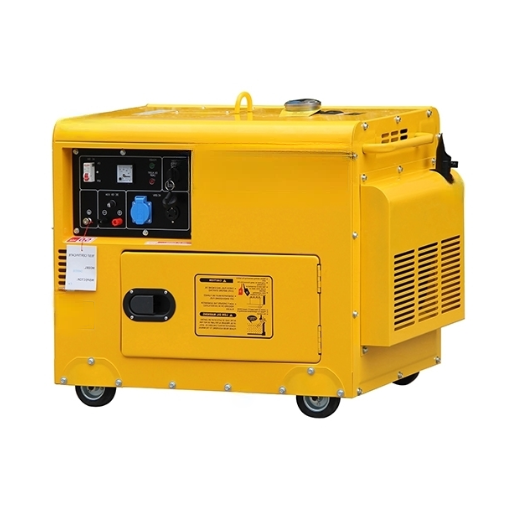
A stationary generator is a set that isn’t intended to move. It sits on a permanent foundation, connects to permanent fuel storage and a fixed switchboard, and normally runs under an automatic transfer switch without an operator present. “Stationary” describes where the set lives, not how hard it works.
A mobile generator is built to be relocated. That covers trailer-mounted and skid-mounted sets and containerized packages, and it covers an industrial range rather than a domestic one. Our overview of mobile power stations explains how these packages are configured and sized.
One confusion causes more over-specification than any other on this topic. Form factor and duty rating are different axes. A generator can be mobile and prime rated, or stationary and standby rated, and every other combination. Sites buy the wrong set because someone treats “stationary” and “standby” as the same word.
They’re not. If your project needs a permanently sited machine that also carries a continuous load, you need both a stationary installation and a prime rating, and those are two separate specification decisions. Our explanation of prime and standby ratings covers how the duty classes are defined and what changes between them.
A second distinction matters for compliance. A permanently installed set is regulated as a stationary engine. A trailer-mounted set generally isn’t, because it falls under the rules for nonroad engines instead.
The EPA’s stationary engine programme sets out the framework for fixed installations. Its emission standards reference guide covers on-road and nonroad engines. Neither page states a universal numeric limit, because the tier that applies depends on your jurisdiction, engine class, and installation date. Don’t assume the two regimes are interchangeable; confirm which one your site falls under.
What Counts as Mobile: Trailer, Skid, and Containerized Sets
Industrial portable generators aren’t scaled-up domestic portables. They’re engineered packages that happen to be relocatable, and the three common formats solve different problems.
Trailer-Mounted Generators
A trailer-mounted generator is the most directly relocatable format. The set, its fuel tank, its control panel, and usually a canopy travel together as one unit, so it can be towed between sites and running within hours of arrival.
This format suits projects where the power requirement moves faster than the work does. It also keeps the set outside the civil-works scope entirely. A trailer needs a level hardstand and a cable route. It doesn’t need a foundation, a building, or a permanent fuel system.
The trade-off is fuel autonomy. A trailer carries its own tank rather than drawing on bulk storage, so a set running continuously will need refuelling on a schedule decided by the tank size, not by your maintenance plan.
Skid-Mounted and Containerized Packages
A skid-mounted set is built on a steel base that can be lifted into place. That suits sites where the set will stay put for a season or a campaign, but may be lifted out later. A containerized package goes further, mounting the set inside a standard ISO container.
Containerized sets are the closest thing to a permanent installation that still moves. They give the set weather protection, acoustic attenuation, and security, and they can be shipped internationally as standard freight. For a remote site that needs permanent-grade protection without building anything permanent, they’re often the correct answer.
If noise is regulated at your site, the enclosure isn’t a cosmetic choice. Generator noise regulations set the limits that decide which package you can specify, and the difference between an open skid and an attenuated container is significant.
When a Mobile Generator Is the Right Answer
Construction and Temporary Site Power
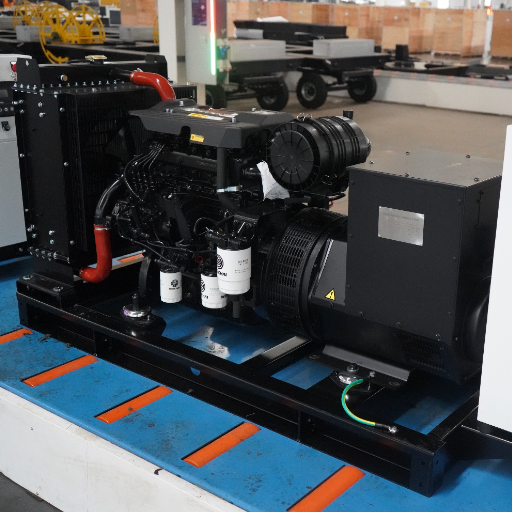
A construction site is the clearest case. The load exists for the duration of the build, the site layout changes as the work progresses, and the power requirement often arrives before the permanent supply does. Our guide to power supply for construction covers how temporary and mobile power is planned across a programme.
Rafael ran commissioning for a water treatment plant in northern Peru, and he hit exactly this problem. The permanent generator room was in the design, but the civil package around it would take roughly four months. His commissioning team needed power long before that, and the plant’s own testing schedule could not wait for a building to be finished.
He brought in a 400 kVA trailer-mounted set instead. It powered commissioning about three months earlier than the fixed installation would have. When the permanent set was finally energised, the trailer went to the next project rather than being sold at a loss. The equipment that looked like a temporary fix outlived two more jobs.
Seasonal and Relocatable Loads
Some loads are permanent in the sense that they recur every year, but they aren’t permanent in one place. Agricultural processing campaigns, seasonal crushing plants, and event or construction work that moves between sites all fit this pattern.
Buying a stationary installation for this kind of load means paying for civil works at a site you’ll leave. A mobile set lets the same asset follow the work, which is why these buyers usually measure value per campaign rather than cost per site.
Sites Where Civil Works Are Impossible or Too Slow
There are locations where a permanent installation isn’t a schedule problem but a physical one. Rock at shallow depth, protected ground, a leased site where you can’t pour foundations, or a permitted area where construction is restricted.
In these cases a trailer or containerized set isn’t a compromise. It’s the only option that gets power onto the site at all. A relocatable set still has to be specified for the conditions it will meet, though. Derating for altitude and temperature applies to mobile sets just as it does to fixed ones.
When a Stationary Installation Still Wins
High-Capacity and Prime Power Duty
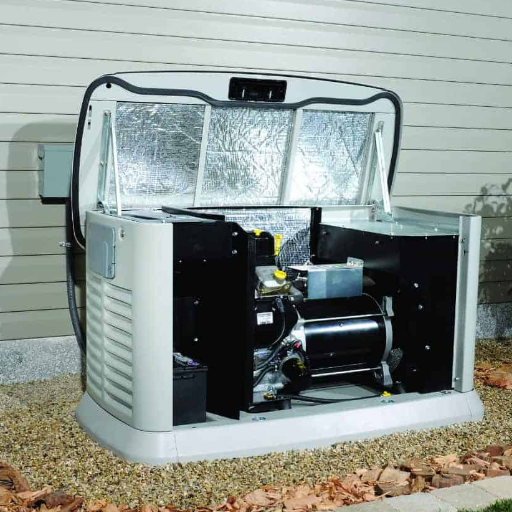
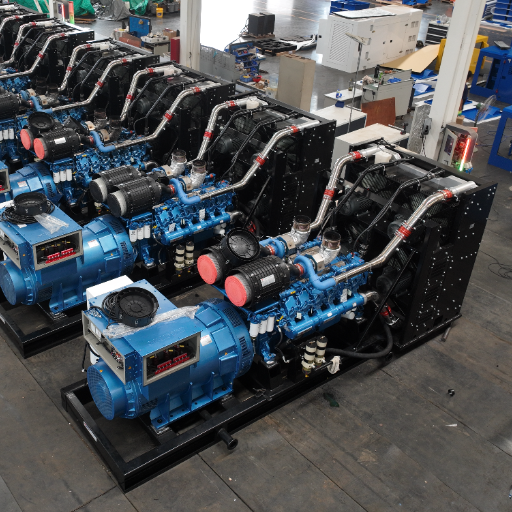
Above a certain capacity, mobile stops being practical. A trailer-mounted set can be built large, but the trailer has to be road-legal, and road-legal limits how much machine, fuel, and attenuation you can carry as one unit.
A site carrying a heavy continuous load, running as its own power source rather than as a backup, is normally a stationary installation. The machine can be sized to the load without a transport constraint, and the fuel system to the runtime. The switchgear can be built around the plant rather than around a trailer.
Unattended and Long-Runtime Operation
Stationary installations are built for sites without an operator on hand. A permanent installation connects to bulk fuel storage, which means weeks or months of runtime instead of hours. It can be monitored remotely, serviced on a planned schedule, and left running between visits.
Ingrid managed a quarry in Portugal, where the primary crusher generated power for most of the working year. She had started with a rented mobile set and found the refuelling schedule was costing more attention than the crushing operation itself, because every tank was a stop in the day.
The permanent 800 kVA installation she replaced it with drew on bulk fuel and ran unattended between service visits. The saving was not in the fuel. It was in the labour and the interruptions that disappeared with the weekly refuelling round.
An unattended site also tends to need remote monitoring and automatic mains failure control, which are line items rather than defaults. Our overview of stationary generators covers how these installations are configured for continuous and standby duty.
Where Fuel Infrastructure and Permits Justify Permanence
A stationary installation lets you build the things a mobile set can’t carry. Bulk storage with containment and bunding. Fixed pipework. A permanent exhaust route with proper attenuation. Ventilation designed for the room rather than the enclosure.
These are capital items, and they only make sense on a site you own and intend to keep using. Once the site qualifies, though, they’re also what makes the installation cheaper to run, because everything that costs labour on a mobile set becomes part of the fixed plant.
Mobile vs Stationary Generator by Decision Factor
| Decision factor | Mobile generator | Stationary installation |
|---|---|---|
| Site permanence | Temporary, seasonal, or relocatable | Permanent, owned or long lease |
| Typical capacity | Lower to mid-range, transport-limited | Mid to high range, no transport limit |
| Civil works | Hardstand and cable route | Foundation, room, fuel system, exhaust |
| Time to power | Days from delivery | Weeks to months, civil works first |
| Fuel autonomy | Tank carried on the set | Bulk storage, weeks to months |
| Duty assumed | Standby, or prime with attention to servicing | Standby, prime, or continuous |
| Operator presence | Attended or regularly visited | Can run unattended with monitoring |
| Emissions regime | Generally nonroad engine rules | Stationary engine rules |
| Redeployment | Set follows the work | Value tied to the site |
| Main risk | Fuel logistics and refuelling intervals | Sunk civil cost if the site changes |
The Costs and Lead Times Buyers Forget
The purchase price is the smallest part of this decision, and the two columns fail in different ways.
A mobile set carries costs a stationary set doesn’t. Refuelling labour builds up on every interval, and mobilisation is charged each time the set moves. A trailer also takes up site space you may want for something else. None of it shows on the quotation, and all of it lands on the operating budget.
A stationary installation carries the opposite profile. The civil package is often the largest single line after the machine, and it’s spent before the set arrives. Permits, foundations, fuel infrastructure, and exhaust routing all have to finish first. That puts your schedule in the hands of trades that have nothing to do with generators.
That asymmetry is why the timeline usually settles the question before the budget does. A project that needs power in six weeks can’t use an installation that needs four months of civil works. The lifetime cost can look far better on paper and still lose.
One contractor learned that the expensive way. He bought a stationary set for a road project with a three-year programme, reasoning that permanent would be cheaper per kVA.
When the work moved to a second section forty kilometres away, the foundation, the fuel system, and the exhaust route stayed behind. The set was relocated as a bare unit, and the second installation had to be built from scratch. The per-kVA saving was gone, and the second site cost more than the first.
Where the enclosure decision sits inside all of this is covered in our comparison of open and silent diesel generators, which sets out what a canopy or container buys over an open skid.
Frequently Asked Questions
What is considered a stationary generator?
A stationary generator is permanently installed and not meant to move. It sits on a fixed foundation, connects to permanent fuel storage and a fixed switchboard, and usually operates under an automatic transfer switch. The term describes the installation, not the duty rating, so a stationary set can be either standby or prime rated.
Is a mobile generator more expensive than a stationary one?
Per kVA, usually yes, because the set carries its own enclosure, fuel tank, and transport frame. The comparison changes once you include the installed cost. A stationary installation adds foundations, a building or room, fixed fuel infrastructure, and permits, and those items often exceed the premium on the mobile set.
Can a trailer-mounted generator run continuously?
It can run as a prime power set if it’s specified for that duty, but the limiting factor is usually fuel rather than the machine. A trailer carries a finite tank, so continuous operation means a refuelling schedule. Where continuous running is the requirement, bulk fuel storage is the deciding constraint.
Do mobile generators need foundations?
No. A mobile set needs a level, load-bearing hardstand and a cable route, not a poured foundation. That’s the main reason a mobile deployment can reach power in days while a stationary installation is still waiting on civil works.
How long does a stationary installation take to commission?
It depends on the civil package rather than the generator. Foundations, a generator room or enclosure, fuel infrastructure, exhaust routing, and permits all have to complete before the set can be energised. On many projects that sequence is measured in months, which is why the schedule often settles the mobile versus stationary question on its own.
Conclusion
The choice between a mobile generator and a stationary installation is one question, and it’s not about capacity. Ask whether the site is permanent. Everything else follows from the answer.
If the load moves, if the site is leased or temporary, or if civil works sit on your critical path, a mobile set removes the problem instead of managing it. If the site is permanent, the load is heavy, and nobody will be standing next to the machine, a stationary installation is the cheaper answer over its working life.
Keep the two axes separate while you decide. Mobile and stationary describe how the set is sited. Standby and prime describe how hard it works. Sites that blur them buy more machine than the load requires, or discover the shortfall after commissioning.
Still deciding which model your site needs? Send us the site plan, the load schedule, and the programme dates. Our engineering team will confirm whether a trailer, containerized, or stationary package fits the project. We’ll quote it with the scope and exclusions stated explicitly, so it compares cleanly against anything else on your desk.
