
Diesel generator UPS compatibility depends on input demand, source response and the load sequence. Check the named machines together, using supplier data and joint tests. A fixed capacity ratio cannot prove that they will work together.
The engine is running. Why is the load still on battery? The UPS may be rejecting its input. Both machines can work alone while their interface still needs checking.
This guide shows what to ask each supplier, how to avoid counting recharge twice and what proof to request before sign-off.
The scope is an external static uninterruptible power supply (UPS) fed by a diesel generating set. Rotary UPS and battery-storage architecture comparisons need separate studies. For broader application planning, see our data-center power page.
Key Takeaways
- Size from UPS input, including relevant losses and recharge, plus other concurrent loads.
- Check engine kW, alternator current, reactive capability and waveform behavior separately.
- Coordinate input acceptance, walk-in, charging and bypass as distinct functions.
- Test the actual operating sequence, including light load and return to utility.
Diesel Generator UPS Compatibility Starts with the Operating States
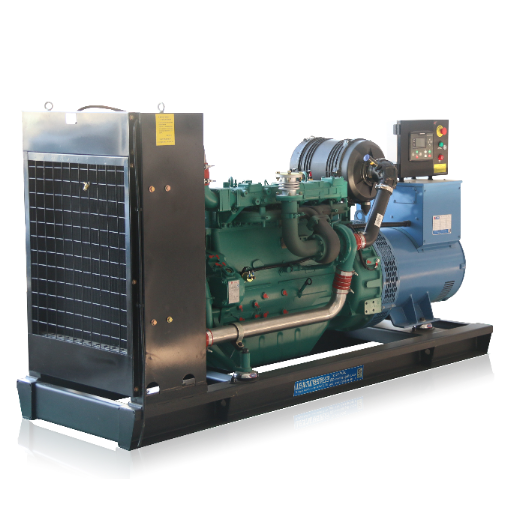
Rectifier input is different from protected output
The UPS rectifier converts incoming AC power to DC. The inverter supplies the protected AC load, while the battery provides stored energy when needed. The generator feeds the UPS input.
It supplies conversion losses and any battery charging in that state, as well as the protected load. The output nameplate isn’t the full demand.
Topology matters. An online double-conversion UPS and a line-interactive unit handle incoming power differently. Neither label replaces the model’s input limits.
For diesel generator UPS compatibility, record the topology, rectifier design and operating modes alongside the model number. Ask which modes the supplier has assessed for generator operation.
Draw the bypass path too. Does it share the rectifier feed, or use a separate feed? The rectifier may accept the source while bypass cannot use it. Each path has its own limits.
Diesel generator UPS compatibility review must cover both paths. Ask what happens during maintenance, overload or a fault, when the load may need bypass. A stable inverter reading does not answer that question.
Utility failure, battery bridge, acceptance and retransfer
Map diesel generator UPS compatibility from the first loss of utility power. Show the battery bridge, generator ready signal and UPS input check. Then show the rectifier ramp and battery recharge.
Continue the map through loss of the generator feed and return to utility. Who owns each event, and what proves it took place? A steady reading at the end leaves those questions open.
If you are preparing a selection inquiry, send ShanHua the UPS model and one-line diagram. Include the proposed sequence so the discussion starts with the equipment interface.
Illustrative scenario: A site’s engine is running, but the UPS stays on battery. This is a teaching example, not a real site report. Build a shared timeline to assess diesel generator UPS compatibility.
Record voltage and frequency at the UPS input. Match those traces to the UPS rejection log and the loads that joined at that time. The engine-running signal alone does not show why the UPS stayed on battery.
Cummins’ educational video below distinguishes transfer-switch and UPS roles in a healthcare setting. The selected segment starts at 07:55. The timing discussed applies to its healthcare context. It doesn’t set a transfer deadline for every industrial site or prove a specific pairing.
An automatic transfer switch selects a source. It does not store energy to bridge engine startup. The batteries must cover the full sequence at the actual load.
Ask the UPS supplier to confirm runtime for that duty. Have the designer own the full transfer schedule. Keep both records with the project file.
Collect the UPS Input and Recharge Data Before Sizing
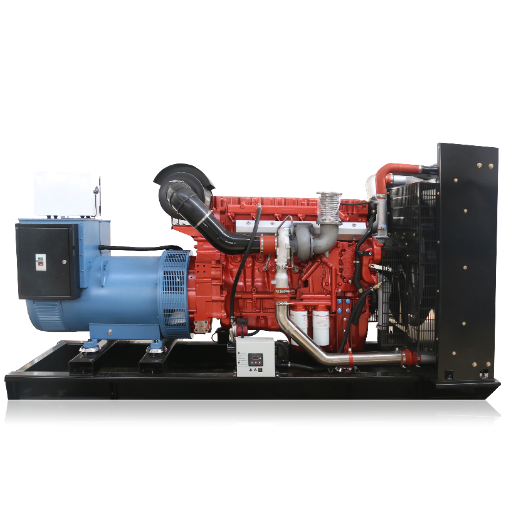
Input kW, kVA, true power factor and efficiency
Start the diesel generator UPS compatibility worksheet at the UPS AC input terminals. This defines where the values apply. Mark each value as normal input, maximum input or output. Keep kW, kVA and amps in separate columns.
True power factor relates real power to apparent power. It includes distortion. A displacement-only figure can miss part of the input-current picture.
Use this request table with the generator load schedule. Blank cells are supplier questions, not permission to insert a typical value.
| Field to request | What the record must show | Who supplies it |
|---|---|---|
| Protected output | Show kW and the load profile. Separate initial, future and failover cases. | The designer lists each case. |
| UPS input | Give kW, kVA, amps and true PF at each planned load. | The UPS supplier provides curves or a schedule. |
| Efficiency | State the load, mode and measurement boundary. | The UPS supplier confirms which losses it includes. |
| Recharge | State AC input kW or amps. Clearly flag any DC value. | The UPS supplier explains losses and what is included. |
| Input controls | List voltage and frequency limits, current limit and walk-in. | The UPS supplier cites the model manual. |
| Other loads | List running and starting demand in each state. | The designer checks the site load schedule. |
Check what the maximum input figure includes. It may already cover full recharge. If so, adding a charge allowance counts that load twice. An output-only efficiency sum may instead leave charging out.
This boundary check is central to diesel generator UPS compatibility. Cummins’ T030 application manual, section 3.3.3.4 covers UPS demand, charging and current limits. Its examples date from February 2015. They are not ratings for a current model.
A Diesel Generator UPS Compatibility Demand Calculation
Illustrative scenario: Assume a protected output of 160 kW. Use 96% conversion efficiency, a separate 20 kW AC-side charge allowance and 80 kW of other loads. These are teaching inputs, not product ratings or a customer result.
Assume the efficiency figure leaves charging out. Also assume none of the other loads sit inside the UPS output. State both points in the diesel generator UPS compatibility worksheet before doing the sum.
The arithmetic demand is:
160 / 0.96 + 20 + 80 = 266.7 kW, rounded
That calculation establishes one real-power demand case. It does not select a generating set or prove diesel generator UPS compatibility. It leaves more checks: alternator current, reactive demand, load steps, site derating and duty.
Check each one with the equipment supplier. Do not turn the result into kVA by dividing every mixed load by an assumed 0.8 power factor.
Maximum recharge and simultaneous modules
Is the charge figure AC input or DC battery power? Ask the supplier. A DC figure needs the right charge-loss data before you can use it as an AC load. The output efficiency may not apply.
For diesel generator UPS compatibility, request the maximum combined AC input with load and charging active. Keep the supplier’s boundary note beside the number.
For modular or redundant systems, record which modules operate in each state. Failover can shift demand to another feed or module. Show that case on its own.
Keep initial and future loads separate too. A redundancy label doesn’t state the whole generator demand.
Check bypass demand on its own. A change of path can change what the source sees. Do not count the UPS input and its downstream loads twice in one total.
Ask the designer to check each row against the one-line diagram. Diesel generator UPS compatibility sizing should use one agreed load list. Keep earlier versions so the team can trace changes in the demand case.
Check Engine, Alternator and Waveform Limits Separately
Current distortion is different from voltage distortion
Spare engine kilowatts are only part of diesel generator UPS compatibility. The engine supplies real power. It must respond when demand changes.
The alternator must carry current within its heat and reactive limits. It must also control voltage. Ask for each check in the diesel generator UPS compatibility assessment. A single spare-capacity percentage hides which limit applies.
UPS rectifiers can draw nonsinusoidal current. Current total harmonic distortion (THDi) describes the current waveform. Voltage distortion (THDv) describes the voltage waveform at a set point.
The source impedance and load shape the result. Impedance describes how the source opposes current flow. Ask where each value was measured. Low input-current distortion alone does not prove low bus voltage distortion in every state.
STAMFORD | AvK AGN025 explains why nonlinear loads have no single oversizing factor. Its questionnaire asks about the converter and how it works. Use those questions for diesel generator UPS compatibility.
Get input-current and harmonic data at the load levels you plan to use. Then ask the alternator supplier to assess the source and site. A full-load data point does not describe the whole range.
Leading reactive power at light load
Check diesel generator UPS compatibility at light load too. The UPS and its filters may draw leading reactive power while real-power demand stays low. This depends on their design and state.
The engine can have spare kW while the alternator reaches a limit. Request leading and lagging reactive power in kVAR across the planned load range. Compare those values with the curve for the proposed alternator.
Cummins’ Data Center Design Challenges training dates from July 30, 2024. Its charts show engine, stator, rotor and stability limits. These are teaching charts. Use the curve for your named equipment to assess diesel generator UPS compatibility.
| Load case | Question to resolve | Evidence to request |
|---|---|---|
| High load plus recharge | Can the set supply the kW and current? | Get combined input data and a model-specific assessment. |
| Light load with filters active | Is leading reactive demand within the curve? | Get UPS kVAR data and the alternator curve. |
| Rectifier ramp or another load step | Do voltage and frequency stay within agreed limits? | Get the sequence, response curves and test traces. |
| Bypass | Can the alternate path supply the load? | Confirm the source, sync limits and allowed states. |
Excitation and reactance are design inputs
A permanent magnet generator (PMG) can support the excitation system. It does not stop the load drawing harmonic current. Reactance and control response still matter.
Use the alternator specifications guide to identify the fields to request. For diesel generator UPS compatibility, require evidence for the exact alternator. A design label is not a test result.
Do not add capacitors based on a low power-factor reading alone. Leading, lagging and distorted loads need different checks. The power-factor diagnosis article explains those cases. Ask suppliers to identify the cause before they propose a change.
Set the test points before taking waveform and reactive readings. A generator-terminal result and a UPS-terminal result are not interchangeable when the feeder and other loads lie between them. Log the test method, load and mode with each result. That lets the next engineer compare like with like.
Coordinate Walk-In, Recharge and the Site Load Sequence
Acceptance delay and rectifier walk-in
Input acceptance means the UPS has judged the source suitable. Walk-in controls how fast rectifier demand rises after that point. Recharge restores battery energy.
Bypass synchronization checks the alternate power path against its own conditions. Keep these functions separate in the diesel generator UPS compatibility schedule.
A slower ramp can spread the rise in rectifier demand. The batteries must still support the load during that time. Ask the UPS supplier for the available ramp settings and any input delay.
Diesel generator UPS compatibility review must include the runtime basis. State battery condition, charge level and protected load. A nominal runtime label does not show that this sequence is covered.
Name the events on the timeline: utility fails, generator is ready, UPS accepts input, ramp starts, charging starts and other loads join. Use settings from the approved design. No general delay proves diesel generator UPS compatibility. A longer delay can change how much battery reserve the site needs.
Charging limits and motor pickup
Illustrative scenario: Cooling equipment starts while the UPS rectifier is recovering from an outage. This is a teaching exercise. Plot both demands on one timeline for diesel generator UPS compatibility review.
Ask both suppliers to compare the proposed sequences. Which loads must the source accept at once? Do not assume that an arbitrary pause will fix a response problem.
Review motor-starting kVA inputs separately from running demand. If a start causes a dip, examine its duration and recovery using the motor-start voltage-drop discussion. Keep these events visible in the UPS acceptance review.
A charge-current limit may reduce initial demand if the model supports it. It may also change recharge time. Ask the UPS supplier to confirm both effects.
Assess diesel generator UPS compatibility for another outage before recharge ends. The battery reserve will differ from a full-charge start. Record what the owner needs the system to support in that state.
Check the owner’s needs as well as the source response. What must keep running if power fails again?
Bypass synchronization and generator mode
Can bypass work throughout generator operation, or only in certain states? Ask the UPS supplier. Record what happens when bypass is unavailable and what the load needs.
Have the supplier and designer approve that behavior before testing. A healthy rectifier does not prove that bypass is ready. Keep the two acceptance checks separate.
Schneider Electric’s SRTG FAQ describes a generator mode for specified SRTG UPS models. Other models need their own manual check. Ask for the relevant manual and firmware version.
Treat that feature as a narrow, model-specific example. Its name does not authorize wider protection limits. Nor does it guarantee that a proposed pairing will work.
If the issue is sustained low voltage, use the voltage-under-load guide. If frequency falls during demand changes, use the frequency-response guide. These are distinct diagnostic paths. Capture synchronized traces before deciding which equipment or setting needs attention.
Prove Diesel Generator UPS Compatibility with Joint Testing
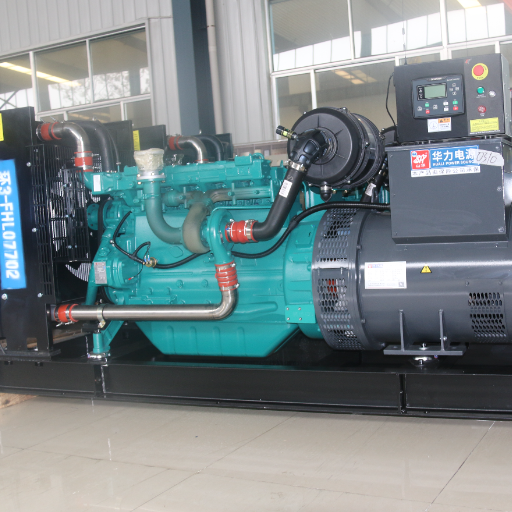
Agree Diesel Generator UPS Compatibility Test Limits
A resistive load bank tests the generator with a known load. It does not test the UPS rectifier, battery controls or bypass logic. Test diesel generator UPS compatibility with the actual machines.
Add the interface cases below to the generator acceptance procedure. Name each witness and the evidence required.
Agree the limits before testing. For diesel generator UPS compatibility, list the UPS input and bypass limits. Add the agreed generator response.
State what the downstream load must ride through. For each limit, cite the document version, test point and allowed duration. A steady voltage band can’t describe a short dip or the time taken to recover.
Use a qualified test team and an approved procedure. This matrix sets out evidence to request, not live switching instructions. Assign people to protect the load and watch battery reserve. State who can stop the test when approved conditions are exceeded.
Cover each relevant operating state
| State to test | Load basis | What to record | Who agrees the limit |
|---|---|---|---|
| Utility loss and battery bridge | Use the actual protected load. | Log UPS events, battery condition and load continuity. | UPS supplier and designer |
| Generator acceptance | State the initial loads. | Measure voltage and frequency at UPS input. Keep acceptance and rejection logs. | Both suppliers |
| Rectifier walk-in | Use the agreed ramp and other loads. | Trace input kW, current rise and bus recovery time. | Both suppliers |
| Charge recovery | Define battery state and load. | Record combined AC input and battery events. | UPS supplier |
| Motor or cooling pickup | State the starting sequence. | Trace bus and UPS voltage. Record frequency recovery. | Designer and generator supplier |
| Light load | State minimum demand and filter state. | Measure leading or lagging kVAR and waveforms. | UPS and alternator suppliers |
| Bypass or transfer | Use the approved applicable states. | Record sync status, power path and load continuity. | UPS supplier and designer |
| Loss of generator input | Define the battery condition. | Log the UPS transition and load behavior. | UPS supplier |
| Return to utility | Use the agreed retransfer sequence. | Log source changes, ramp, charging and load continuity. | Designer and both suppliers |
For each row, enter the load, settings, witness and report reference. Explain any case marked “not applicable.” Missing readings remain open items. No alarm does not mean a test passed.
Capture voltage and frequency changes with their recovery times at the defined terminals. For diesel generator UPS compatibility, keep current and voltage distortion readings distinct. Record THDi at the UPS input. Measure THDv at the agreed generator or bus point where required.
Include reactive direction and kVAR. Add neutral current where the design calls for it. Note which other loads were connected so the reader can interpret each trace.
Label each waveform with the load and event time. Keep the raw trace, not just the summary.
Keep a Diesel Generator UPS Compatibility Retest Record
In the first illustrative scenario, engine-running and UPS input acceptance are separate events. Align both with voltage, frequency and battery records to assess diesel generator UPS compatibility.
Did the source fail a limit, or was another control state active? Keep the full event record; a display photo alone cannot show the cause.
For a failed test, keep the trace, settings, proposed fix and approval. Retest diesel generator UPS compatibility under the same relevant conditions against the original criteria.
A lighter-load run does not close the failure without a formal change to the design requirement. Keep that approval with the report.
Record the generator, engine, alternator and UPS identifiers. Add control and firmware versions, battery condition, ambient conditions and instrument details. These define the scope of the result.
A new alternator or UPS setting can change diesel generator UPS compatibility at the same capacity. Review changes before applying an old report.
The performance-class guide helps frame the required response. A class label alone does not prove site acceptance. Keep the commissioning checklist for wider site records and the load-bank test schedule for that separate test. File them with the joint report, and assign each open item.
Prepare a Supplier Review Pack
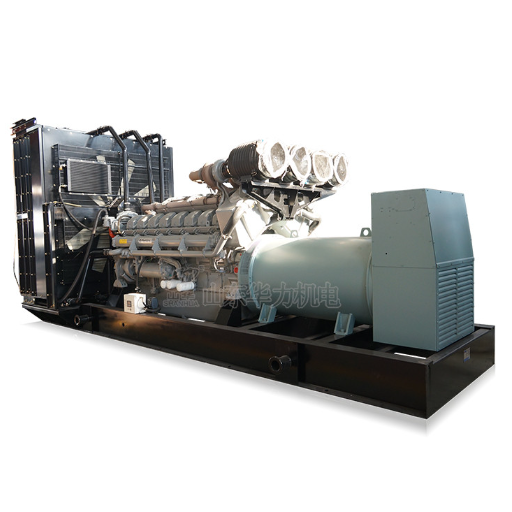
What the UPS Supplier Must Confirm for Diesel Generator UPS Compatibility
For a diesel generator UPS compatibility inquiry, send the one-line diagram, load schedule and UPS model. Show rectifier and bypass paths, module layout and planned modes. Separate initial, future and failover cases so each demand is clear.
Ask the UPS supplier for:
- Maximum AC input with recharge, at the planned load levels.
- True PF, harmonic data and relevant leading kVAR.
- Input acceptance limits and separate bypass limits.
- Available ramp and current controls, with model references.
A brochure’s best-load efficiency or full-load THDi number doesn’t fill every row. Request each missing value.
What the generator supplier and test team must return
Give the supplier altitude, temperature, airflow and duty. Request separate checks for engine response, alternator current and reactive limits. Ask which load steps and assumptions were used. Have the designer check the result against the other loads and site protection.
The test team should return a state matrix, witness list, instrument plan and report format. Include failures, fixes and retests.
Version the supplier pack so all suppliers use the same load list and settings. Flag equipment swaps for review.
Track the remaining data as open requests:
| Open request | Owner | Decision it holds open |
|---|---|---|
| Input with recharge | UPS supplier | What is the maximum kW demand? |
| Reactive curve | Alternator supplier | Is the light-load case within limits? |
| Coincident loads | Designer | Which loads must join together? |
| Limits and witnesses | Test lead | What will count as a pass? |
Keep each request tied to a decision. Don’t replace a missing value with a capacity ratio. The load assumptions, equipment assessment and witnessed evidence should tell the same story.
For the wider selection process, use our diesel generator sizing guide. Bring the completed interface pack into that process so the general load total does not hide charging, bypass or transition requirements.
Questions Buyers Ask About Generator and UPS Operation
Why does my UPS stay on battery when the generator is running?
The UPS may not accept the incoming voltage, frequency or waveform, or it may still be within an acceptance delay. Engine-running status does not identify which condition applies. Compare the UPS event log with measurements at its input and the connected-load sequence, using the limits for that exact model.
Does the generator always need twice the UPS rating?
No fixed multiplier proves diesel generator UPS compatibility. Use actual input demand, recharge and other loads. Then check load-step response, current and reactive limits for the named equipment. A product-family sizing rule may help within that scope, but it does not replace data for another system.
Does an online UPS guarantee compatibility?
No. Double conversion describes the power path, but the UPS rectifier still has input requirements and the bypass path has its own conditions. Obtain the named model’s limits, input-current data and relevant operating modes. Then assess the actual generator, loading and sequence together, including low-load operation and battery recovery.
What is UPS walk-in, and how is recharge different?
Walk-in is the controlled increase of rectifier input demand after source acceptance. Recharge restores energy to the battery and can add demand alongside the protected load. They may overlap, but they are not the same function. Confirm both controls, combined input demand and the runtime needed during the agreed transition.
Which tests are needed after an unloaded generator exercise?
An unloaded run does not prove diesel generator UPS compatibility under load. Joint tests should cover input acceptance, rectifier ramp, recharge and other load pickup, plus light load, applicable bypass states and return to utility. Agree the limits and test points first. Keep the event logs and evidence from any corrective retest.
The buying decision should rest on a clear interface pack and a testable sequence. To discuss generator selection, contact ShanHua with your named UPS inputs and proposed operating states. Start diesel generator UPS compatibility review before the order fixes the equipment combination, and keep the agreed evidence with the project records.
