
A diesel generator is the better choice for standby power and for any site running fewer than about 1,000 hours a year. A natural gas generator wins on total cost once you pass roughly 1,500 to 2,500 annual run hours, provided you have a firm pipeline connection and stable local gas pricing.
That answer surprises people, because it splits the diesel vs natural gas generator decision away from the number most buyers start with. The fuel that costs less per kilowatt-hour is often the more expensive decision. Fuel price is the visible cost. The capital premium, the pipeline connection, and the maintenance schedule are the costs that decide the outcome.
Most buyers approach this comparison the same way, by comparing fuel cost per kWh and assuming the cheaper fuel wins. That instinct is reasonable, and it is also incomplete. What you actually need is a run-hours threshold you can apply to your own load profile before you commit capital.
This guide gives you that threshold. You will get the crossover arithmetic and a decision table keyed on annual run hours. You will also get an honest look at pipeline reliability, plus the maintenance numbers that change the answer at high hours.
Key Takeaways
- Diesel wins below roughly 1,000 annual run hours because its lower capital cost and on-site fuel storage outweigh a higher fuel price.
- Natural gas wins above roughly 1,500 to 2,500 annual hours, where fuel savings of about $0.20 per kWh compound fast enough to repay the gas infrastructure premium.
- The gas premium is the most variable input in the calculation, and a service line or meter upgrade can run 40,000to40,000to80,000 with a lead time measured in months.
- A natural gas generator depends on the pipeline, and pipelines fail in the same weather and grid events that cause outages in the first place.
- Bi-fuel conversion substitutes 50 to 70 percent gas for diesel and keeps the diesel tank as a fallback, which captures most of the fuel savings without giving up fuel autonomy.
The Short Answer: Annual Run Hours Decide
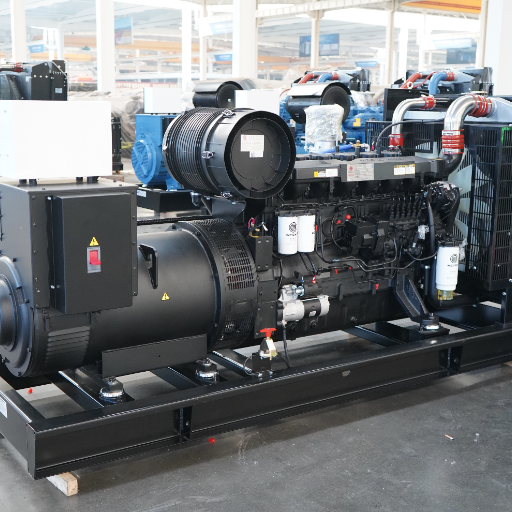
Strip away the marketing and the diesel vs natural gas generator comparison reduces to one variable: how many hours the unit will actually run each year. Everything else, including fuel price, emissions, and noise, is secondary to that number.
The three operating regimes behave very differently.
- Standby, under 500 hours a year. The generator exists for grid failure. Diesel wins, because the unit costs less to buy, needs no pipeline, and fuel consumption is too small for the price difference to matter.
- Peak shaving and demand management, 500 to 1,500 hours a year. This is the contested middle. Diesel usually still wins, but the margin narrows with every hour of runtime.
- Prime power, above 2,500 hours a year. The generator is the primary supply. Natural gas wins on fuel cost, and the gap widens the longer the unit runs.
The trap is that buyers routinely claim prime power when they mean peak shaving. A facilities team running a unit 700 hours a year to shave demand charges is not running prime power. The gas infrastructure investment is much harder to justify at 700 hours than at 7,000.
Ravi ran into exactly this. As facilities manager for a cold storage operator in Gujarat, he inherited a project to replace two aging diesel units with a single natural gas set. The business case rested on fuel cost per kWh, and on paper it looked excellent.
What the original analysis hadn’t priced was the service line upgrade, the pressure regulation equipment, and a four month utility timeline that pushed commissioning past the cooling season. The site ran 620 hours a year.
Ravi cancelled the conversion and rebuilt the diesel units instead. He invested the difference in a load bank testing programme that cut unplanned outages by 40 percent over the following two years.
Trying to work out where your own site sits? Our guide to prime and standby generator ratings explains how the two duty classes are defined. It also covers why the distinction changes the equipment you should be specifying.
Capital Cost: What a Diesel vs Natural Gas Generator Costs to Install
Diesel units cost less to buy at every size above roughly 150 kW. That gap is the starting point for the whole comparison, and it is larger than most buyers expect at industrial ratings.
A natural gas engine produces less power per unit of displacement than a diesel engine of the same physical size. To reach the same rated output, the gas unit needs a larger engine, a heavier base frame, and a more complex fuel delivery system. Those differences show up directly in the price.
Diesel also has the simpler ancillary package. A fuel tank, a transfer pump, a filtration set, and containment. All of it is standard, all of it is inexpensive, and none of it depends on a third party.
However, below about 150 kW the relationship can invert, and small residential-scale gas units are sometimes the cheaper purchase. Almost nothing in industrial power sits in that band, so for most readers the rule holds: diesel costs less upfront.
The Infrastructure Costs Nobody Quotes Upfront
The purchase price is the honest part of the comparison. The installation cost is where the two options diverge sharply, and it is where gas quotes most often understate the true figure.
On the diesel side, plan for the tank, secondary containment, bunding, venting, and a fuel polishing regime. Our breakdown of diesel fuel storage regulations covers the containment requirements and the spill-prevention thresholds that apply once you store fuel on site.
On the gas side, plan for a meter upgrade, a service line, pressure regulation, a gas train with its own safety shutoffs, and ventilation designed to prevent gas accumulation. Published comparisons from equipment dealers put a service line and meter upgrade at 40,000to40,000to80,000, with a lead time of roughly four months. Treat that as a planning range rather than a quote, because it varies enormously with distance to the main and local utility practice.
That four month timeline matters as much as the money. It sits on the critical path, and it’s outside your control in a way that a fuel tank delivery is not.
Running Cost: Diesel vs Natural Gas Generator Fuel and Maintenance
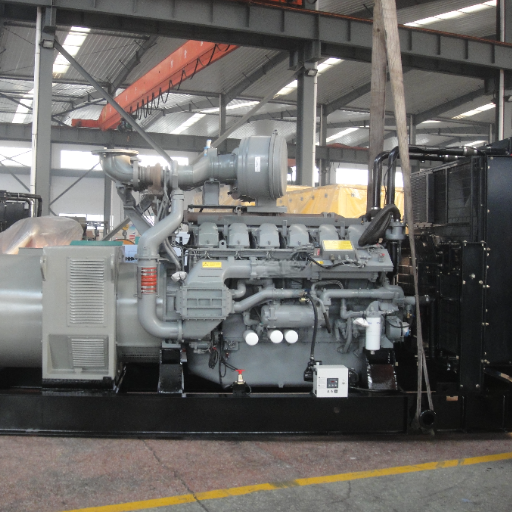
Here is where natural gas earns its reputation. Pipeline gas is cheaper per unit of energy than diesel in most markets, and the gap is wide enough to overcome a substantial capital premium given enough runtime.
Published equipment-dealer comparisons put natural gas at roughly 0.12perkWh∗∗against∗∗0.12perkWh∗∗against∗∗0.30 to $0.37 per kWh for diesel. Those figures are regional and they move with both gas prices and crude oil, so use them as a shape rather than a constant. The direction is consistent across markets even where the magnitude is not. You can run your own numbers with our diesel generator fuel consumption calculator.
Maintenance intervals differ in a way that also favours gas at high hours. Dealer-published service data puts a natural gas oil change at 1,500 to 2,000 hours against 500 to 750 hours for diesel. Over a long service life that difference adds up to a large number of labour hours and a large volume of oil.
Diesel carries costs on the other side of the ledger. Fuel polishing, filter changes, water and microbial contamination management, and on Tier 4 Final units the DEF, DPF, and SCR aftertreatment system. Our guide to diesel generator fuel consumption covers the consumption side in detail, and the fuel system maintenance routine covers what keeps stored fuel usable.
In practice, gas engines aren’t maintenance-free either. They carry spark plugs, an ignition system, and a gas train that needs periodic inspection and testing. The saving is real, but it’s a difference in degree, not a free lunch.
The Crossover Formula
You can calculate your own breakeven point with one piece of arithmetic. This is the number the rest of the comparison turns on, and it’s worth running before you accept any quotation.
breakeven annual hours =
 (gas capital premium + gas infrastructure premium)
 ÷ [(diesel $/kWh − gas $/kWh) × rated kW × average load factor]
Work through a 1 MW example with clearly labelled inputs.
| Input | Value | Note |
|---|---|---|
| Gas capital premium | $100,000 | Illustrative, size dependent |
| Gas infrastructure premium | $60,000 | Service line and meter |
| Total premium | $160,000 | |
| Diesel fuel cost | $0.32/kWh | Midpoint of published range |
| Gas fuel cost | $0.12/kWh | Published dealer figure |
| Fuel saving | $0.20/kWh | |
| Rated output | 1,000 kW | |
| Average load factor | 0.70 | Typical industrial duty |
| Saving per run hour | $140 |
At those inputs the breakeven lands at 1,143 annual run hours. Below that, diesel has the lower total cost of ownership. Above it, gas pulls ahead, and the advantage grows with every additional hour.
Three inputs move the answer more than the others. The infrastructure premium is the most volatile. The local fuel price spread directly drives the numerator. Maintenance interval differences push the breakeven lower, because longer gas service intervals are a running-cost advantage that the fuel figure alone does not capture.
Any of those inputs can move the breakeven outside the 1,000 to 2,500 hour band. That band is a planning heuristic, not a law. Run the arithmetic on your own numbers.
A Run-Hours Decision Table
Use this as a first pass, then confirm it with your own arithmetic.
| Annual run hours | Typical application | Usually cheaper | Why |
|---|---|---|---|
| Under 500 | Standby and emergency backup | Diesel | Fuel cost is negligible; capital cost dominates |
| 500 to 1,500 | Peak shaving, demand management | Diesel, margin narrows | Fuel saving rarely repays the gas premium in time |
| 1,500 to 3,000 | Continuous day-shift power | Natural gas | Fuel saving begins to outrun the premium |
| Above 3,000 | Prime power, off-grid baseload | Natural gas | Fuel and maintenance savings compound rapidly |
Two facilities illustrate how far apart the outcomes can land.
Marcus manages a regional distribution centre in Ohio that runs a 400 kW unit for outage cover. Annual runtime came in at 310 hours last year, most of it in scheduled exercise periods. The fuel bill is under $9,000 a year.
When a gas conversion was proposed, the $70,000 service line upgrade alone would have taken more than seven years to repay. That was before counting the gas unit’s higher purchase price. The conversion never happened, and it shouldn’t have.
Eight hundred kilometres away, Danielle runs a processing plant in Louisiana with no reliable utility supply. Her 1 MW set logs just over 6,000 hours a year. On diesel, fuel alone was running beyond $1.3 million annually.After the site connected to a nearby gas main and switched to a gas unit, the same output consumed roughly $500,000 a year in gas. The infrastructure premium was repaid inside the first two months of operation.Every hour since has been pure savings.Same comparison, opposite answers. The fuel type did not change. The run hours did.
Reliability: Fuel Autonomy vs Pipeline Dependence
Reliability is the argument that decides a lot of industrial projects, and it is where diesel’s case is strongest. The reason is structural rather than mechanical.
A natural gas generator is only as reliable as the pipeline that feeds it. The engine itself is dependable. The supply chain behind it is not, and it fails in a specific and predictable way: it fails during the same events that cause grid outages.
There are three failure modes worth understanding.
- Wellhead and gathering system freeze-off. In extreme cold, moisture in gathering lines can freeze and restrict flow at the source.
- Compressor station power loss. Compressor stations run on electricity, and they draw from the same grid that is failing.
- Pressure loss at the customer meter. Even with gas flowing in the main, insufficient pressure at the meter means the generator will not start.
Texas Winter Storm Uri in February 2021 demonstrated all three at national scale. The FERC and NERC joint inquiry found that 87 percent of fuel-related outages involved natural gas. It also found that 81 percent of freeze-related failures happened at temperatures the units were supposedly designed for.
ERCOT shed roughly 20 GW of firm load, its largest manual load shed event on record. The final FERC and NERC report documents the mechanism in detail and is worth reading if you are specifying critical standby power.
Hurricane Sandy in 2012 produced a related pattern. Facilities that assumed firm gas supply managed pressure and service interruptions alongside the storm damage they were already dealing with.
Diesel’s answer to all of this is straightforward. Stored fuel is fuel you control. Nobody else’s infrastructure has to work for your generator to start.
However, that advantage carries a caveat, and it is one worth stating plainly. Diesel fuel degrades in storage. Water ingress, microbial growth, and stratification all accumulate over time, and a generator that has sat untouched for two years may not start when called on. Autonomy is only real if the fuel is maintained, which is why keeping stored diesel clean is not optional on a standby diesel set.
Load-Step Performance and Motor Starting
There’s a second reliability dimension that receives far less attention than fuel supply, and it matters enormously in mission-critical work: how fast the generator can accept load.
Diesel engines accept load in large increments. Dealer-published figures put a diesel unit at roughly 10 load steps to reach full load, against 30 or more cycles for a natural gas unit. The gas engine has to ramp more gradually because it operates closer to its knock limit and cannot tolerate the same sudden fuel increase.
That difference directly interacts with code requirements. NFPA 110 Type 10 requires a standby system to accept full load within 10 seconds of a transfer. Our resource on NFPA 110 generator fuel requirements covers the standard’s fuel sizing rules.
A diesel unit meets the ten second requirement comfortably. A gas unit in the same rating class may need careful application engineering to get there, and in some cases it won’t get there at all.
For data centres, hospitals, and any facility with large motor loads starting simultaneously, this is often the deciding factor. Our guide to generator sizing for motor starting explains how starting kVA requirements drive the sizing decision. Data centre operators weighing the trade-off will find the application detail in our data centre power solutions section.
Emissions, Permitting, and Noise
Natural gas is the cleaner fuel on every measure that regulators care about, and the CO2 numbers are unambiguous. According to the U.S. Energy Information Administration, natural gas produces about 117 pounds of CO2 per million Btu when burned, against about 163 pounds for distillate fuel oil. That’s a 28 percent reduction on combustion alone.
The permitting advantages go further than CO2. A gas engine needs no diesel exhaust fluid, no diesel particulate filter, and no selective catalytic reduction system. It typically needs no fuel storage permitting at all, which removes an entire category of compliance work.
However, diesel’s storage burden is real. Above 1,320 gallons of aboveground capacity, the EPA’s Spill Prevention, Control, and Countermeasure rules apply, bringing containment, inspection, and plan requirements with them. Our diesel generator emissions standards guide covers the regulatory framework for diesel units.
Still, modern diesel has closed much of the gap. Tier 4 Final and EU Stage V engines are dramatically cleaner than the generations before them. Renewable diesel, also called HVO, can cut particulate matter by 30 to 50 percent in published tests without hardware changes. Our certifications guide covers the standards a compliant diesel installation needs to meet.
Noise is a genuinely underrated gas advantage. A natural gas unit typically runs below 70 dBA, while an unenclosed diesel unit sits between 85 and 95 dBA. Diesel can be brought down substantially with a silent canopy, and our noise regulations guide covers the limits that apply in populated areas. Still, enclosure costs money and adds footprint, and gas starts from a better position.
Bi-Fuel: A Middle Path for Diesel vs Natural Gas Generator Buyers
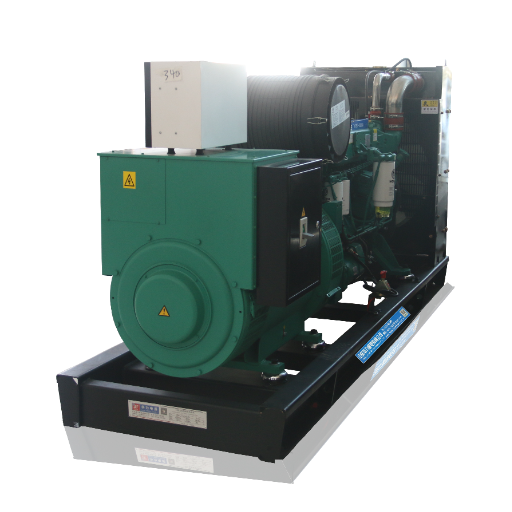
There is an option that gets less attention than it deserves, and for the right site it resolves the diesel vs natural gas generator trade-off almost entirely.
A bi-fuel conversion lets a diesel engine run primarily on natural gas while retaining diesel injection for ignition and load response. Published figures put gas substitution at 50 to 70 percent, with conversion costs in the 30,000to30,000to80,000 range. Confirm both against a specific kit supplier before you budget, because they vary by engine platform and rating.
The appeal is that you keep everything diesel offers while capturing most of what gas offers. You retain the on-site fuel tank and the fuel autonomy that comes with it. You still meet fast load acceptance requirements, because diesel remains in the combustion cycle. And you cut your fuel bill by more than half.
Nevertheless, the trade-offs are worth understanding before you commit. Bi-fuel kits are engine-specific, so availability depends on your platform. Emissions certification may need to be revisited for your jurisdiction. And you should confirm the warranty position with your engine supplier before installation, not after.
When Pipeline Access Does Not Exist
Everything in the gas half of this comparison assumes one thing: a pipeline you can connect to. Remove that assumption and the comparison collapses.
Remote sites, weak-grid regions, construction projects, mining operations, agricultural installations, and most export markets have no gas main within practical reach. A service line to a remote site isn’t a cost problem that better budgeting solves. It’s a physical impossibility.
This is where diesel’s advantage is absolute rather than relative. Diesel fuel is deliverable by truck to any location a road reaches. It can be stored on site in quantities sized to your required autonomy. It doesn’t depend on a utility’s timeline, a regulator’s approval, or a third party’s infrastructure remaining intact.
Operating conditions reinforce the point. Gas engines derate in high ambient temperatures and at altitude, and the effect is more pronounced than on diesel in some applications. Sizing margins need to account for it, and our guide to generator derating covers the correction factors. The altitude derating calculator gives you the figure for your own site.
For sites running continuously and far from any grid, runtime autonomy is a different question from fuel choice. Our article on how many hours an industrial generator can run continuously covers the maintenance and duty-cycle limits that govern it.
Tomas learned the pipeline lesson the expensive way. He specified a natural gas generator for a mining camp in northern Chile on the strength of a fuel cost analysis that looked outstanding. The camp was 60 kilometres from the nearest gas main.
The line extension quote came back at a figure that exceeded the generator’s purchase price, and the utility timeline ran to eighteen months. Tomas switched to two diesel units in parallel instead, sized the fuel storage for fourteen days of autonomy, and commissioned in under four months. Our comparison of one large generator against parallel units covers when that approach makes sense.
The fuel costs more per kWh. The site has power.
A Decision Checklist for Your Project
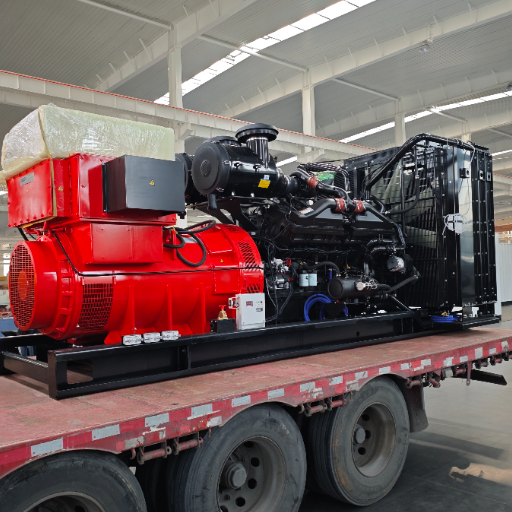
Work through these before you accept either quotation. Each one has changed the answer on a real project.
- Annual run hours. Measure them, do not estimate. Twelve months of logs will tell you more than any projection.
- Firm pipeline supply. Is gas available at the site boundary, at the pressure your engine needs, and on a timeline that fits your programme?
- Load acceptance requirement. Does your application need full load within 10 seconds? If yes, diesel has a structural advantage.
- Fuel storage feasibility. Can you permit and physically accommodate a tank, containment, and deliveries at this site?
- Local fuel price spread. What is the actual diesel-to-gas price gap in your market, and how volatile has it been?
- Maintenance capability. Who services the unit, and how far away are the parts? A gas engine needs a technician who knows ignition and gas trains.
- Emissions limits and permit timeline. What does your air permit require, and how long does approval take?
- Total premium, fully loaded. Add the capital difference, the infrastructure cost, and the cost of the delay. Not just the equipment.
Frequently Asked Questions
Is a natural gas generator cheaper than a diesel generator?
In terms of fuel costs, natural gas is cheaper: publicly available comparative data shows that natural gas fuel costs approximately $0.12 per kilowatt-hour, whereas diesel costs range from $0.30 to $0.37. However, the purchase and installation costs for natural gas equipment are typically higher; this is because natural gas engines are larger for the same power output, and upgrading gas supply lines and metering equipment can add an extra $40,000 to $80,000 to the cost. Ultimately, determining which option offers a lower total cost depends almost entirely on the number of operating hours per year.
What happens to a natural gas generator during a gas outage?
It stops producing power. This is the central reliability difference between the two fuels. Pipeline gas depends on wellheads that can freeze, compressor stations that need electricity, and pressure that must be maintained at your meter. All three are vulnerable during the same severe weather and grid events that cause outages in the first place.
How many hours a year before natural gas pays off?
Roughly 1,500 to 2,500 hours for most large industrial installations, though the figure moves with the infrastructure premium and local fuel price spread. Below about 1,000 hours diesel almost always has the lower total cost of ownership. Above 3,000 hours gas is usually clearly ahead.
Can you convert a diesel generator to run on natural gas?
You can convert many diesel engines to bi-fuel operation, where the engine runs primarily on gas with diesel retained for ignition and load response. Gas substitution typically reaches 50 to 70 percent. Conversion kits are engine-specific, cost between 30,000 and30,000 and80,000 in published figures, and may require emissions re-certification in your jurisdiction.
Does a natural gas generator need a fuel tank?
No, and that is a genuine advantage. It removes fuel storage, containment, delivery logistics, and fuel degradation from your maintenance scope entirely. The trade-off is that you have replaced a tank you control with a pipeline you do not.
Which fuel is better for standby power?
Diesel, in almost every case. Standby generators run few hours, so fuel cost barely registers, and the application demands fast load acceptance and independence from external infrastructure. Both requirements favour diesel.
Choosing With Your Eyes Open
The diesel vs natural gas generator decision has a clean structure once you stop treating fuel price as the answer and start treating it as one input among several. Fuel cost per kWh favours gas. Capital cost, installation simplicity, load acceptance, and fuel autonomy favour diesel. Annual run hours determine which set of advantages matters more.
Below roughly 1,000 hours a year, diesel wins, and it usually wins by enough that the comparison is not close. Above roughly 2,500 hours with firm pipeline supply and stable gas pricing, natural gas genuinely does have the lower total cost of ownership, and it is worth saying so plainly. For a diesel manufacturer to argue otherwise would be dishonest. Between those two points, the arithmetic on your own numbers decides.
What diesel offers regardless of run hours is a generator that starts because you have fuel, not because a third party delivered it. That property is worth different amounts to different operations. For a data centre, a hospital, or a mine, it is usually worth a great deal more than a fuel saving does.
If you want to know where your own project lands, send us your load schedule and twelve months of run-hour data. Our engineers will model both fuel types against your actual profile. If you are still earlier in the process, our comparison of diesel generators against battery energy storage covers the alternative worth ruling out first.
